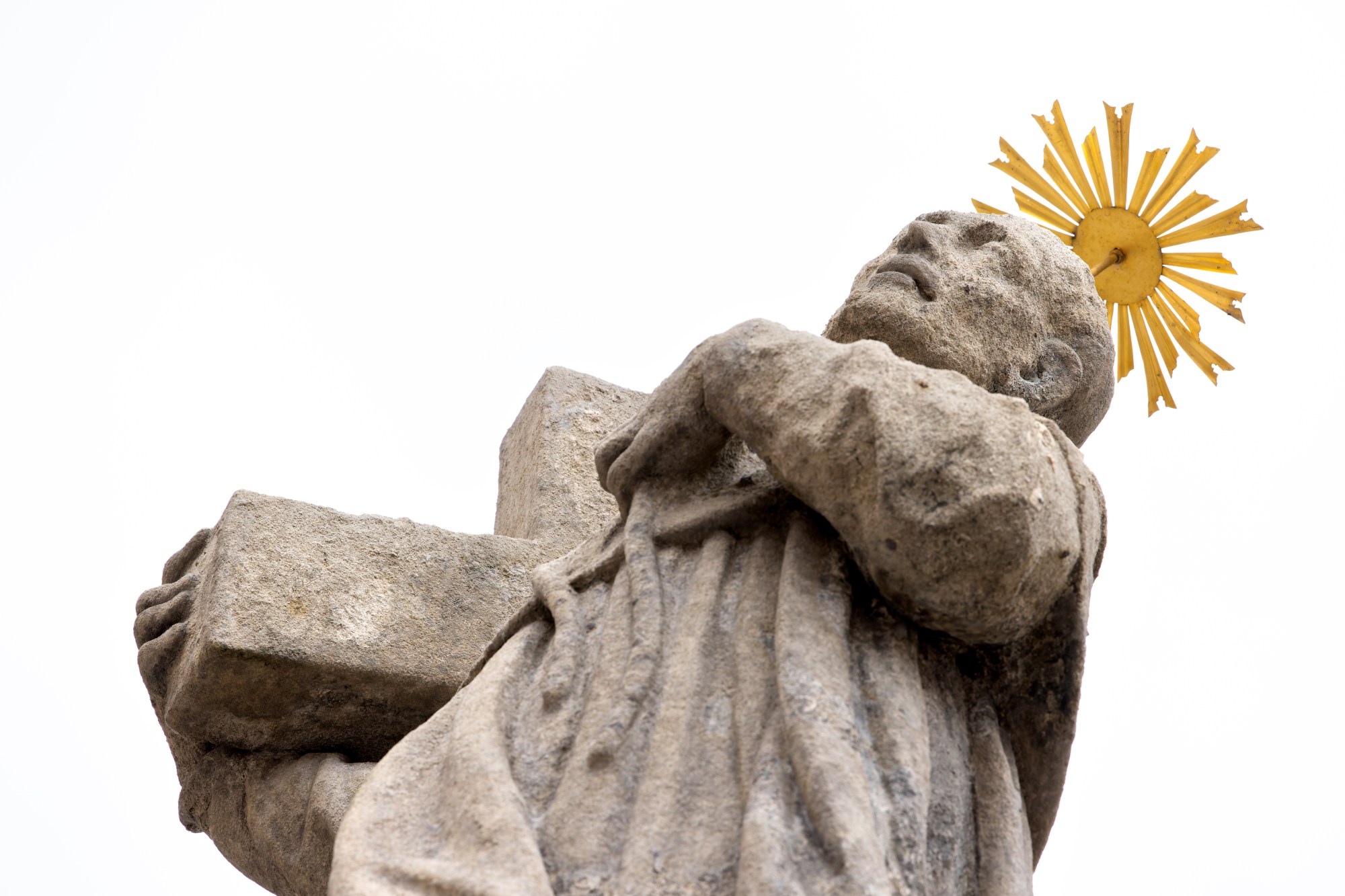
(AKA Column of the Virgin Mary Immaculate)
The Plague Column was erected in the early 18th century in the central square of Kutná Hora, which is a UNESCO World Heritage Site. The column stands tall and majestic, reaching a height of about 27 meters (89 feet), making it an imposing sight in the town.
The column is composed of several elements, each carrying symbolic meaning. At the top of the column is a gilded statue of the Virgin Mary, known as the Our Lady of Sorrows. She is depicted with a sorrowful expression, holding a crucifix and surrounded by angels. This statue represents hope, faith, and solace during times of great suffering and despair.
Descending down the column, you’ll notice numerous decorative sculptures and reliefs. These intricate carvings depict scenes from the plague, including skeletal figures and suffering individuals, as well as various saints and biblical figures associated with healing and protection. The detailed craftsmanship of these sculptures is truly remarkable and adds a sense of depth and emotion to the monument.
The Plague Column was built as an expression of gratitude for the town’s survival and recovery from the devastating plague epidemic that struck Kutná Hora in the 17th century. It stands as a testament to the resilience of the people and their enduring faith in the face of adversity.
Beyond its historical and artistic significance, the Plague Column offers visitors a unique opportunity to reflect on the fragility of life and the resilience of the human spirit. It serves as a solemn reminder of the hardships our ancestors endured and the strength they found in unity and faith.
Visit Notes
I was impressed with the statues adorning this monument. Because of my obsession with carved stone, I spent quite a bit of time examining and photographing this monument. Even if you only spend a few minutes admiring it while walking through town, it’s worth stopping by.
Details
Šultysova, 284 01 Kutná Hora, Czechia
Photos





 Meticulous Meanderings