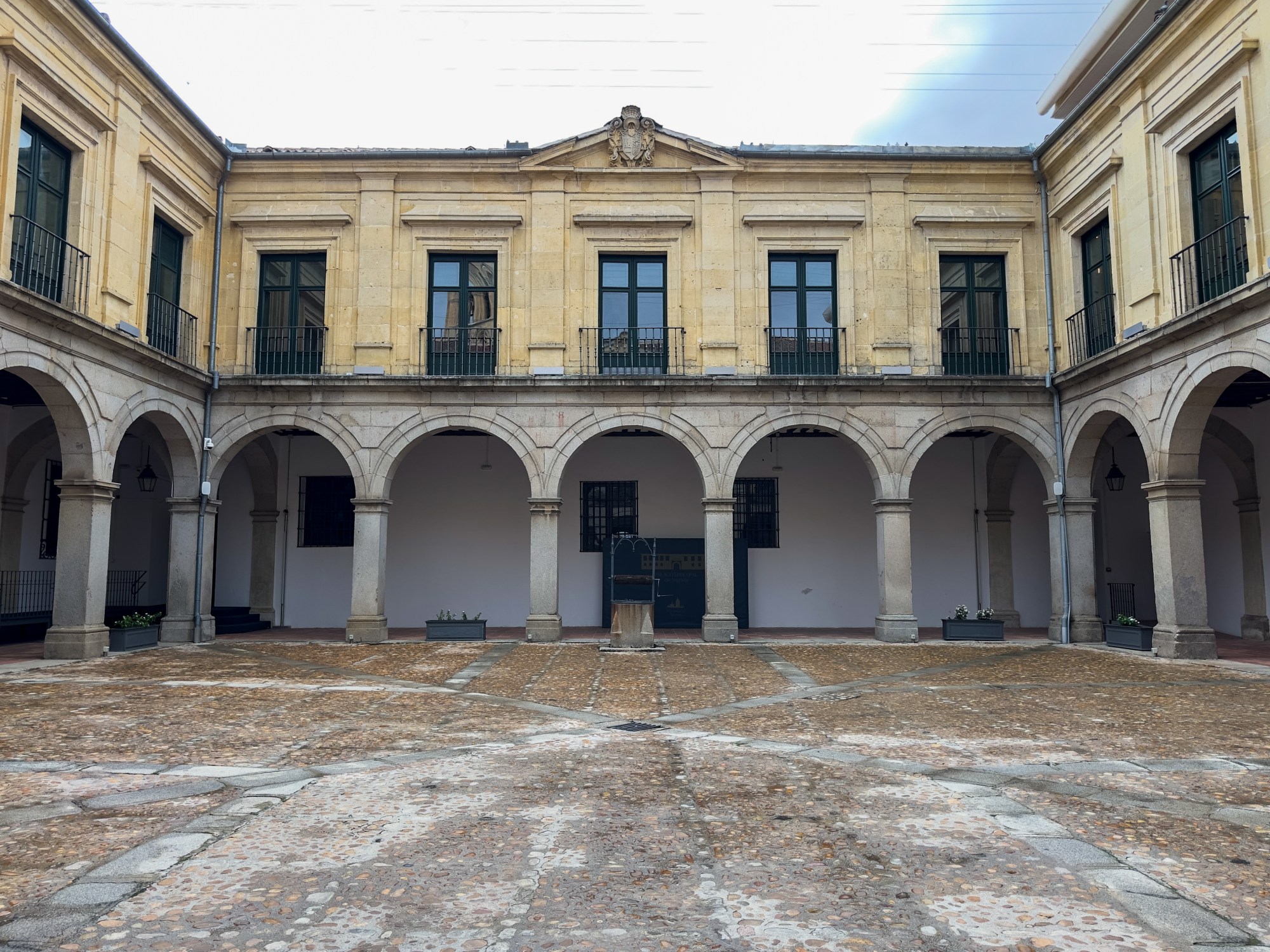
The Palacio Episcopal (Episcopal Palace) is a remarkable architectural gem located in the historic city of Segovia, Spain.
The construction of the Palacio Episcopal dates back to the late 18th century, with the initial work being commissioned by the Bishop Agustín Rubín de Ceballos. The palace was intended to serve as the residence for the bishops of Segovia, combining both residential and administrative functions.
The Palacio Episcopal exhibits a unique blend of architectural styles, predominantly showcasing the Neoclassical and Baroque influences that were prevalent during its construction. The building was designed by the renowned architect Pedro de Asensio, who infused it with grandeur and elegance.
The facade of the palace is characterized by a composition of symmetrical lines. The use of local golden sandstone, known as “pinar de Segovia,” gives the building a warm and inviting appearance.
The central section of the palace features a prominent pediment supported by Corinthian columns, adding a touch of classical grandeur. Look closely, and you’ll notice delicate details such as sculptures, reliefs, and decorative motifs that adorn the facade, showcasing the mastery of the craftsmen involved in its creation.
Step inside the Palacio Episcopal, and you’ll be greeted by a series of rooms that showcase the opulence and refinement of the era. The interior spaces are designed with a sense of grandeur, featuring high ceilings, intricate moldings, and sumptuous decorations.
The palace houses a remarkable collection of artworks, including paintings, sculptures, and religious artifacts, many of which are displayed in the various rooms. If you’re feeling especially competitive, you can book a reservation in their escape room (purchase on their website).
Photos


Other Sights




Segovia
Segovia, Spain is located in the central part of the country, just north of Madrid. It is a place where history comes alive, boasting a rich heritage and architectural wonders that will leave you amazed. One of the most iconic landmarks in Segovia is its stunning Roman aqueduct, which dates back to the 1st century…
Thanks for visiting! I hope you have a great trip.
 Meticulous Meanderings