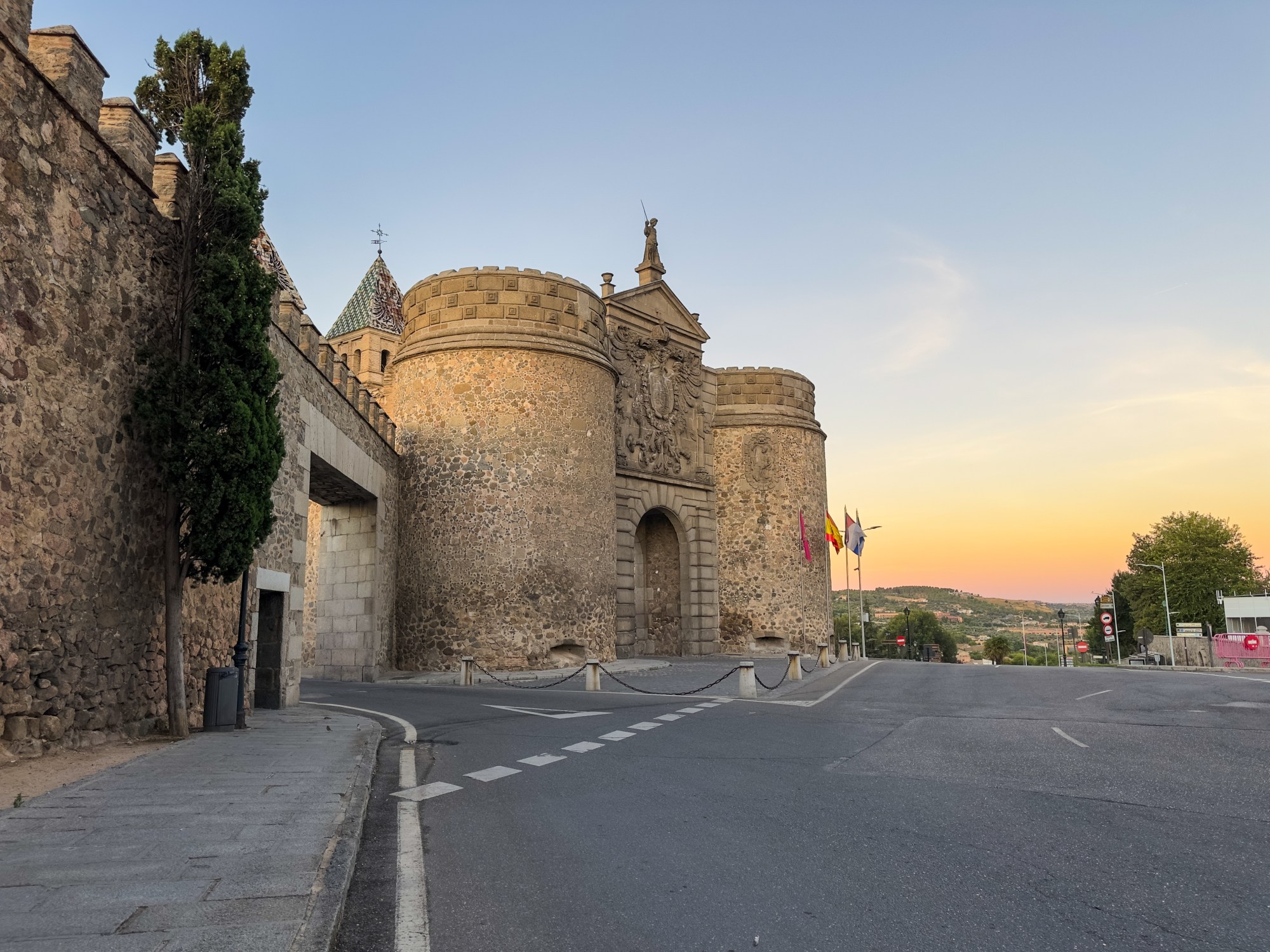
The history of the Puerta de Bisagra dates back to the medieval era when Toledo was a crucial city in the Iberian Peninsula. The gate was built during the 10th century by the Moors, who occupied the region at the time. It served as one of the main entrances to the fortified city and played a significant role in controlling access to Toledo.
However, after the Christian Reconquista of Toledo in 1085, the gate underwent major changes. In the 16th century, during the reign of Charles I of Spain and Holy Roman Emperor, a renovation project was undertaken to modernize and fortify the city’s defenses. The gate’s original structure was largely preserved, but new Renaissance-style elements were added, giving it a distinct and impressive appearance that still stands today.
The Puerta de Bisagra is a stunning example of military and Renaissance architecture. The gate is characterized by its two large towers flanking the central passage, which was a common feature of medieval city gates.
The outer facade of the gate showcases intricate decorative elements, reflecting the Mudejar architectural influence during the Moorish period. You’ll find beautiful geometric patterns, plasterwork, and inscriptions that add to its historic charm.
As you pass through the gate, you’ll notice the interior side, which exhibits more prominent Renaissance features, like classical pilasters and ornamental motifs that were added during the 16th-century renovations.
Today, the gate is an iconic symbol of Toledo’s rich history and is recognized as a National Monument in Spain. It stands as a testament to the city’s cultural and architectural heritage.
Details
C. Real del Arrabal, 26, 45003 Toledo, Spain
Photos


Other Sights








Thanks for visiting! I hope you have a great trip.
 Meticulous Meanderings