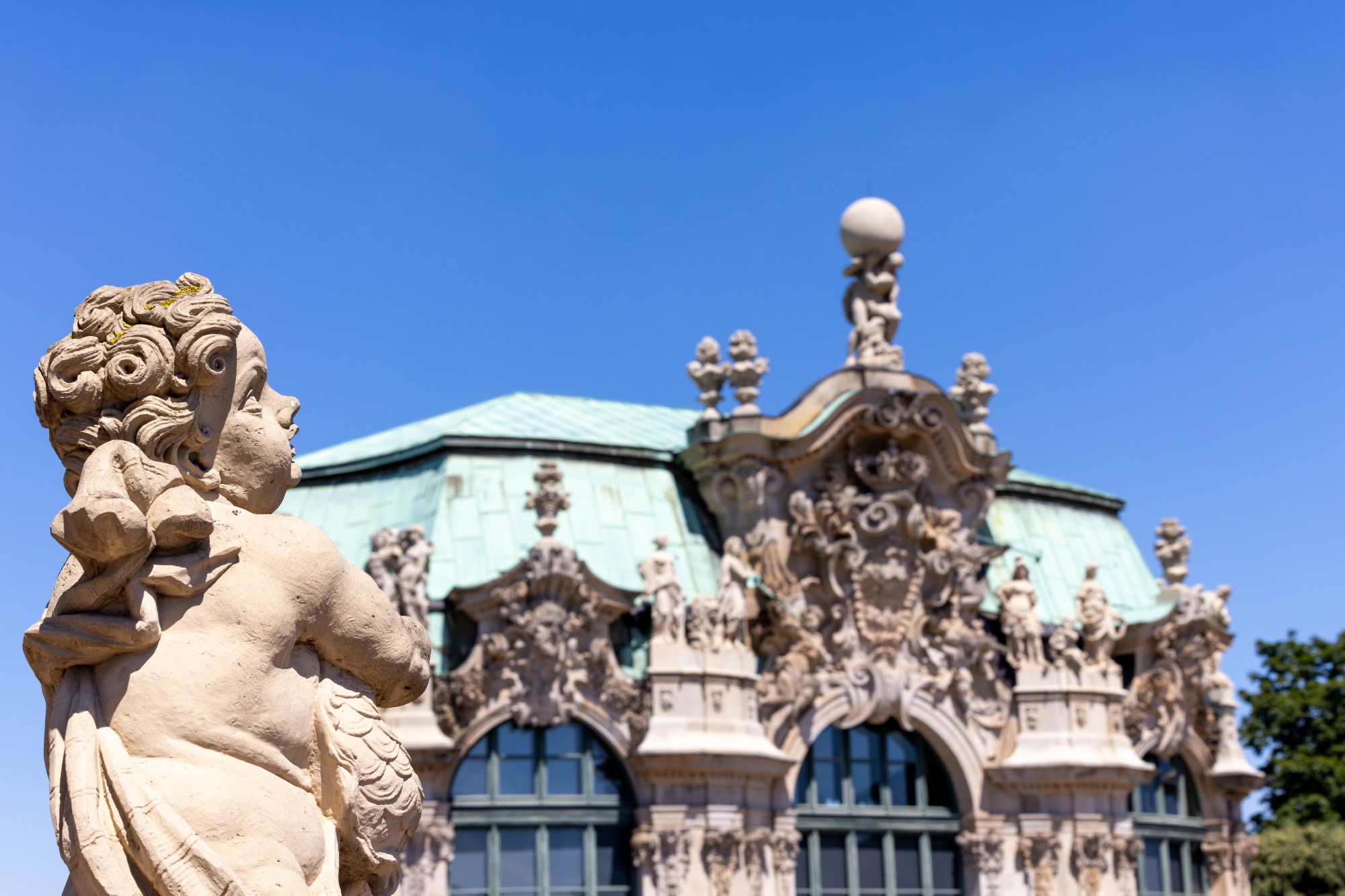
The Zwinger is an exquisite and renowned architectural ensemble located in the heart of Dresden. It’s a palace complex that seamlessly combines stunning Baroque architecture with beautiful gardens, and it’s one of the most famous landmarks in the city. The Zwinger was originally constructed in the early 18th century as an orangery, exhibition gallery, and festival arena for the royal court of Augustus the Strong, Elector of Saxony and King of Poland.
However, during World War II, Dresden experienced intense bombing raids that severely damaged the city, including the Zwinger. The devastating Allied bombings in February 1945 left much of Dresden, including the Zwinger, in ruins. The grandeur of the palace was reduced to rubble. Thankfully, its collection of art had been previously evactuated. The destruction of the Zwinger was a tragic loss for both Dresden and the world’s cultural heritage.
After the war, the reconstruction of Dresden and the Zwinger became a symbol of resilience and restoration. The painstaking efforts to rebuild the city and its historical landmarks, including the Zwinger, were a testament to the determination of the people to restore their cultural legacy. The reconstruction process aimed not only to rebuild the physical structures but also to recapture the spirit and aesthetics of the original architecture and artworks. Reconstruction began in 1945, and by 1963 the Zwinger had been largely restored.
Architecture:
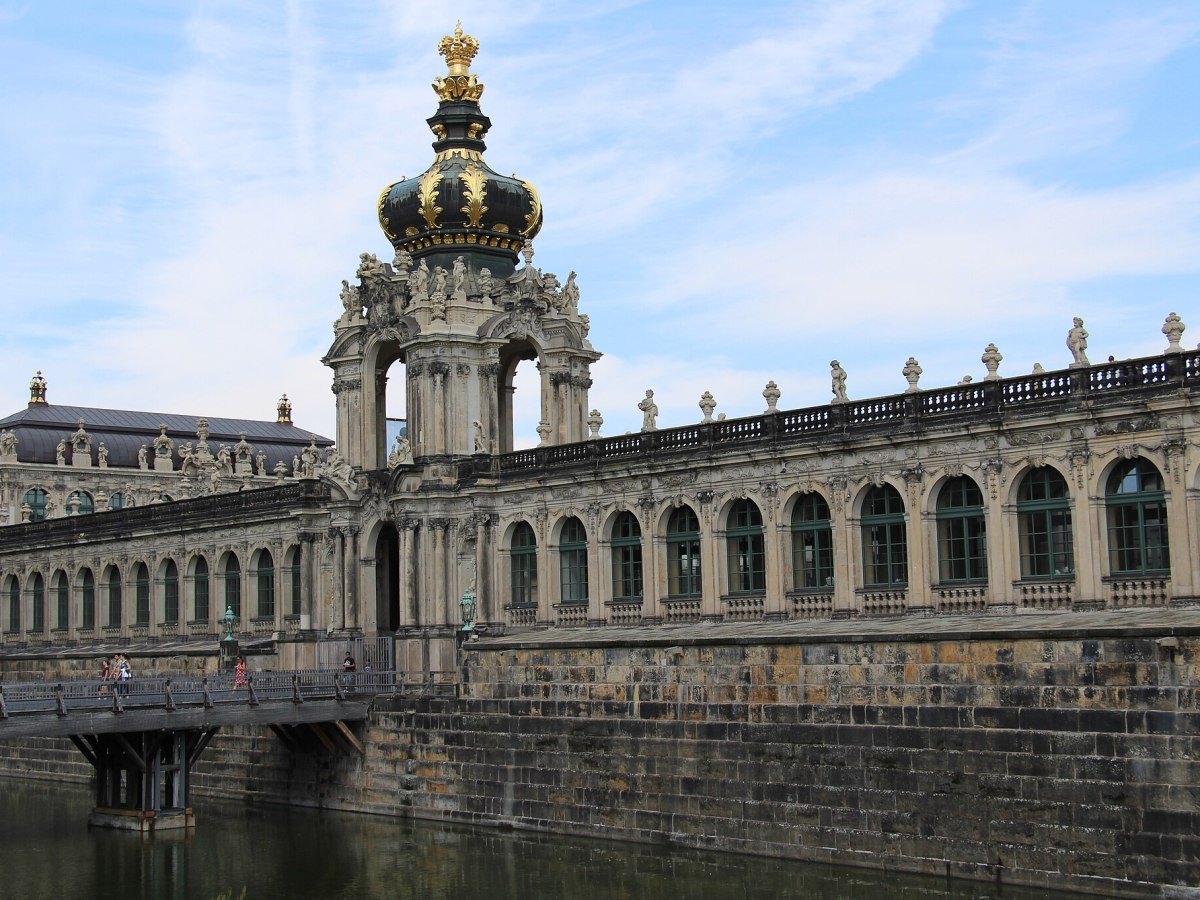
The Zwinger’s architecture is a prime example of Baroque grandeur and elegance. The complex consists of various pavilions, galleries, and courtyards, all interconnected by ornate gates, arcades, and walkways. The outer walls are adorned with intricate sculptures, reliefs, and decorative elements. One of the most iconic features is the Crown Gate (Kronentor), which serves as the main entrance and features a majestic crown at its top.
Museums:
Within the Zwinger complex, there are several museums that house a remarkable collection of art, historical artifacts, and scientific instruments:
- Old Masters Picture Gallery (Gemäldegalerie Alte Meister): This museum hosts an outstanding collection of European paintings from the Renaissance to the Romantic era. You’ll find masterpieces by artists like Raphael, Rembrandt, Vermeer, and Titian. One of the most famous works is Raphael’s “Sistine Madonna,” featuring the cherubic angels that have become iconic.
- Porcelain Collection (Porzellansammlung): The Zwinger is also home to a remarkable collection of porcelain, particularly Meissen porcelain, which is renowned for its quality and craftsmanship. The museum showcases delicate and intricate porcelain items ranging from tableware to figurines.
- Mathematics and Physics Salon (Mathematisch-Physikalischer Salon): This museum is a treasure trove of scientific instruments, clocks, and precision tools. It provides insights into the history of scientific exploration and technological advancement.
- Sculpture Museum (Skulpturensammlung): The museum’s collection comprises sculptures from antiquity to the 18th century, showcasing a diverse array of styles, materials, and artistic expressions. Marvel at exquisite sculptures from ancient Greece and Rome. Explore sculptures from the Renaissance period, capturing the revival of classical forms and a renewed focus on human anatomy and emotion. Works from renowned artists like Giambologna and Bernini showcase the skill and innovation of this era.
Gardens:
In addition to the architectural marvels and museums, the Zwinger normally boasts beautifully landscaped gardens and fountains. The gardens are laid out in a formal Baroque style, featuring fountains, flower beds, and meticulously designed pathways. The gardens provide a serene atmosphere for visitors to stroll, relax, and appreciate the beauty of the surroundings.
Visit Notes
The first thing to note is that the interior courtyard and gardens are currently undergoing renovations. When we visited they were doing what looked like an archaeological dig in the courtyard with little trowels and brushes. It was actually pretty interesting.
If you want to visit all of the collections at the Zwinger, you’ll need to allocate quite a lot of time. We spent a full morning and half the afternoon wandering through all the exhibits. There is a cafe in the southwest corner (upstairs) with snacks to keep you fueled. I had a chocolate “shake”, which was more like ice cold chocolate milk (not at all thick), but boy was it delicious and refreshing. We also picked up a brownie and a cookie.
Each museum has its own entrance, so you will need to have your ticket handy for each. At the Mathematics and Physics Salon, I had to put my backpack in a locker for a Euro. I didn’t have a Euro handy so they gave me some plastic coin that looked like a Euro and that worked.
You should also note that this is a historic building with no air conditioning. The only place it was noticeable to us was in the Porcelain museum. They had brought in portable air conditioning units, but that only helped if you were directly in front of them. Perhaps not coincidentally, that’s where the museum employees would sit.
I enjoyed all of the museums here, but my favorite was the Mathematics and Physics Salon. I love mechanical things and globes, so it was very much like someone had created this place just for me.
You can also walk up some stairs and stroll along the top of the building. From here you have a close-up view of all the Baroque details and statues. On the north side of the complex there are some fountains and shady areas to relax.
Lastly, even though it was summer and the courtyard was full of people, we hardly saw anyone inside the museums themselves. The building is so large, you have plenty of room to get away from others.
Details
Sophienstraße, 01067 Dresden, Germany
Tuesday to Sunday
10:00 – 18:00
Attraction opening days and times can change with no warning.
Always double-check information with the official website before making any plans
Photos




Dresden
Dresden, located in eastern Germany, is a city that seamlessly blends history, culture, and natural beauty. Known as the “Florence on the Elbe,” Dresden has a rich and complex history that is reflected in its stunning architecture, vibrant arts scene, and picturesque landscapes. Architectural Marvels: One of the city’s most iconic landmarks is the Dresden…
Thanks for visiting! I hope you have a great trip.
 Meticulous Meanderings