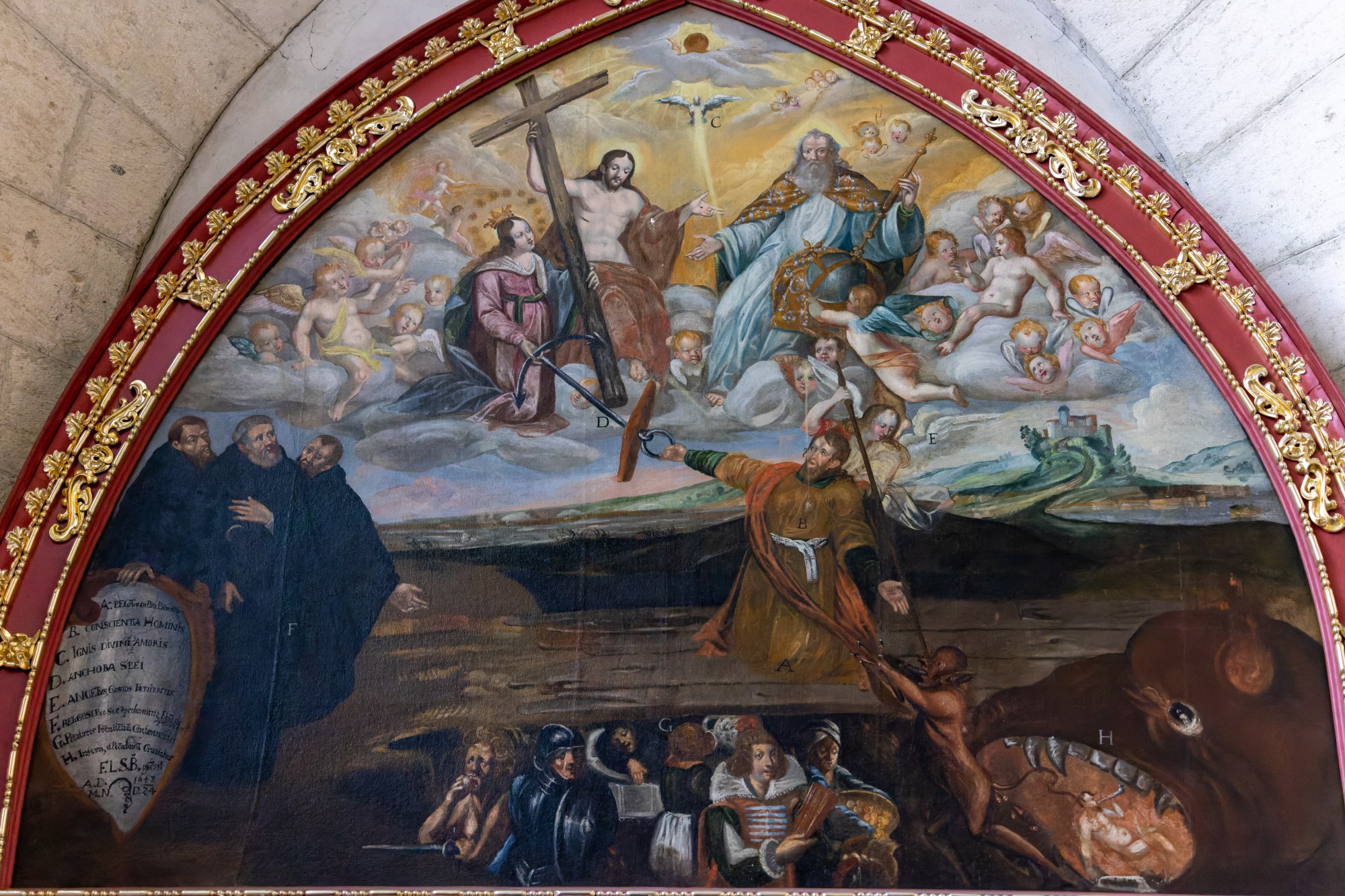
(AKA Kościół pw. św. Katarzyny Aleksandryjskiej)
The Church of St. Catherine of Alexandria and the accompanying Augustinian Monastery in Kraków, Poland, are historically and architecturally significant landmarks that offer a glimpse into the city’s rich cultural and religious heritage.
History:
- Foundation: The Church of St. Catherine of Alexandria and the Augustinian Monastery were founded in the 13th century, with construction beginning in the late 1200s.
- Augustinian Order: The complex was established by the Augustinian friars, a religious order founded by St. Augustine of Hippo. The Augustinians played a crucial role in the spiritual and intellectual life of medieval Kraków.
- Cultural Center: Throughout its history, the Augustinian Monastery served as a center for learning, scholarship, and cultural activities. It housed a renowned library and attracted scholars and theologians.
- Reformation and Suppression: Like many religious institutions in Europe, the Augustinian Monastery faced challenges during the Reformation and later periods of political turmoil. It was suppressed during the partitions of Poland in the late 18th century but continued to function as a church.
- Restoration: In the 19th century, after Poland regained independence, efforts were made to restore the monastery and church to their former glory. This restoration work aimed to preserve their historical and architectural significance.
Architecture:
- Gothic Style: The Church of St. Catherine of Alexandria is primarily built in the Gothic architectural style, characterized by pointed arches, ribbed vaults, and buttresses. This style was popular during the medieval period.
- Exterior: The church’s exterior features impressive Gothic elements, including its façade with a large stained glass window and intricate stone carvings. The bell tower is also a notable feature, offering panoramic views of Kraków.
- Interior: Inside the church, you’ll find a beautiful Gothic nave with tall, slender columns and stained glass windows that filter colorful light into the space. The altar, pulpit, and other elements showcase rich Baroque and Rococo decorations from later periods.
- Monastery Complex: The Augustinian Monastery is connected to the church and includes a cloister with a tranquil garden. The cloister often serves as a peaceful escape from the bustling city streets.
- Art and Frescoes: Throughout the church and monastery, you can admire various works of religious art, including frescoes, sculptures, and paintings, which add to the historical and artistic significance of the complex.
Visit Notes
This is another bright and airy church where you can lose yourself in the little details all around you. We found a number of hallways and alcoves to explore, leading to artistic treasures to enjoy. It was also a very nice reprieve from the heat outside.
Details
Augustiańska 7, 31-064 Kraków, Poland
Attraction opening days and times can change with no warning.
Always double-check information with the official website before making any plans
Photos


Other Sights












Kraków
Krakow, Poland is a city that seamlessly blends history, culture, and vibrant contemporary life, making it a fantastic destination for travelers. Krakow, often hailed as the “cultural capital” of Poland, is a city steeped in history and brimming with charm. Nestled in the southern part of the country, Krakow is a city that balances its…
Thanks for visiting! I hope you have a great trip.
 Meticulous Meanderings