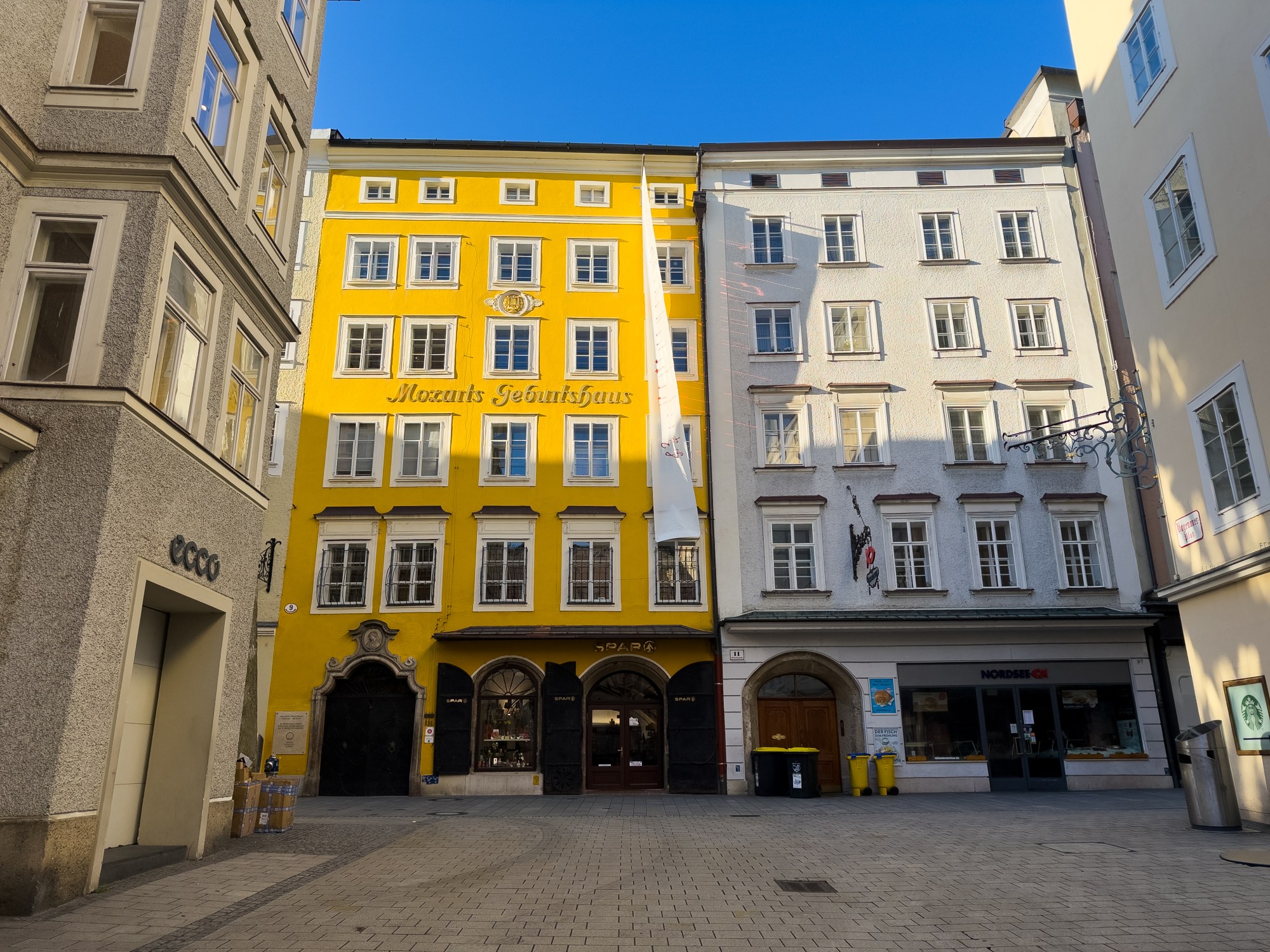
Mozart’s Geburtshaus (Mozart’s Birthplace) is one of Salzburg’s most famous attractions, offering a fascinating glimpse into the early life of Wolfgang Amadeus Mozart, one of the greatest composers of all time. Located in the heart of the Old Town (Altstadt) on Getreidegasse 9, this historic bright yellow townhouse is where Mozart was born on January 27, 1756, and where he lived with his family for the first 17 years of his life. Today, the house has been transformed into a museum, displaying an extensive collection of original artifacts, including Mozart’s childhood violin, portraits, letters, and furniture from the period.
The museum takes visitors through rooms that provide insight into Mozart’s family life, early musical education, and his first compositions. Exhibits also explore his travels, his rise to fame, and his deep connection to Salzburg before he moved to Vienna. One of the highlights is seeing the very room where Mozart was born, a moment that makes history feel incredibly tangible.
A Brief History of Wolfgang Amadeus Mozart
Wolfgang Amadeus Mozart (1756–1791) was a musical prodigy and one of the most influential composers in history. Born on January 27, 1756, in Salzburg, Austria, he showed extraordinary musical talent from a very young age. His father, Leopold Mozart, a respected composer and violinist, recognized his son’s genius and began teaching him music when he was just three years old. By the age of five, Mozart was already composing and performing for European royalty.
Throughout his childhood and teenage years, Mozart and his sister Nannerl toured Europe, dazzling audiences with their exceptional abilities. He worked for the Prince-Archbishop of Salzburg, but frustrated with limited opportunities, he moved to Vienna in 1781, seeking greater artistic freedom. There, he composed some of his most famous works, including “The Marriage of Figaro,” “Don Giovanni,” and “The Magic Flute.” He excelled in all musical forms, from symphonies and operas to chamber music and concertos.
Despite his success, Mozart struggled financially and faced declining health. He died on December 5, 1791, at the age of 35, while working on his famous Requiem, leaving it unfinished. Though he was buried in a common grave, his legacy lives on through his timeless music, which continues to inspire and captivate audiences worldwide.
The exact cause of Wolfgang Amadeus Mozart’s death remains a mystery and has been widely debated by historians and medical experts. He fell severely ill in late November 1791, experiencing symptoms such as fever, swelling, pain, and vomiting. His condition rapidly worsened, and he died at the age of 35 in Vienna.
At the time, Mozart’s official death record listed “severe miliary fever”, a vague 18th-century medical term. Over the years, theories have ranged from rheumatic fever, kidney failure, and streptococcal infection to mercury poisoning and an autoimmune disease. Some even speculated that he was poisoned—rumors fueled by his rival Antonio Salieri, though there is no real evidence to support this claim.
Modern research suggests that a sudden epidemic, possibly a streptococcal infection leading to kidney failure, was the most likely cause of his death. Regardless of the exact reason, Mozart’s passing was tragic and untimely, cutting short the life of a musical genius who left behind an extraordinary legacy.
Photos







Salzburg
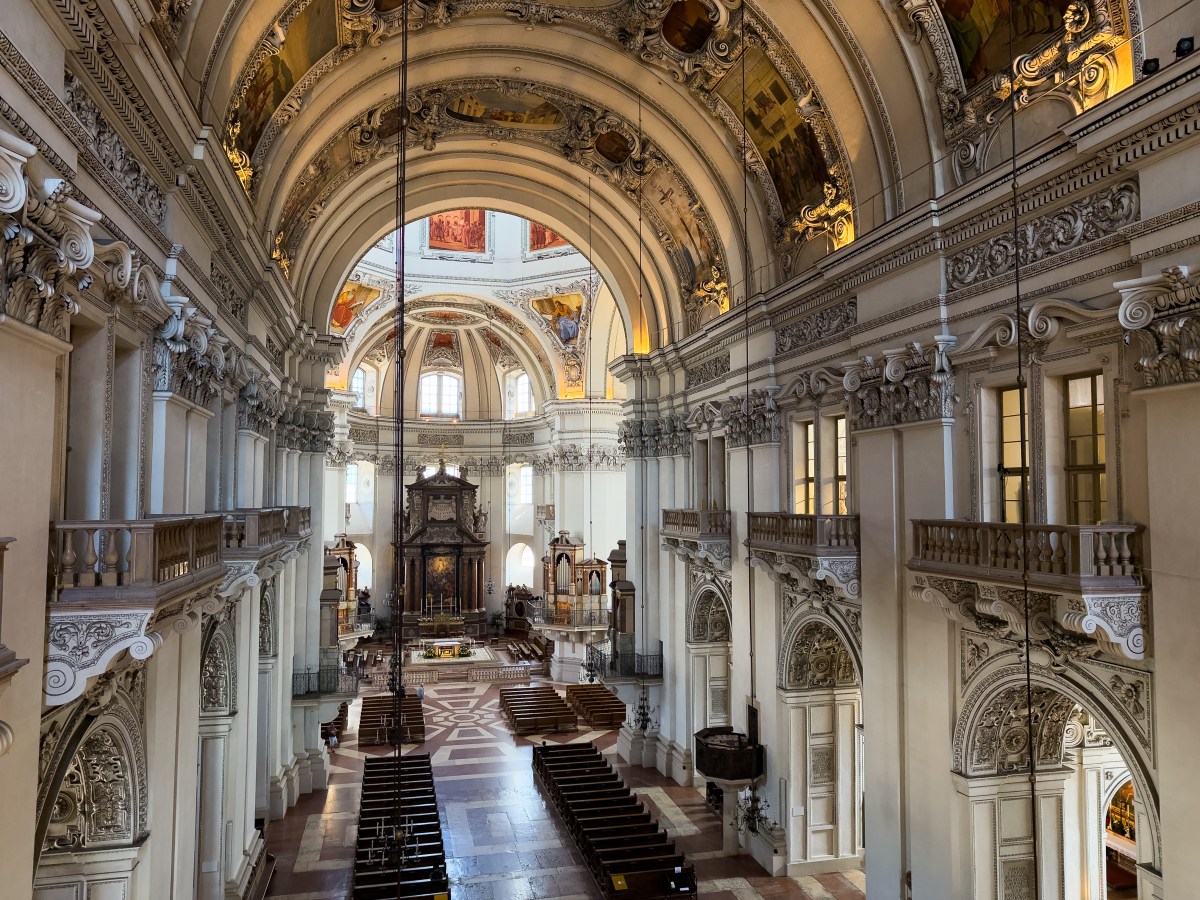
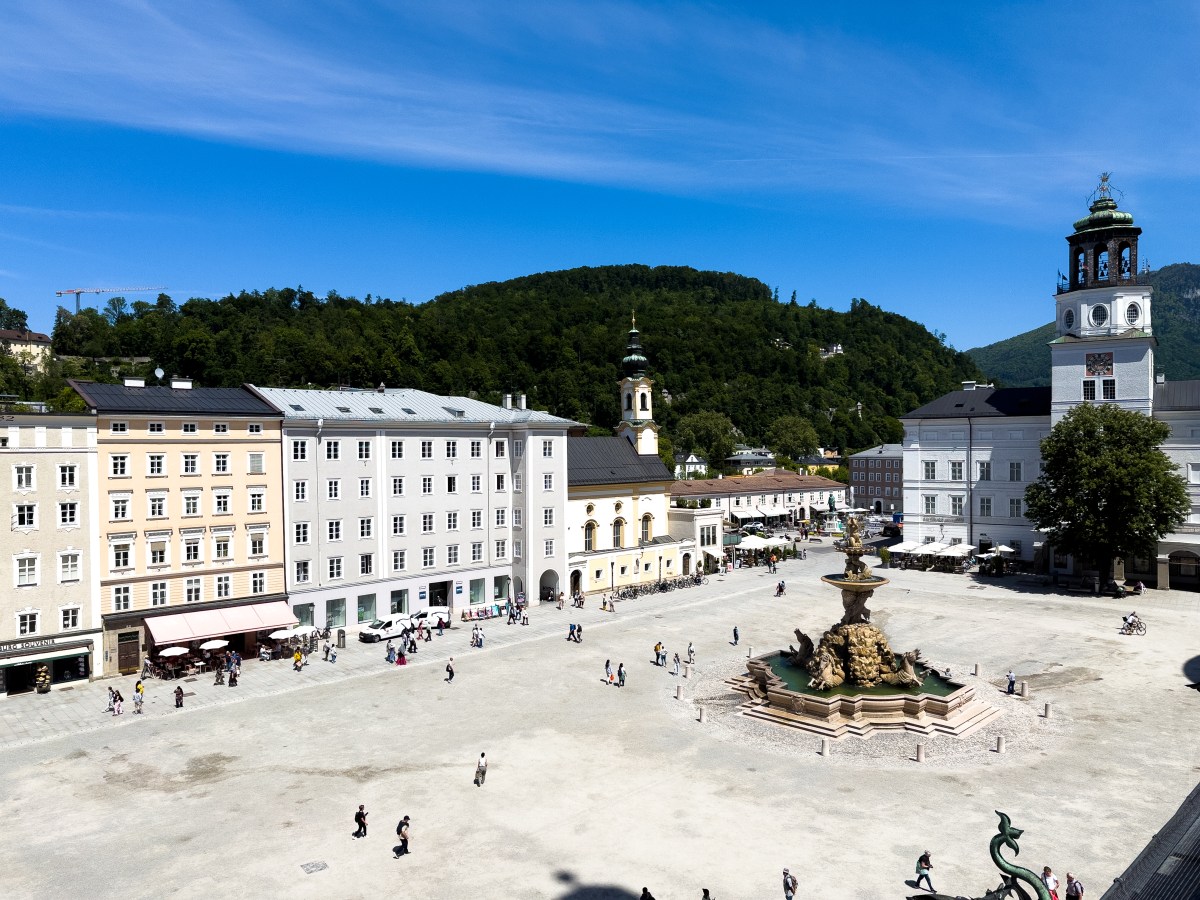
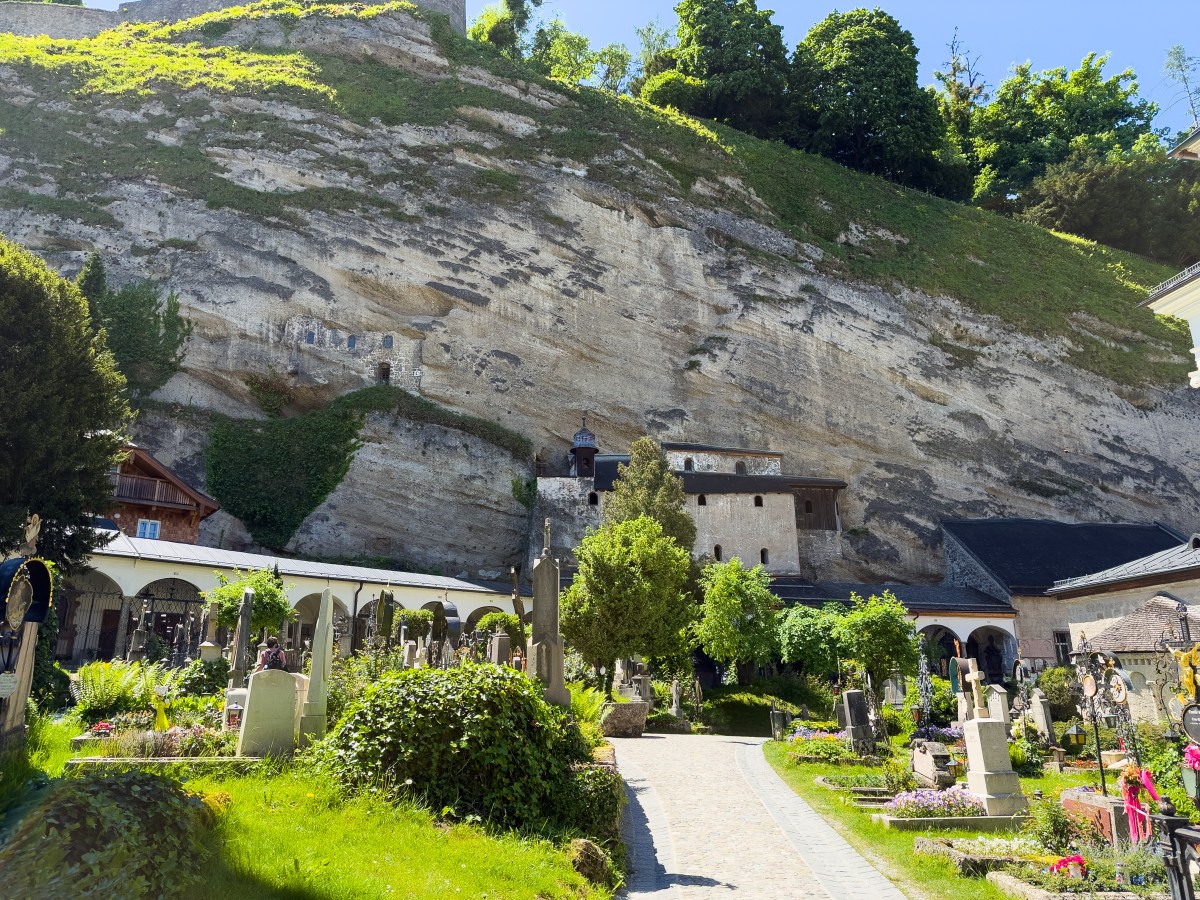
Salzburg, Austria, is a city where history, culture, and stunning natural beauty come together in perfect harmony, making it a must-visit destination for anyone looking to explore both rich heritage and scenic landscapes. Known as the birthplace of Wolfgang Amadeus Mozart, Salzburg has earned a reputation as a “City of Music”, and its musical legacy…
Thanks for visiting! I hope you have a great trip.
 Meticulous Meanderings