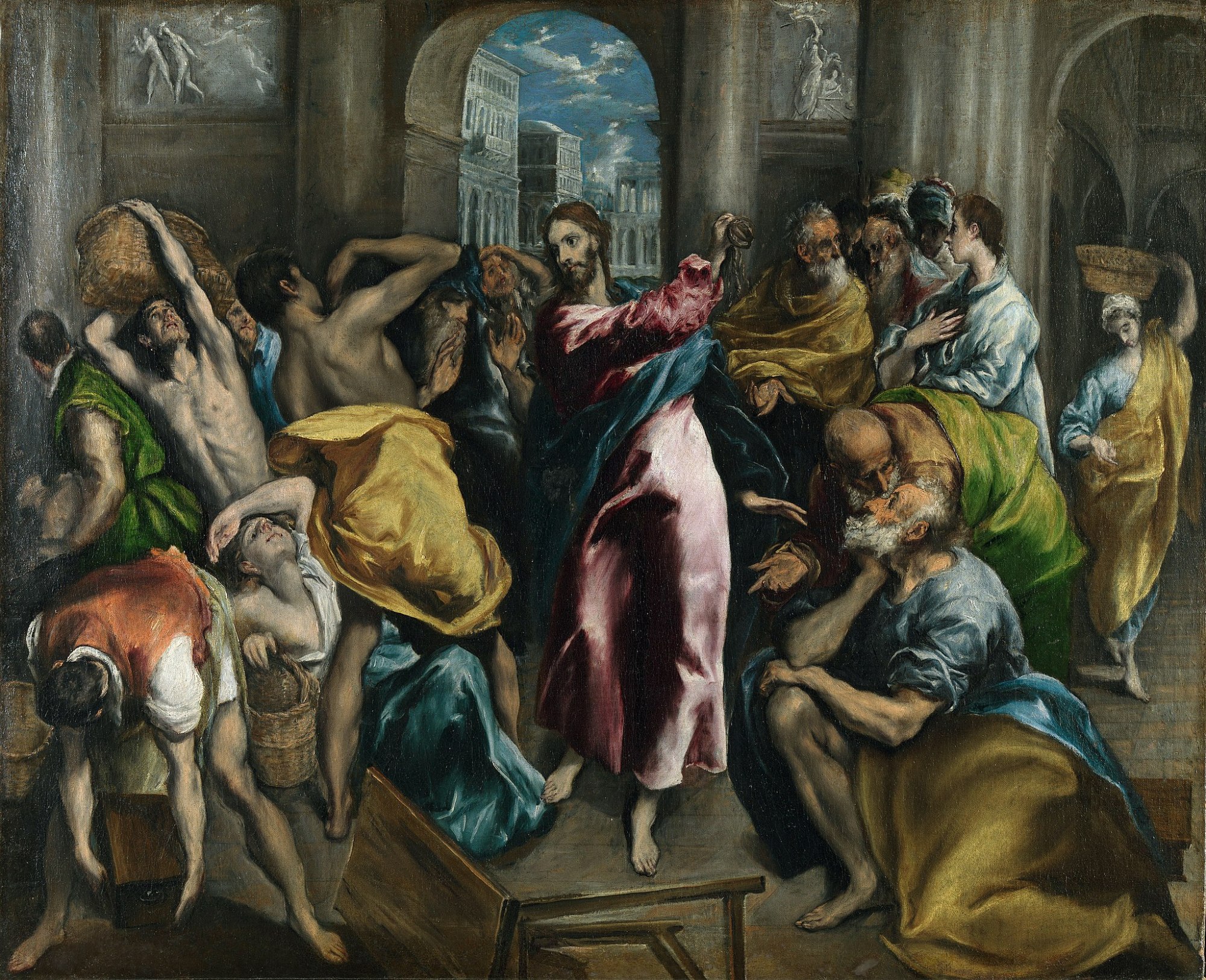
El Greco, whose real name was Doménikos Theotokópoulos, was a prominent painter of the Spanish Renaissance. Born in Crete, Greece, in 1541, El Greco is known for his unique artistic style, marked by elongated figures, vibrant colors, and expressive brushwork. His work played a significant role in the transition from the Renaissance to the Baroque period.
Early in his career, El Greco studied Byzantine icon painting in his hometown of Candia (now Heraklion). Seeking broader artistic horizons, he traveled to Venice in 1567 and immersed himself in the Italian Renaissance. Later, he moved to Rome, where he encountered the works of Michelangelo and Raphael, which had a profound influence on his artistic development.
In the late 1570s, El Greco settled in Toledo, Spain, where he spent the remainder of his life and created his most celebrated works. Toledo became a flourishing artistic center during this time, attracting many commissions from local religious institutions and wealthy patrons.
El Greco’s religious paintings are among his most influential works. One of his iconic pieces is “The Burial of the Count of Orgaz” (1586-1588), which depicts a miracle occurring during the funeral of a nobleman. The painting showcases his distinctive style, with elongated figures and intense emotional expression. It exemplifies his ability to convey spiritual and ethereal qualities through his art.

Another notable work is “The Disrobing of Christ” (1577-1579), also known as “El Espolio.” It portrays the moment when Christ is stripped of his garments before the Crucifixion. This painting demonstrates El Greco’s mastery of light and shade, as well as his ability to capture complex emotions.

El Greco’s “View of Toledo” (circa 1596-1600) is one of his most renowned landscape paintings. It depicts the city of Toledo with a dramatic and atmospheric perspective, showcasing his innovative approach to capturing the essence of a place.
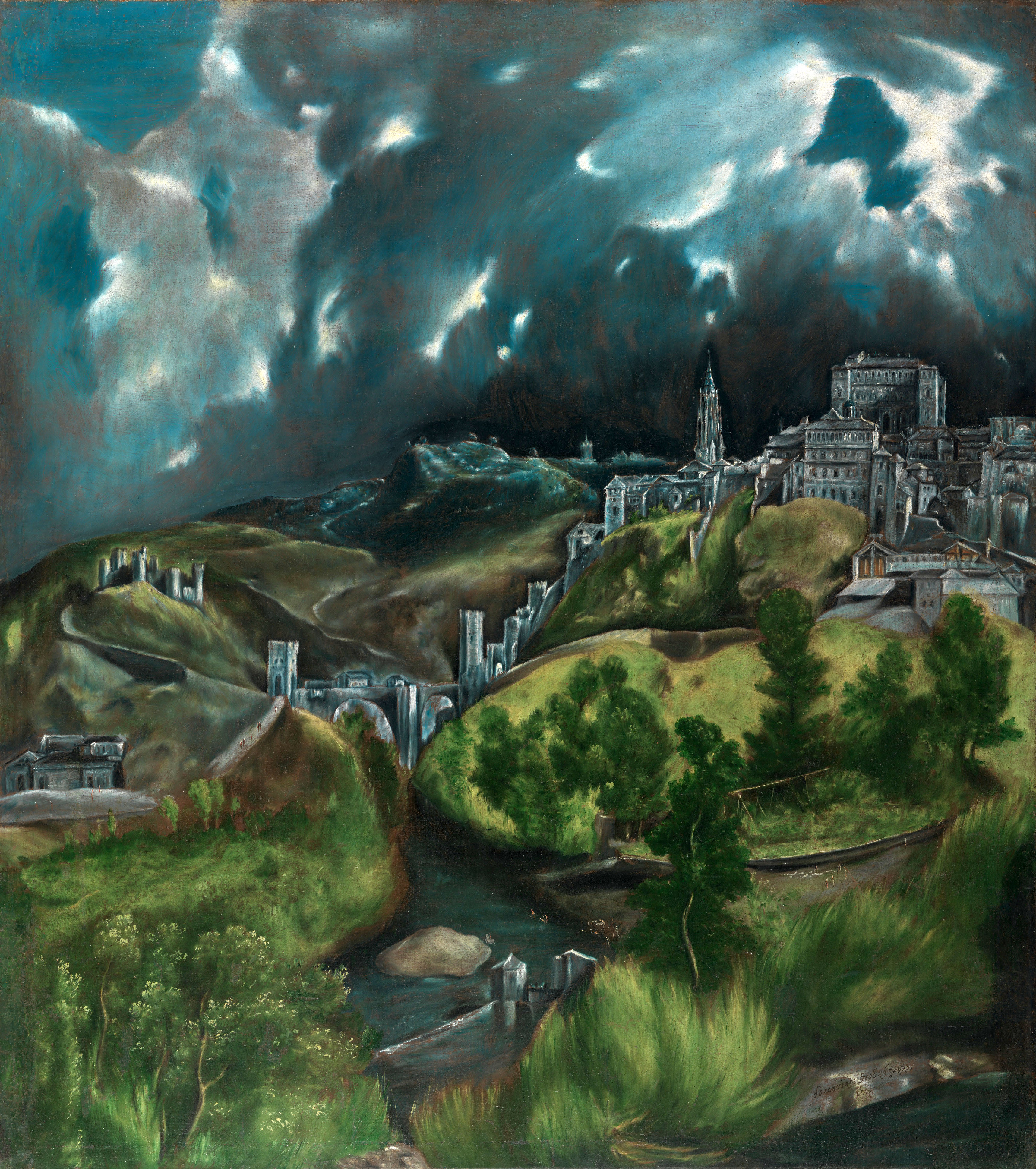
His religious portraits, such as “The Opening of the Fifth Seal” (1608-1614), are characterized by intense spiritual intensity and dramatic expression. This particular work displays the souls of martyrs being called to heaven, and it exemplifies his unique interpretation of religious themes.

El Greco’s style was often met with mixed reception during his lifetime, as it deviated from the traditional canons of the time. However, his innovative techniques and visionary approach to painting laid the foundation for later artistic movements such as Expressionism and Cubism. Today, he is recognized as one of the most important figures in Western art history and a significant influence on subsequent generations of artists.
 Meticulous Meanderings
You must be logged in to post a comment.