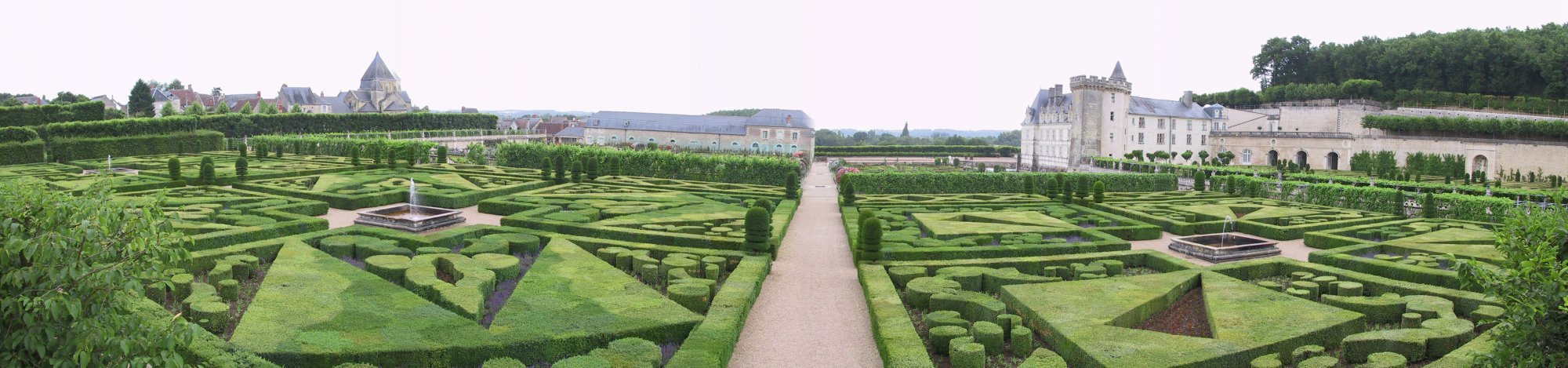
The French style of garden design, often referred to as “French formal gardens,” is known for its symmetrical and geometric layout, intricate patterns, and meticulous attention to detail. Here are some key characteristics:
- Formal Layout: French gardens typically feature a formal and structured layout with precise geometric patterns. They often include elements like axial symmetry, straight lines, and precise angles.
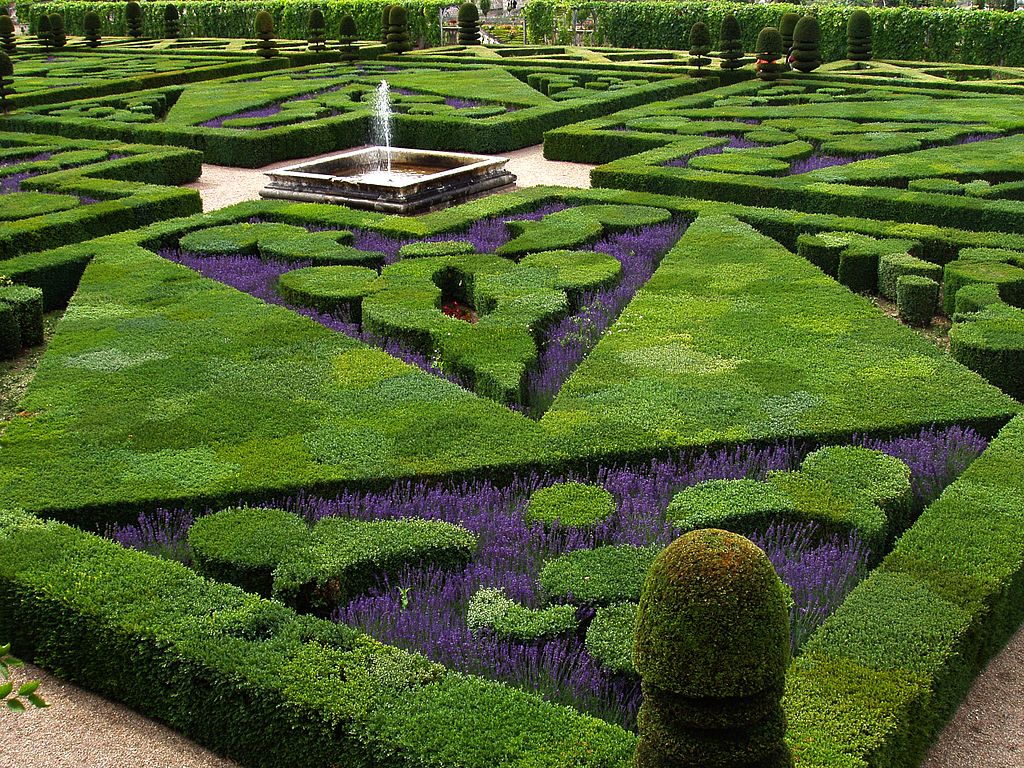
- Terraces and Parterres: Terraces are a common feature in French gardens, providing elevated viewpoints and creating a sense of grandeur. Parterres, or intricate patterns of flower beds, are often used to decorate these terraces.
- Ornaments and Statuary: French gardens are adorned with various ornaments and sculptures, including statues, urns, fountains, and vases. These elements add a sense of elegance and grandeur to the design.
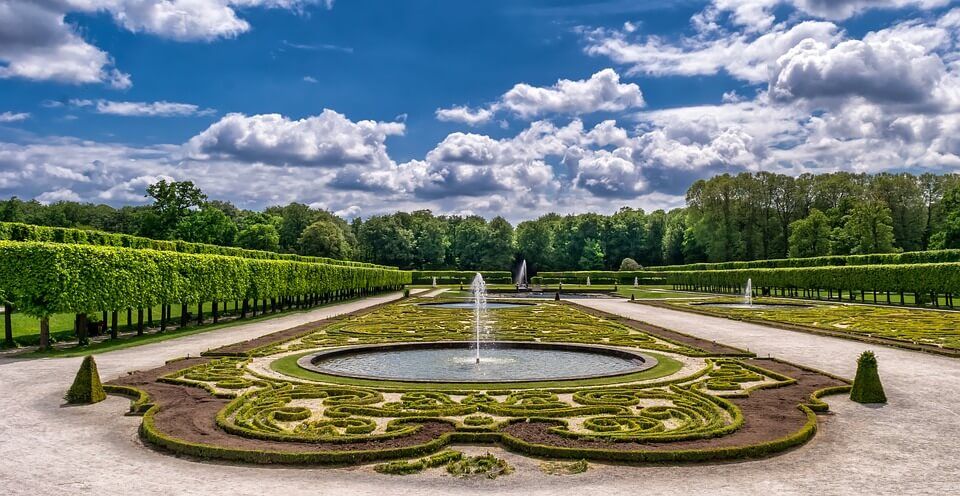
- Water Features: Water plays a prominent role in French garden design. Grand fountains, reflecting pools, canals, and cascades are often incorporated, creating a tranquil and visually appealing atmosphere.
- Axis and Perspectives: French gardens are designed with careful consideration of axis and perspectives. The design often revolves around a central axis, which provides a clear line of sight and creates a sense of depth and visual harmony.
- Symmetry and Balance: The French style emphasizes symmetry and balance in its design. The layout of the garden, as well as the placement of hedges, flower beds, and other elements, are carefully arranged to achieve a sense of harmony.
Some famous French garden designers include:
André Le Nôtre (1613-1700): Le Nôtre is considered the master of French garden design and is renowned for his work at the Palace of Versailles. He designed the famous geometrically precise gardens of Versailles, including the Hall of Mirrors and the Grand Canal.
Jean-Baptiste-Alexandre Le Blond (1679-1719): Le Blond was a prominent French landscape architect known for his work in designing the gardens of Blenheim Palace in England and the gardens of Peterhof Palace in Russia.
Achille Duchêne (1866-1947): Duchêne was a leading landscape architect of the early 20th century. He designed numerous French gardens, including those at the Château de Chenonceau and the gardens of the Trianon Palace in Versailles.
André Le Nôtre the Younger (1643-1715): The nephew and pupil of the famous André Le Nôtre, André Le Nôtre the Younger continued his uncle’s work and completed many garden designs, including those at the Château de Fontainebleau and the Tuileries Gardens in Paris.
These are just a few notable French garden designers who have made significant contributions to the French style of garden design.
 Meticulous Meanderings
You must be logged in to post a comment.