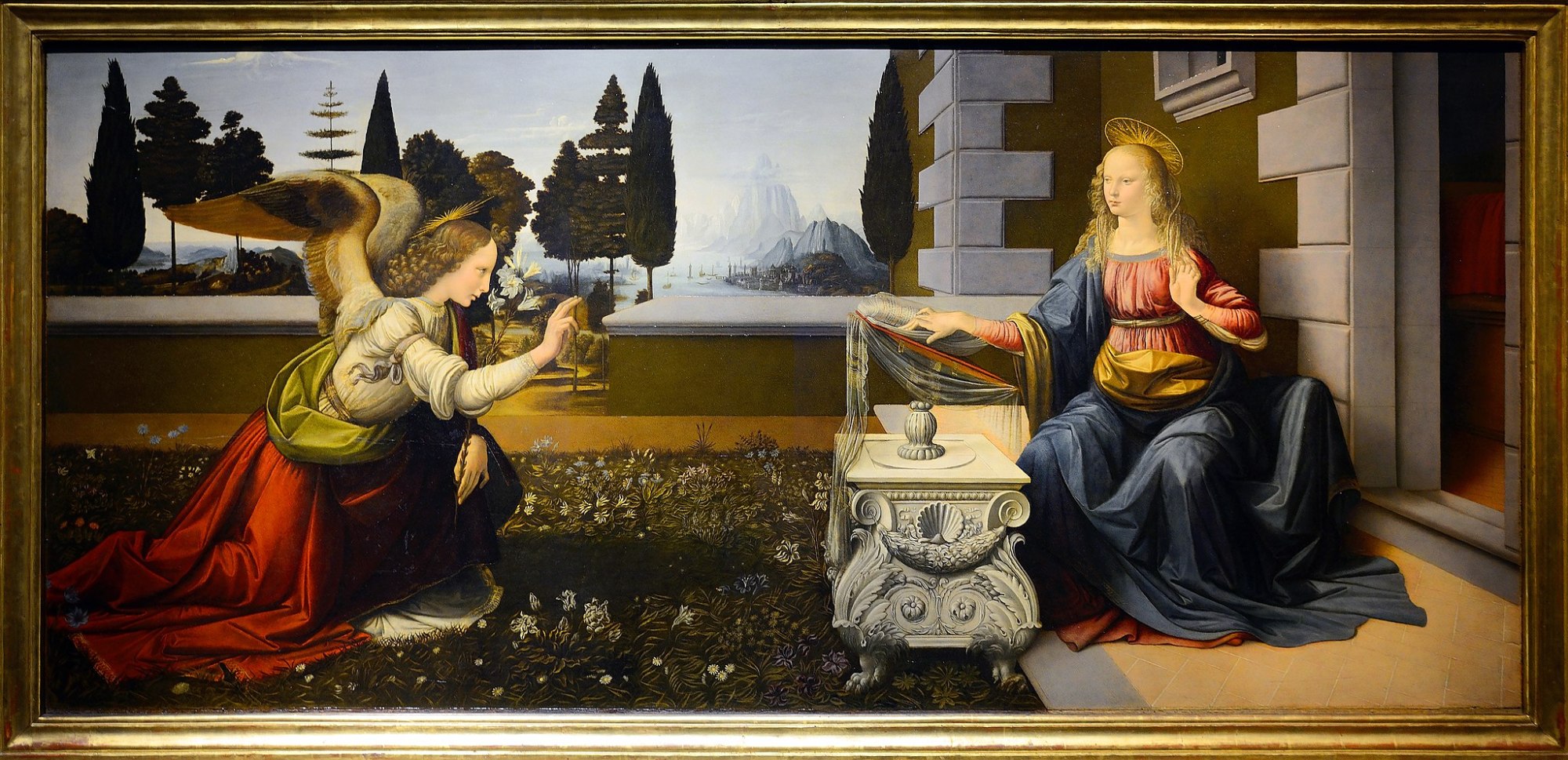
Leonardo da Vinci (1452-1519) was a renowned Italian polymath of the Renaissance era, excelling in various fields such as painting, science, engineering, anatomy, and more. His life and works continue to be celebrated for their profound influence on art and human knowledge. Here is an overview of his life and some of his most famous works:
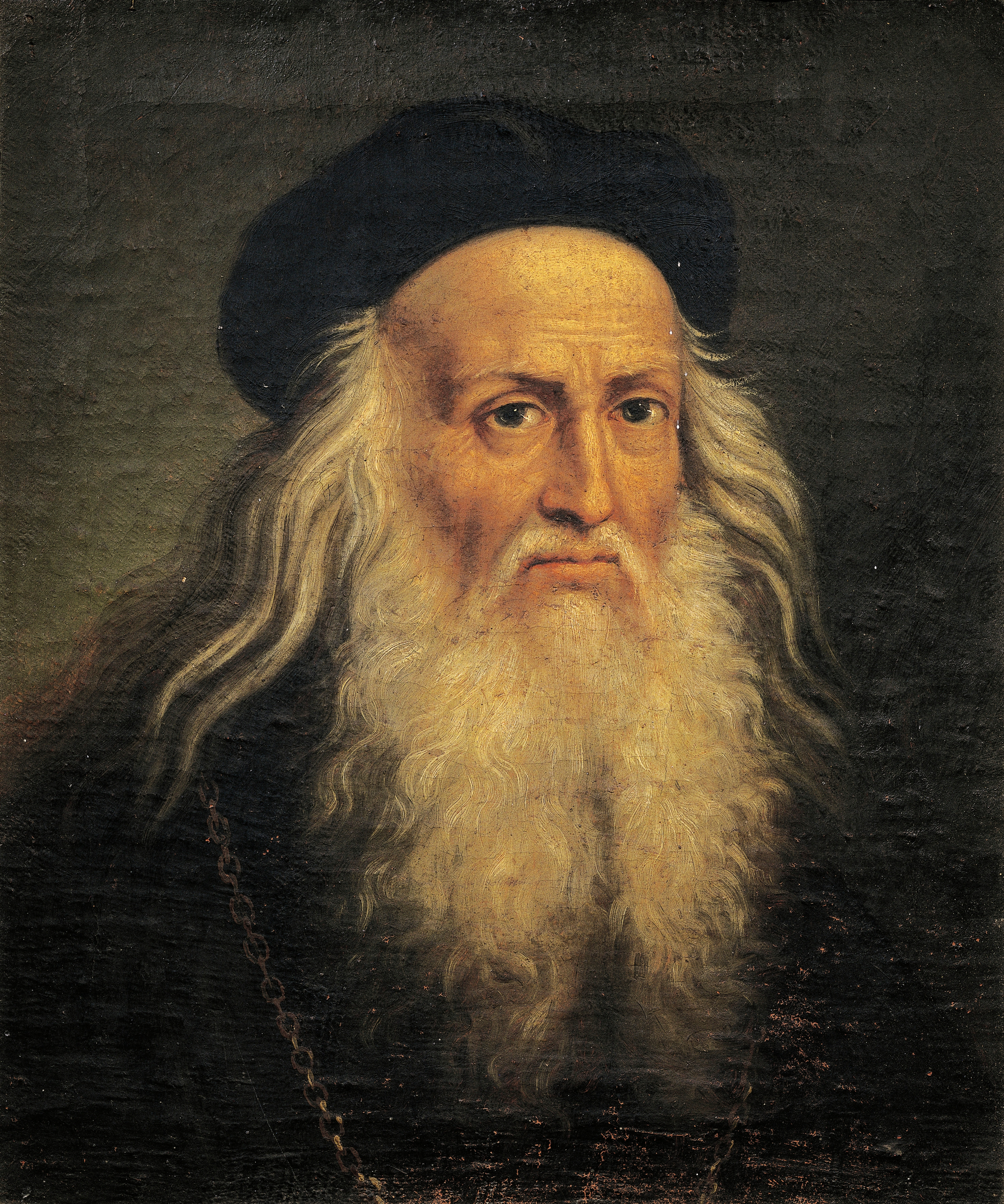
Early Life:
Leonardo was born on April 15, 1452, in Vinci, Italy, as the illegitimate son of Ser Piero da Vinci, a notary, and Caterina, a peasant woman. He spent his early years in Vinci and then moved to Florence.
Artistic Achievements:
Mona Lisa (c. 1503-1506): Perhaps his most famous work, the Mona Lisa is an iconic portrait known for its enigmatic smile. It’s displayed at the Louvre Museum in Paris.
The Last Supper (c. 1495-1498): This mural painting depicting the moment Jesus announces that one of his disciples will betray him is located in Milan’s Convent of Santa Maria delle Grazie.

Scientific and Engineering Contributions:
Vitruvian Man (c. 1490): Leonardo’s famous drawing of a man inscribed in both a circle and a square, illustrating his ideas about human proportions and geometry.
Notebooks: Leonardo’s notebooks are filled with sketches and notes on various subjects, including anatomy, engineering, and his inventions. They provide insights into his inquisitive mind and innovative ideas.


Inventions:
Leonardo designed a wide range of inventions and machines, including flying machines, bridges, military weaponry, and hydraulic systems. Many of his designs were ahead of their time and laid the foundation for future innovations.
Anatomy Studies:
Leonardo conducted extensive anatomical studies, dissecting human bodies to gain a better understanding of human anatomy. His detailed anatomical drawings are considered remarkable contributions to the field of medical science.
Legacy:
Leonardo’s work had a profound and lasting impact on art, science, and engineering. His artistic techniques, such as sfumato (smoky effect) and chiaroscuro (light and shadow), revolutionized painting.
His scientific observations and inventions contributed to advancements in fields like engineering, anatomy, and physics, although many of his ideas were not widely recognized or applied in his lifetime.
Leonardo’s diverse talents and insatiable curiosity exemplified the spirit of the Renaissance, a period of great cultural and intellectual flourishing in Europe.
Leonardo da Vinci’s life and works continue to be celebrated for their innovation, creativity, and the timeless beauty of his art. His contributions to multiple disciplines make him one of history’s most iconic and enduring figures.
 Meticulous Meanderings