
Meissen porcelain, also known as Meissenware, is a type of European porcelain that is highly regarded for its quality, craftsmanship, and historical significance. The history of Meissen porcelain dates back to the early 18th century and is closely associated with the town of Meissen in Saxony, Germany.
Early Origins:
The story of Meissen porcelain begins with the efforts of Johann Friedrich Böttger, a German alchemist and inventor. In the early 18th century, Böttger was tasked by Augustus the Strong, Elector of Saxony and King of Poland, with discovering the secret of producing “white gold” – a term used at the time to refer to porcelain. After years of research and experimentation, Böttger and his team successfully produced the first European porcelain at the Albrechtsburg Castle in Meissen in 1708. The initial production was focused on creating porcelain figurines and small objects.
Royal Patronage:
Augustus the Strong recognized the value of this discovery and established the Meissen Manufactory in 1710, making it the first porcelain manufacturer in Europe. The manufactory was granted exclusive rights to produce porcelain in Saxony. The production initially focused on imitating the styles of Chinese and Japanese porcelain, which were highly sought after in Europe at the time.
Growth and Innovation:
Under the leadership of men like Johann Joachim Kaendler, Meissen porcelain began to flourish. Kaendler was a sculptor who introduced a wide range of imaginative and intricate figurines, many of which became iconic representations of Meissen’s craftsmanship. The manufactory continued to innovate in terms of glazing, painting techniques, and forms, eventually developing a distinctive Meissen style.

Iconic Designs:
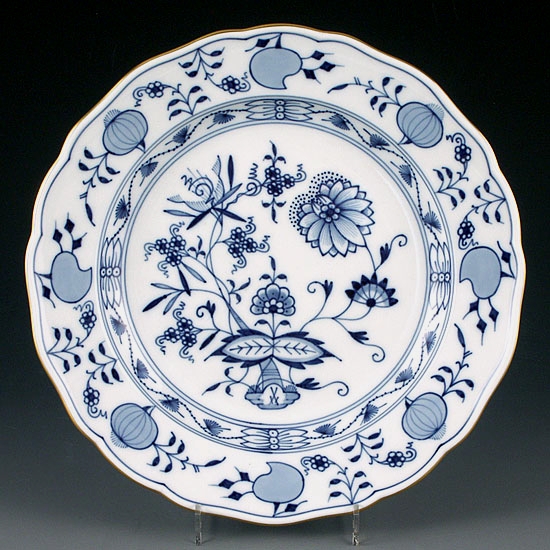
One of the most famous and enduring designs associated with Meissen is the “Blue Onion” pattern, created by Höroldt around 1739. This pattern combined Eastern and Western design elements and remains popular to this day. Meissen also became known for its detailed and realistic figurines, capturing scenes from everyday life, historical events, and mythology.
Competition and Influence:
As the popularity of Meissen porcelain grew, other European countries established their own porcelain manufactories, often attempting to imitate Meissen’s success. Despite this competition, Meissen maintained a reputation for exceptional quality and artistic achievement.

Challenges and Revival:
The 19th century brought various challenges, including economic difficulties and shifts in artistic tastes. However, Meissen managed to adapt and survive, producing pieces in various styles, from traditional to more contemporary designs.
Modern Era:
Meissen porcelain remains a symbol of exquisite craftsmanship and enduring beauty. The manufactory has continued to evolve, introducing new designs, collaborating with contemporary artists, and embracing modern technology while still preserving its traditional techniques.
Today, Meissen porcelain is highly sought after by collectors, museums, and enthusiasts around the world. It stands as a testament to centuries of artistic innovation and the enduring legacy of European porcelain craftsmanship.
 Meticulous Meanderings
You must be logged in to post a comment.