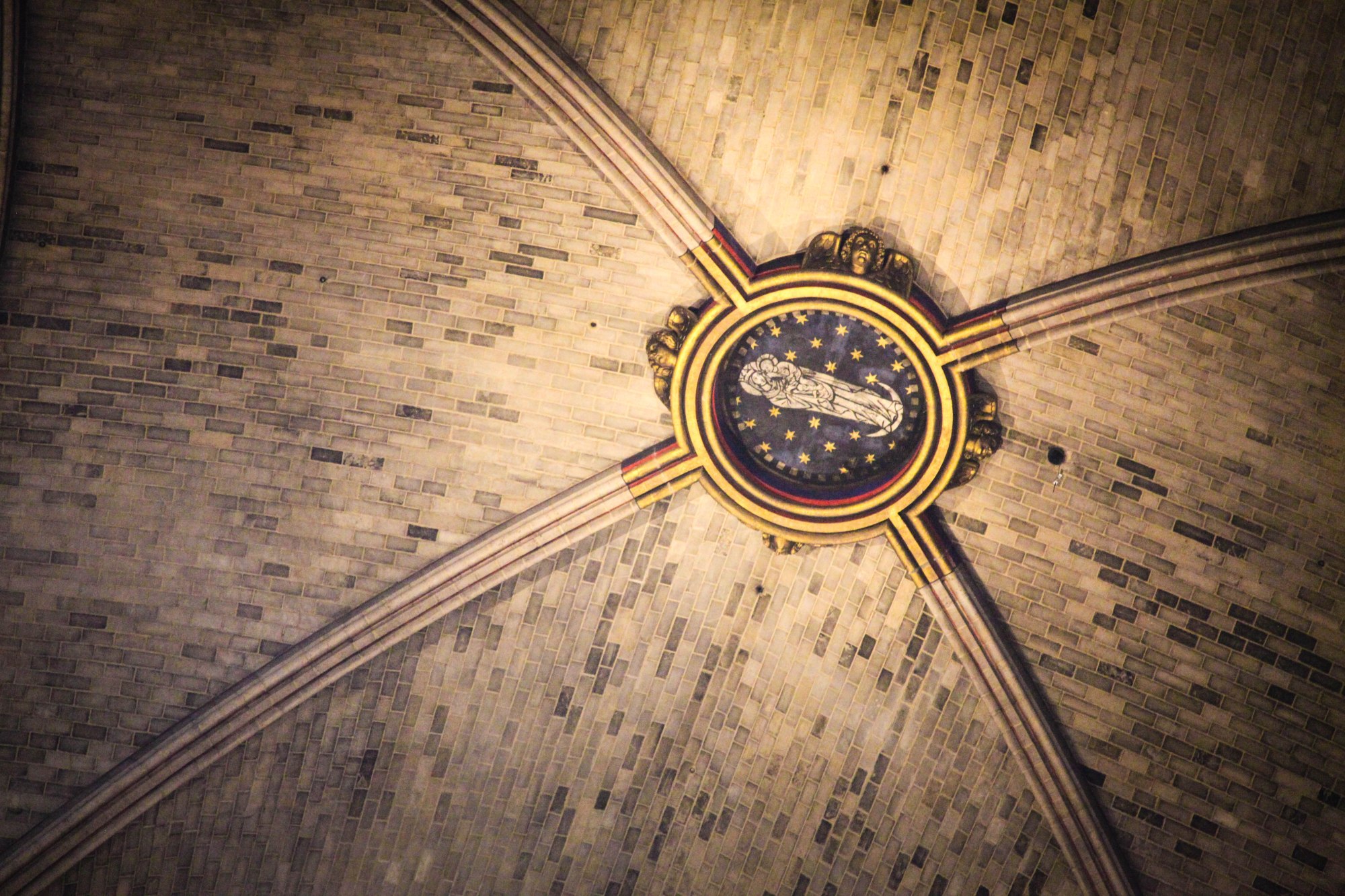
Ribbed vaults are architectural elements commonly found in Gothic architecture, particularly in the construction of cathedrals, churches, and other large religious buildings. They are characterized by a network of intersecting arched ribs that create a structural framework supporting the weight of the roof and distributing it to the supporting columns or walls.
The ribs in a ribbed vault typically consist of curved or pointed arches that intersect and form a series of diagonal lines. These ribs are typically made of stone or brick and are designed to bear the load of the vaulted ceiling. The ribs are often raised above the level of the vault surface, creating a visually striking three-dimensional effect.
The main purpose of ribbed vaults is to allow for the construction of larger and higher ceilings while reducing the weight and outward thrust on the supporting walls. By distributing the weight along the ribs, the load-bearing capacity of the structure is increased, enabling the creation of expansive interior spaces and soaring heights.
Ribbed vaults also serve an aesthetic purpose, adding elegance, rhythm, and visual interest to the architectural design. The intersecting ribs create a play of light and shadow, emphasizing the verticality of the space and enhancing the overall sense of grandeur.
There are several types of ribbed vaults, including quadripartite (four-part) and sexpartite (six-part) vaults. Quadripartite vaults have two crossing diagonal ribs that divide the ceiling into four compartments, while sexpartite vaults have three crossing ribs that divide the ceiling into six compartments. These compartments, or bays, can be further adorned with intricate tracery, bosses, or other decorative elements.
Overall, ribbed vaults are an important architectural feature of Gothic architecture, known for their structural innovation, aesthetic appeal, and the creation of awe-inspiring spaces that define the grandeur of many medieval cathedrals and churches.


 Meticulous Meanderings