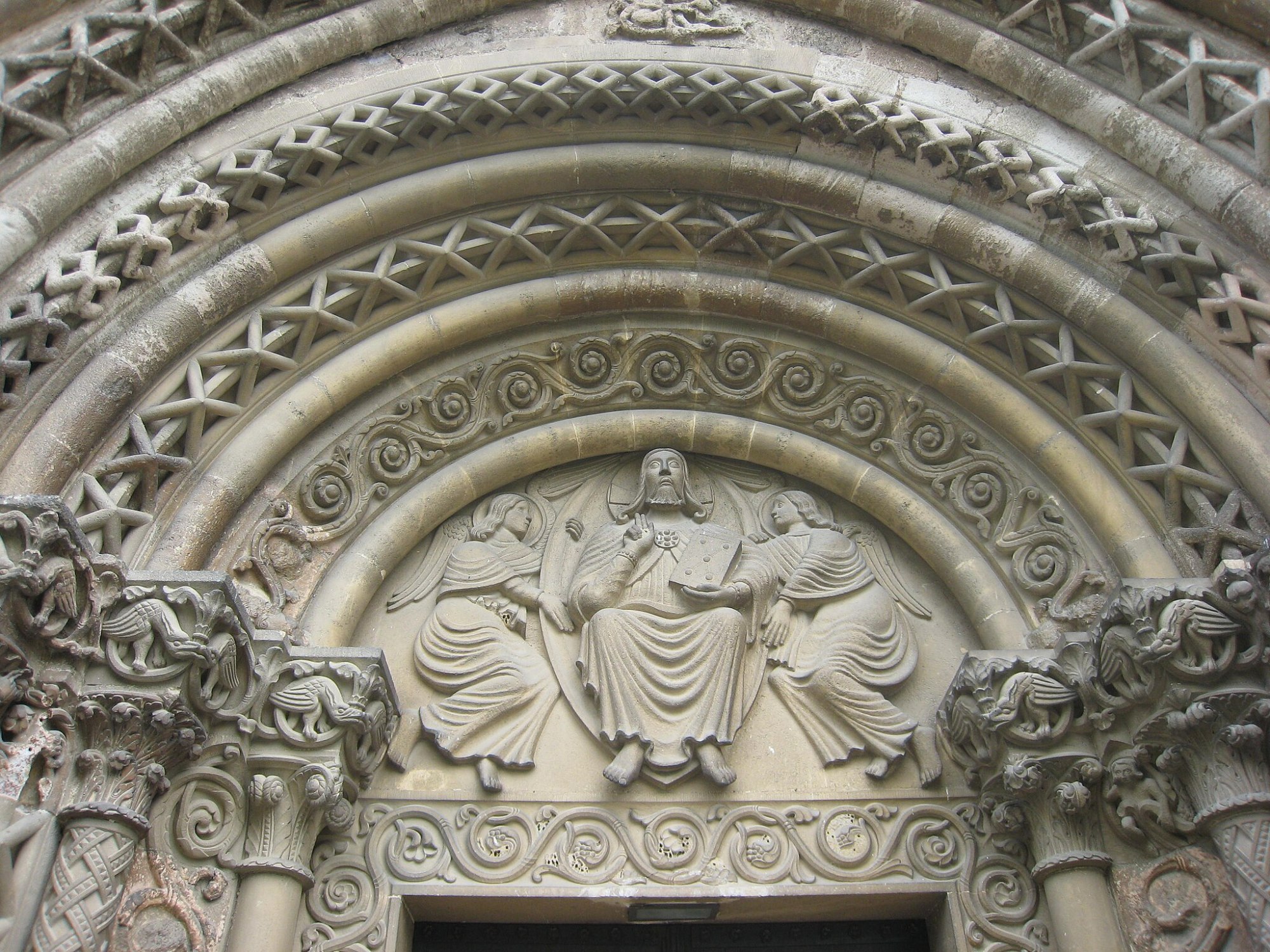
In architecture, a tympanum refers to a specific element commonly found in classical and Gothic buildings, particularly in the context of church architecture. The term “tympanum” originally comes from the Greek word “tympanon,” which means “drum” or “frame of a drum.” It refers to the semi-circular or triangular space enclosed by the arch of a doorway or a window and the lintel or architrave above it.
The tympanum is typically a decorative feature and serves as a backdrop for sculptural or relief compositions. It provides an opportunity for architectural ornamentation and storytelling through intricate carvings, sculptures, or bas-reliefs. The subject matter depicted in the tympanum varies, but religious themes are often prominent, such as scenes from the Bible, depictions of saints, or symbolic representations of heavenly realms.
In classical architecture, tympana were frequently employed in ancient Greek and Roman temples. They were often adorned with mythological scenes, battle narratives, or depictions of deities. The tympana of these structures were usually triangular in shape and positioned above the pediment, which is the triangular gable at the front of the building.
In Gothic architecture, particularly in ecclesiastical buildings like cathedrals, tympana became a significant part of the sculptural program. They were commonly found above doorways, particularly those of the main entrance or the portals. Gothic tympana were typically semi-circular in shape and incorporated elaborate sculptural ensembles, often showcasing biblical narratives, scenes from the Last Judgment, or representations of the Heavenly Jerusalem.
Tympana serve both aesthetic and symbolic functions in architecture. They enhance the visual appeal of the building facade and provide a focal point for artistic expression. Additionally, they convey important messages and narratives, reinforcing the religious or cultural significance of the structure. Tympana often showcase the craftsmanship and skill of the sculptors and artists who created them, leaving a lasting impression on the viewers and adding to the overall grandeur of the architectural composition.
 Meticulous Meanderings