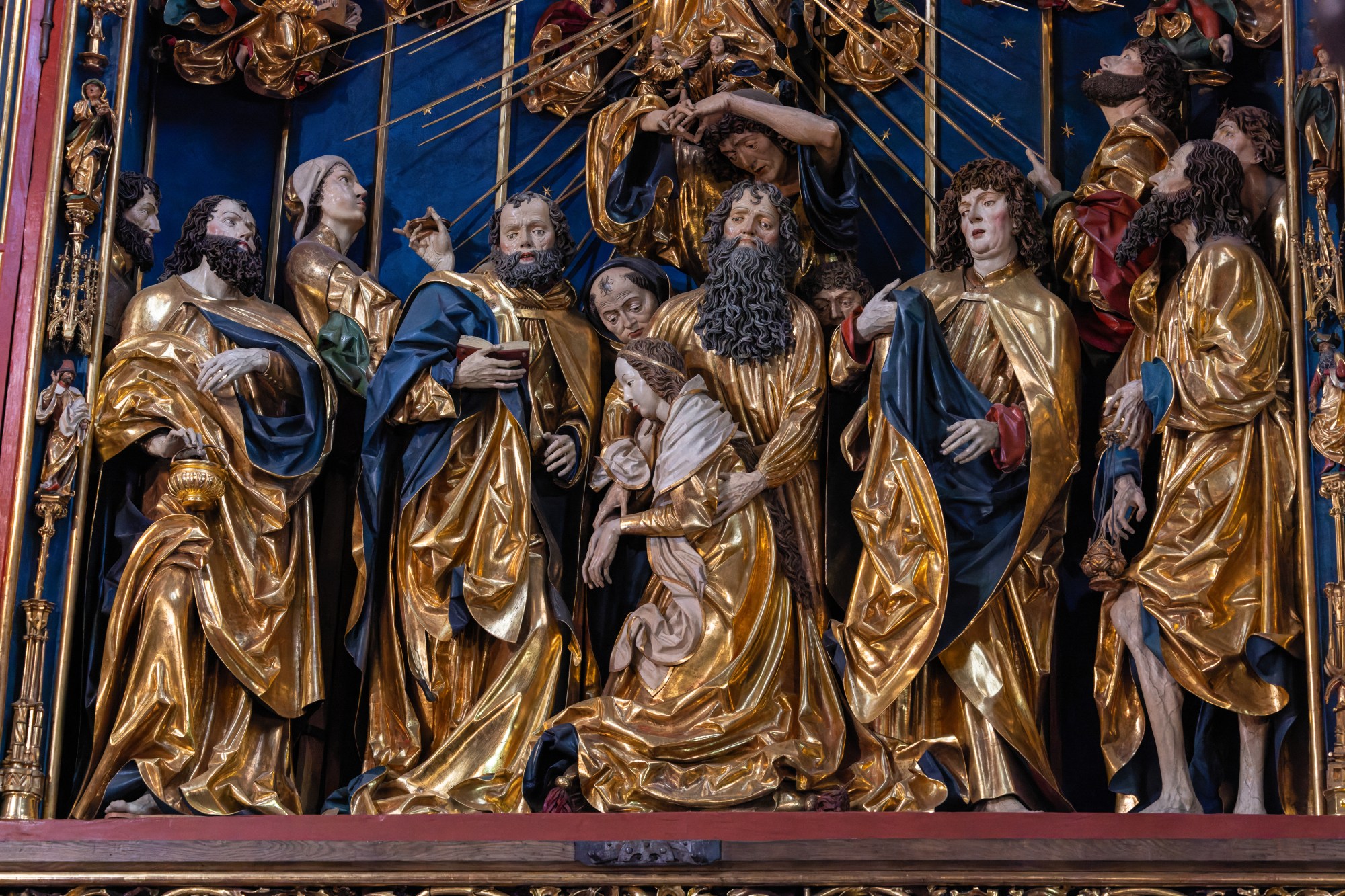
A retable is a decorative panel or structure placed behind the altar in a church or chapel. It serves as a focal point for religious art and imagery, enhancing the overall aesthetic and spiritual experience of the worship space. The term “retable” comes from the Latin word “retrotabulum,” meaning “behind the table,” referring to its position behind the altar.
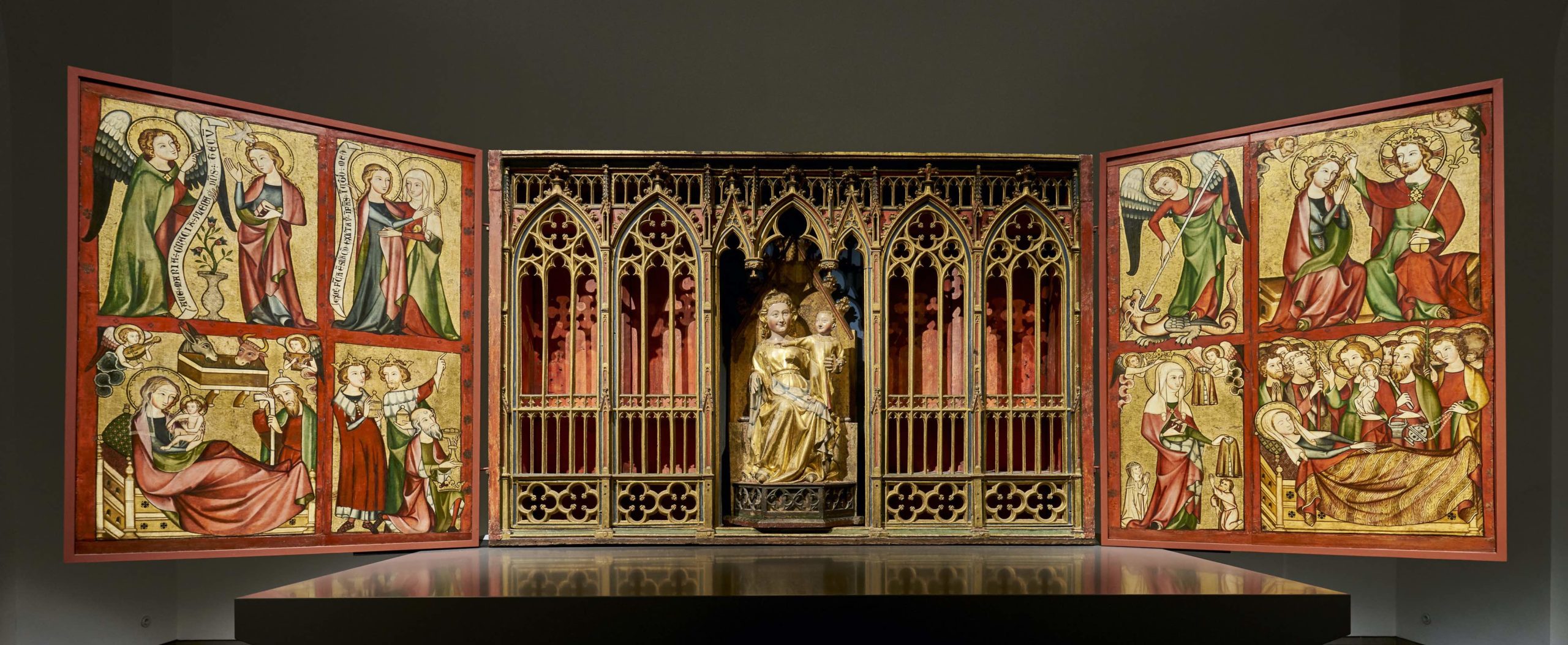
Retables have a long history dating back to the Middle Ages, when they became increasingly prominent in Christian worship spaces. Originally, they were often made of wood and consisted of intricately carved scenes depicting religious narratives, such as the life of Christ, the Virgin Mary, or various saints. These scenes were typically arranged in multiple tiers, creating a visually rich and captivating composition.
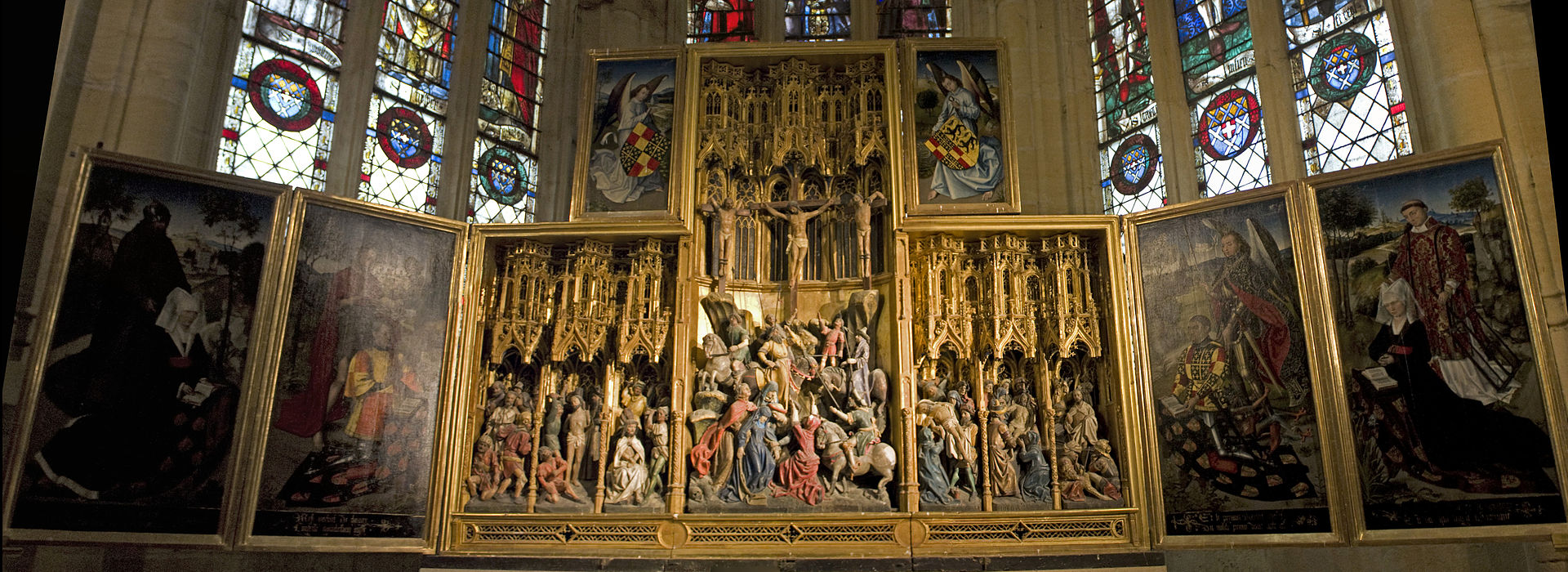
Over time, retables evolved in style and materials. During the Renaissance, they began to incorporate paintings and sculptures alongside the carved elements, displaying a combination of different artistic techniques. They were crafted by skilled artists and craftsmen who employed various mediums, including wood, stone, metal, and paint, to create elaborate and highly detailed works of religious art.
Retables served several purposes within the church. Firstly, they functioned as a visual aid for the illiterate population, effectively conveying biblical stories and teachings through images. They also served as a backdrop for the celebration of the Eucharist, enhancing the sacredness and solemnity of the liturgical rituals. Additionally, retables often contained niches or compartments where relics of saints could be displayed, further emphasizing the connection between the heavenly realm and the earthly worship space.
The popularity of retables reached its peak during the Gothic and Renaissance periods. However, with the advent of Protestantism and the subsequent Reformation in the 16th century, many churches underwent significant changes, and the veneration of religious images and relics was challenged. As a result, numerous retables were destroyed or removed from churches during this period.
Despite these challenges, many retables have survived to the present day, and they continue to be treasured as important artistic and religious artifacts. They offer valuable insights into the history, beliefs, and artistic traditions of the time in which they were created. Retables can still be found in churches, museums, and art galleries worldwide, allowing people to appreciate their beauty and significance in the context of both religious worship and art history.

 Meticulous Meanderings
You must be logged in to post a comment.