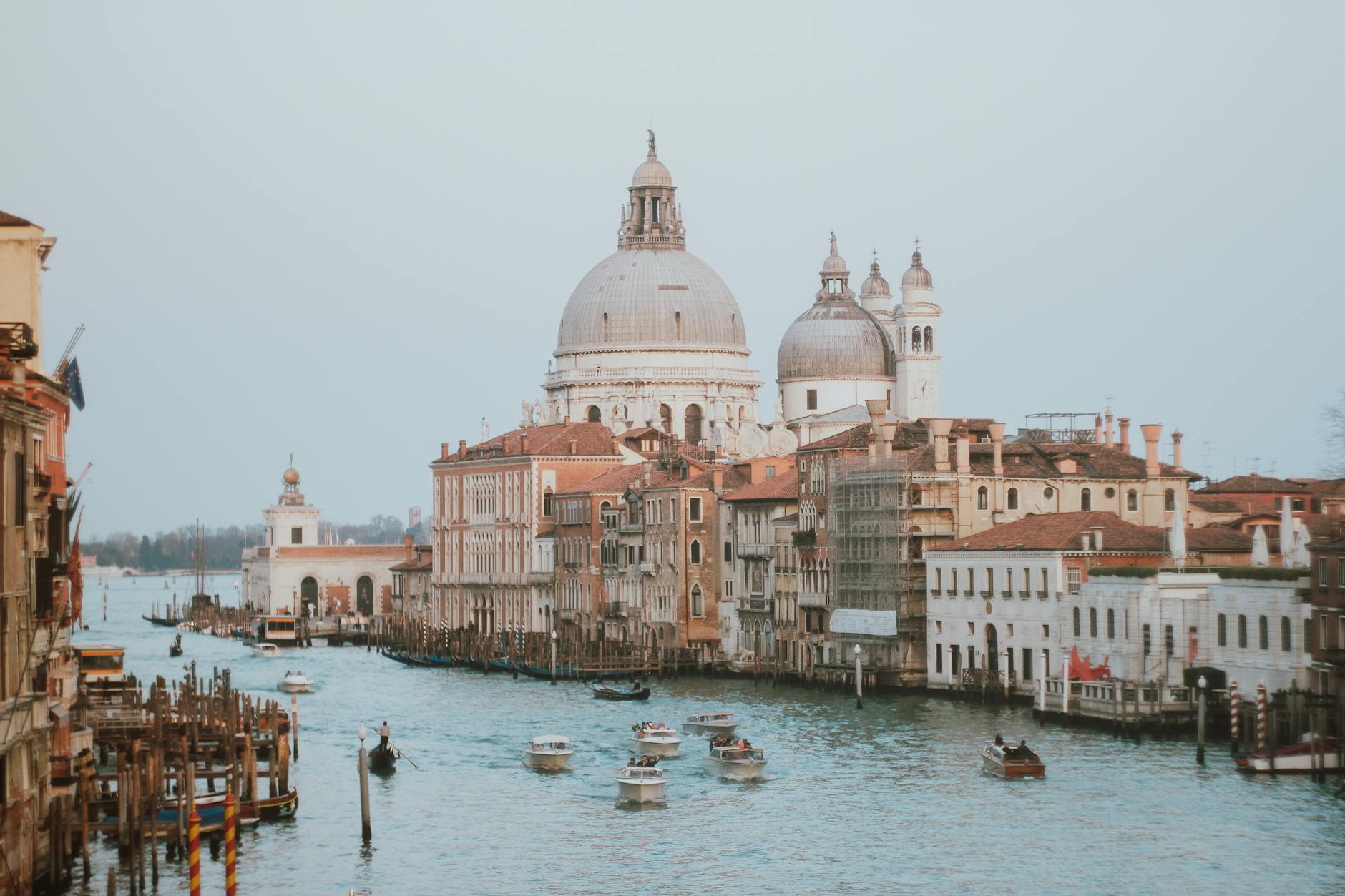
Venice, Italy, is a city unlike any other—a shimmering labyrinth of canals, bridges, and narrow alleyways where every turn seems to reveal a postcard-perfect scene. Built on a network of over 100 small islands in the Venetian Lagoon, it’s a place where boats replace cars and gondolas glide silently past centuries-old palaces. The city’s culture is steeped in its history as a powerful maritime republic, reflected in grand architecture like St. Mark’s Basilica, the Doge’s Palace, and the ornate facades along the Grand Canal. Art and craftsmanship thrive here, from delicate Murano glass to the intricate masks of the Venetian Carnival. Food in Venice reflects its position between land and sea, with specialties such as sarde in saor (sweet-and-sour sardines), creamy risotto al nero di seppia (squid ink risotto), and cicchetti—small tapas-style bites served in cozy bàcari wine bars, perfect with a glass of local prosecco. Life in Venice moves to the rhythm of the water, blending elegance, history, and a touch of mystery in a way that makes even a short visit feel like stepping into another world.

The Six Districts of Venice
Venice is divided into six main districts, known as sestieri, each with unique characteristics, history, and charm. San Marco San Marco is perhaps the most famous and bustling district, home to iconic landmarks such as St. Mark’s Basilica, the Doge’s Palace, and the Piazza San Marco (St. Mark’s Square). This area attracts tourists from around…
Venice is divided into six historic districts, or sestieri, each with its own personality, history, and charm. San Marco is the city’s glamorous heart, home to St. Mark’s Square, the basilica, the Doge’s Palace, and high-end shops—always lively, often crowded, and filled with architectural splendor. San Polo, just across the Grand Canal via the Rialto Bridge, feels more intimate, with narrow streets, artisan shops, and the bustling Rialto Market offering fresh produce and seafood. Dorsoduro is Venice’s artistic soul, housing the Peggy Guggenheim Collection, the Gallerie dell’Accademia, and a relaxed vibe along the Zattere promenade, perfect for sunset strolls. Cannaregio is more residential and less touristy, known for its charming canals, the historic Jewish Ghetto, and a growing number of local eateries and wine bars. Castello, the largest sestiere, stretches from the edge of San Marco into quieter, authentic neighborhoods with leafy parks, shipyards, and the Arsenale, a reminder of Venice’s naval past. Santa Croce is the main entry point for many visitors arriving by train or bus, but beyond the transport hubs it offers peaceful streets, small squares, and a glimpse of everyday Venetian life. Together, these neighborhoods form a patchwork of atmospheres—some opulent and buzzing, others calm and lived-in—that reward exploration far beyond the main tourist trails.
Sights in Venice

Something went wrong. Please refresh the page and/or try again.
 Meticulous Meanderings