
Hello, I’m Veronica
The sky is not completely dark at night. Were the sky absolutely dark, one would not be able to see the silhouette of an object against the sky.


-
Teatro Arriaga

The Teatro Arriaga, named after the renowned Basque composer Juan Crisóstomo de Arriaga, was built in the late 19th century and showcases a stunning neo-baroque design. Its façade is adorned with intricate details, including ornate carvings and statues that add to its grandeur. As you approach the theater, you’ll be captivated by its imposing presence and rich historical significance.
Step inside the Teatro Arriaga, and you’ll find yourself transported to a world of elegance and opulence. The interior is equally impressive, featuring a lavish decor with ornate chandeliers, plush red velvet seats, and beautifully adorned ceilings. The attention to detail is remarkable, and the atmosphere exudes a sense of grandeur and sophistication.
The theater is renowned for its diverse and high-quality performing arts programs. It hosts a wide range of events, including operas, ballets, classical concerts, theater productions, and even contemporary performances. The Teatro Arriaga is known for attracting world-class artists and performers from around the globe, ensuring a memorable and enriching cultural experience.
Apart from the performances, the Teatro Arriaga also offers guided tours that allow visitors to explore the theater’s rich history and architecture. These tours provide fascinating insights into the building’s construction, its significance to the local community, and the artists who have graced its stage over the years.
Beyond its cultural significance, the Teatro Arriaga enjoys a fantastic location. Situated near the picturesque Casco Viejo (Old Town) of Bilbao, visitors can easily combine their theater visit with a stroll through the charming narrow streets, where they can discover local shops, cafes, and traditional Basque pintxo bars.
Photos

Nearby Sights
Casco Viejo
As you wander through the narrow, winding streets of Casco Viejo (Old Town), you’ll find yourself transported back in time. The neighborhood dates back to…
Bilbao Archaeological Museum
The Bilbao Archaeological Museum, located in Bilbao, Spain, is a destination for history enthusiasts and curious travelers alike. Situated in the heart of the city,…
Other Sights
Bilbao
Bilbao, located in the northern region of Spain called the Basque Country, is a vibrant city that offers a unique blend of history, culture, and modernity. One of the city’s most iconic landmarks is the Guggenheim Museum Bilbao, a masterpiece of contemporary architecture designed by Frank Gehry. Its titanium-clad exterior is a sight to behold,…
Thanks for visiting! I hope you have a great trip.
-
San Antón Church

Located in the heart of Bilbao’s historic Old Town, the San Antón Church stands as a remarkable example of Gothic and Renaissance architecture. It dates back to the 15th century, with subsequent renovations and additions that have contributed to its unique character.
As you approach the church, you’ll notice its majestic facade adorned with intricate stone carvings and decorative elements. The entrance is framed by an elegant arch, welcoming you into a world of religious art and serenity. The exterior of the church exudes a sense of timelessness, with its aged stone walls and tall bell tower that stands proudly against the Bilbao skyline.
The interior of San Antón Church boasts a blend of Gothic and Renaissance styles, featuring graceful arches, soaring columns, and delicate ornamentation. The atmosphere is peaceful and conducive to contemplation, allowing visitors to appreciate the spiritual ambiance of the place.
One of the highlights of the church is its stunning stained glass windows. These vibrant artworks illuminate the interior with a kaleidoscope of colors, casting mesmerizing patterns of light and creating a magical atmosphere. They depict biblical scenes and saints, adding to the overall beauty and spirituality of the space.
The church also houses various religious artifacts and sculptures, including a magnificent altarpiece that serves as a focal point. It is intricately crafted and showcases the skilled workmanship of the era. As you explore the church further, you’ll come across several chapels dedicated to different saints, each with its own unique artistic elements.
After visiting the church, take a stroll through the surrounding narrow streets of Bilbao’s Old Town. You’ll find charming shops, traditional Basque restaurants, and lively squares that add to the overall charm of the area.
Photos


Nearby Sights
Catedral Santiago de Bilbao
The cathedral is dedicated to St. James the Apostle and holds great significance within the city’s cultural and religious fabric. It stands proudly in the…
Other Sights
Bilbao
Bilbao, located in the northern region of Spain called the Basque Country, is a vibrant city that offers a unique blend of history, culture, and modernity. One of the city’s most iconic landmarks is the Guggenheim Museum Bilbao, a masterpiece of contemporary architecture designed by Frank Gehry. Its titanium-clad exterior is a sight to behold,…
Thanks for visiting! I hope you have a great trip.
-
Casco Viejo
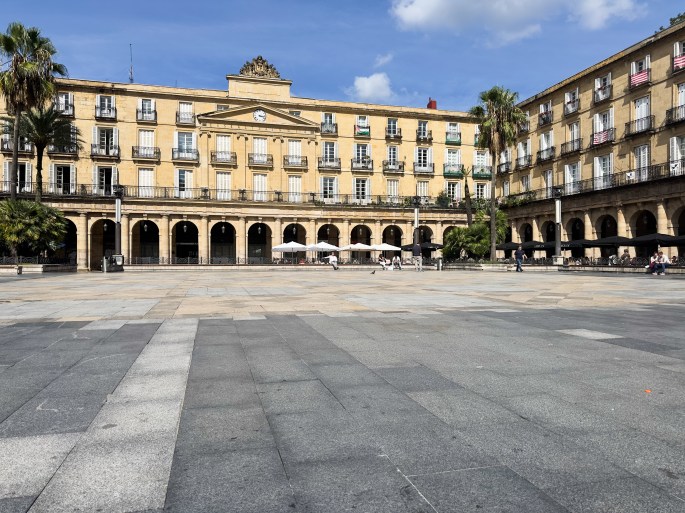
As you wander through the narrow, winding streets of Casco Viejo (Old Town), you’ll find yourself transported back in time. The neighborhood dates back to the 14th century and is characterized by its well-preserved medieval architecture. The buildings showcase a unique blend of architectural styles, from Gothic and Renaissance to Baroque and Modernist influences, creating a captivating atmosphere.
One of the main attractions in Casco Viejo is the Santiago Cathedral. This beautiful Gothic cathedral dominates the skyline and serves as the spiritual heart of the neighborhood. Inside, you can marvel at its impressive stained glass windows and intricate stone carvings.
The Plaza Nueva, a lively square at the heart of Casco Viejo, is another focal point of the neighborhood. Surrounded by arcaded buildings, it is a gathering place for locals and visitors alike. Here, you can relax at one of the many outdoor cafes, sample delicious pintxos (Basque tapas) at the bustling bars, or simply soak in the vibrant atmosphere.
Casco Viejo is also home to a wide array of shops, boutiques, and markets, where you can find everything from traditional Basque handicrafts to modern fashion. The Mercado de la Ribera, one of Europe’s largest covered markets, is a sensory delight with its colorful displays of fresh produce, meat, and fish.
For art enthusiasts, the Bilbao Fine Arts Museum is a must-visit. Located on the edge of Casco Viejo, it houses an impressive collection of Spanish and European art, ranging from medieval works to contemporary masterpieces.
As you explore the streets of Casco Viejo, you’ll come across numerous squares, hidden courtyards, and charming corners waiting to be discovered. It’s a neighborhood that invites you to get lost and stumble upon hidden gems at every turn.
In addition to its cultural and historical attractions, Casco Viejo is known for its lively nightlife. As the sun sets, the streets come alive with bars, clubs, and live music venues, offering a vibrant and unforgettable experience.
Details
Photos


Nearby Sights
Iglesia de San Nicolás de Bari
Iglesia de San Nicolás de Bari (San Nikolas Eliza) is a historic church located in the city of Bilbao, Spain. It holds great significance as…
Bilbao Archaeological Museum
The Bilbao Archaeological Museum, located in Bilbao, Spain, is a destination for history enthusiasts and curious travelers alike. Situated in the heart of the city,…
Catedral Santiago de Bilbao
The cathedral is dedicated to St. James the Apostle and holds great significance within the city’s cultural and religious fabric. It stands proudly in the…
Bilbao
Bilbao, located in the northern region of Spain called the Basque Country, is a vibrant city that offers a unique blend of history, culture, and modernity. One of the city’s most iconic landmarks is the Guggenheim Museum Bilbao, a masterpiece of contemporary architecture designed by Frank Gehry. Its titanium-clad exterior is a sight to behold,…
Thanks for visiting! I hope you have a great trip.
-
Catedral Santiago de Bilbao

The cathedral is dedicated to St. James the Apostle and holds great significance within the city’s cultural and religious fabric. It stands proudly in the heart of Bilbao’s historic Casco Viejo (Old Town), surrounded by charming narrow streets and vibrant atmosphere.
The construction of the Bilbao Cathedral began in the 14th century and continued over several centuries, resulting in a unique blend of architectural styles. The exterior showcases a combination of Gothic, Renaissance, and Baroque elements, creating a visually captivating façade. As you approach, you’ll be greeted by its towering spires and intricate stone carvings, which depict biblical scenes and saints.
The interior features a predominantly Gothic design with vaulted ceilings, tall columns, and beautiful stained glass windows that allow sunlight to create a breathtaking play of colors. Take a moment to admire the detailed woodwork, statues, and religious artwork that adorn the chapels.
One of the highlights of the Bilbao Cathedral is the cloister, a peaceful courtyard surrounded by a covered walkway. This tranquil space is adorned with arches, columns, and a central garden, providing a serene escape from the bustling city outside. It’s a place where you can reflect and soak in the spiritual ambiance.
While exploring the cathedral, you come across various chapels, each offering a unique experience. Among them, the Chapel of Santa Ana stands out with its impressive altarpiece, depicting scenes from the life of the Virgin Mary. Additionally, the Chapel of San Blas houses the tomb of Don Diego López de Haro, the founder of Bilbao.
Visiting the Bilbao Cathedral is not only an opportunity to appreciate its architectural beauty but also to witness the city’s religious heritage. Whether you’re a history enthusiast, an architecture lover, or seeking a peaceful moment in a sacred space, this cathedral offers a remarkable experience.
Photos


Nearby Sights
Casco Viejo
As you wander through the narrow, winding streets of Casco Viejo (Old Town), you’ll find yourself transported back in time. The neighborhood dates back to…
San Antón Church
Located in the heart of Bilbao’s historic Old Town, the San Antón Church stands as a remarkable example of Gothic and Renaissance architecture. It dates…
Bilbao
Bilbao, located in the northern region of Spain called the Basque Country, is a vibrant city that offers a unique blend of history, culture, and modernity. One of the city’s most iconic landmarks is the Guggenheim Museum Bilbao, a masterpiece of contemporary architecture designed by Frank Gehry. Its titanium-clad exterior is a sight to behold,…
Thanks for visiting! I hope you have a great trip.
-
Funicular de Artxanda

The funicular provides a scenic and convenient way to reach the top of Mount Artxanda, which offers breathtaking panoramic views of the city and its surroundings. It has been operating since 1915 and has become an iconic symbol of Bilbao’s transportation system.
To embark on this enjoyable journey, you’ll start at the funicular’s base station, located near the city center. As you step inside the charming wooden carriages, you’ll immediately feel a sense of nostalgia and history. The funicular operates on a cable system, pulling the carriages up the steep slope of Mount Artxanda.
As the funicular ascends, you’ll be treated to stunning vistas of Bilbao’s skyline, the iconic Guggenheim Museum, the Nervión River, and the verdant landscape that surrounds the city. It’s an ideal opportunity to capture some memorable photos and appreciate the beauty of Bilbao from a unique vantage point.
Once you reach the top, you’ll step out onto a viewing platform that offers breathtaking 360-degree views of Bilbao and its picturesque surroundings. On a clear day, you can see the rugged mountains in the distance, and you’ll gain a new perspective on the city’s architecture and layout.
Apart from the stunning views, the summit of Mount Artxanda features various amenities to enhance your visit. You can relax in the peaceful surroundings, enjoy a picnic, or savor some local delicacies at one of the charming cafes and restaurants available. Additionally, there are recreational areas, walking trails, and playgrounds for families and children to enjoy.
The Funicular de Artxanda provides a delightful and memorable experience for visitors to Bilbao. Whether you’re a nature enthusiast, a photography lover, or simply someone looking to enjoy a unique perspective of the city, this attraction offers a combination of history, scenic beauty, and leisure activities. It’s an opportunity to immerse yourself in Bilbao’s charm while creating lasting memories of your visit.
Photos


Bilbao
Bilbao, located in the northern region of Spain called the Basque Country, is a vibrant city that offers a unique blend of history, culture, and modernity. One of the city’s most iconic landmarks is the Guggenheim Museum Bilbao, a masterpiece of contemporary architecture designed by Frank Gehry. Its titanium-clad exterior is a sight to behold,…
Thanks for visiting! I hope you have a great trip.






About Me
The sky is not completely dark at night. Were the sky absolutely dark, one would not be able to see the silhouette of an object against the sky.
Follow Me On
Subscribe To My Newsletter
Subscribe for new travel stories and exclusive content.
 Meticulous Meanderings
You must be logged in to post a comment.