
Hello, I’m Veronica
The sky is not completely dark at night. Were the sky absolutely dark, one would not be able to see the silhouette of an object against the sky.


-
Façade of the University of Salamanca

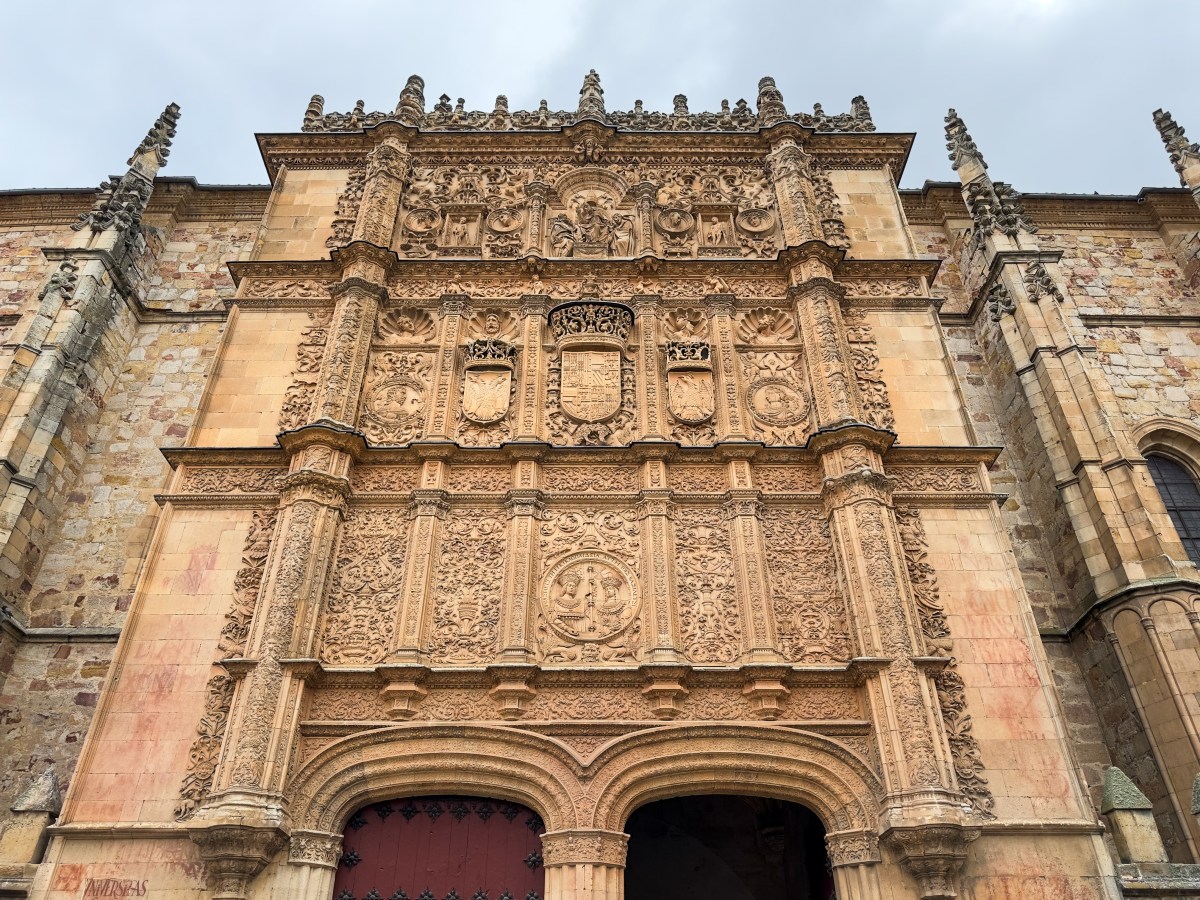
As you approach the university, you’ll be greeted by a magnificent display of intricate stonework that adorns the entire facade. The Plateresque style is a stunning blend of late Gothic and Renaissance architectural elements, and it showcases the artistic brilliance of the Spanish Renaissance.
The facade is adorned with a plethora of decorative motifs, including elegant floral patterns, delicate medallions, and ornate reliefs. These intricate details create a sense of depth and visual richness, making it a mesmerizing masterpiece of its time.
The attention to detail extends to every corner of the facade, with beautiful sculpted figures and statues that add to the overall grandeur of the building. These sculptures represent various academic disciplines, paying homage to the university’s dedication to knowledge and learning.
As the sunlight bathes the facade, the interplay of light and shadows accentuates the intricate carvings, creating a dynamic and ever-changing visual experience throughout the day.
Take your time to explore the facade closely, and you’ll discover new details and stories hidden within its ornate design (don’t forget to find the frog!). Whether you’re an architecture enthusiast, a history lover, or simply someone who appreciates beauty, the Plateresque facade of the University of Salamanca will leave you in awe.
Photos


Nearby Sights
Salamanca Frog
The legend of the frog centers around the famous University of Salamanca, one of the oldest universities in Europe, founded in the 13th century. According…
Museo da Salamanca
Located in the heart of Salamanca, a historic and beautiful city in western Spain, the Museo da Salamanca is housed in the Álvarez Albarca Palace,…
Catedral de Salamanca
The construction of the Salamanca Cathedral began in the 12th century, in 1102, during the Romanesque period. However, as was common with many cathedrals in…
La Clerecía
La Clerecía was originally established in the late 16th century as a Jesuit college and seminary. Its construction began in 1617 and took several decades…
Salamanca
Salamanca, Spain boasts a rich history, stunning architecture, vibrant culture, and a lively atmosphere that will undoubtedly leave a lasting impression on anyone who visits. Nestled in the heart of the Castile and León region, Salamanca is one of Spain’s most picturesque and enchanting cities. One of the city’s most notable features is its prestigious…
Thanks for visiting! I hope you have a great trip.
-
La Clerecía
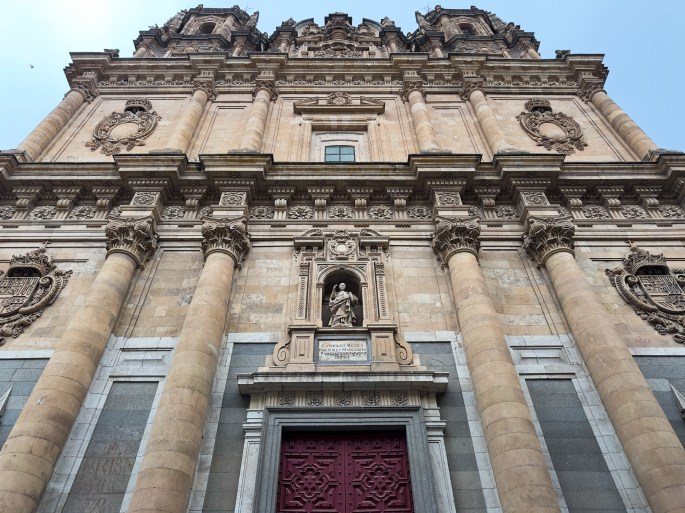
La Clerecía was originally established in the late 16th century as a Jesuit college and seminary. Its construction began in 1617 and took several decades to complete. The college was founded to serve as a center for the education of future clergy and the religious elite, offering studies in theology, philosophy, and other academic disciplines.
The Jesuits played a significant role in shaping the intellectual and cultural life of Salamanca during the Golden Age of Spain. They brought a distinctive architectural style to the city, characterized by a combination of Baroque and Plateresque elements.
The architecture of La Clerecía is a splendid example of the Spanish Baroque style. The building’s design is attributed to the renowned architect Juan Gómez de Mora, who was one of the most prominent architects of his time. It features a grand façade adorned with intricate sculptures, ornate carvings, and delicate stonework, showcasing the characteristic flamboyance of the Baroque period.
One of the most impressive aspects of La Clerecía are its iconic towers, the “Scala Coeli.” These imposing towers stands tall at approximately 90 meters (295 feet) high, making it one of the tallest towers in Salamanca. Visitors can climb the 198 steps to the tower balcony and enjoy breathtaking panoramic views of the city and its surroundings.
The interior of La Clerecía is equally awe-inspiring. The college’s church, dedicated to the Holy Spirit, boasts elaborate altars, beautiful frescoes, and intricate decorations. The architectural details and artwork inside the church reflect the artistic richness of the Baroque period.
Over the centuries, La Clerecía has undergone some modifications and restorations, but it has managed to preserve its grandeur and historical significance. Today, it continues to serve as a functioning educational institution while also welcoming visitors who wish to explore its architectural beauty and immerse themselves in Salamanca’s rich history.
Photos


Nearby Sights
Casa de las Conchas
The Casa de las Conchas was built in the late 15th to early 16th century, between 1493 and 1517, by Rodrigo Arias de Maldonado, a…
Façade of the University of Salamanca
As you approach the university, you’ll be greeted by a magnificent display of intricate stonework that adorns the entire facade. The Plateresque style is a…
Museo da Salamanca
Located in the heart of Salamanca, a historic and beautiful city in western Spain, the Museo da Salamanca is housed in the Álvarez Albarca Palace,…
Salamanca
Salamanca, Spain boasts a rich history, stunning architecture, vibrant culture, and a lively atmosphere that will undoubtedly leave a lasting impression on anyone who visits. Nestled in the heart of the Castile and León region, Salamanca is one of Spain’s most picturesque and enchanting cities. One of the city’s most notable features is its prestigious…
Thanks for visiting! I hope you have a great trip.
-
Casa de las Conchas

The Casa de las Conchas was built in the late 15th to early 16th century, between 1493 and 1517, by Rodrigo Arias de Maldonado, a knight of the Order of Santiago and a professor at the University of Salamanca. The purpose behind its construction was to serve as a residence and a private library for Maldonado, who was an avid book collector and scholar.
The most distinctive feature of the Casa de las Conchas is its exterior, adorned with more than 300 scallop shells. These shells, the defining characteristic of the building, have given rise to numerous legends and theories about their significance. One of the most popular stories claims that the shells symbolize the pilgrimage to Santiago de Compostela, a famous pilgrimage site in Spain.
The architectural style of the Casa de las Conchas is a blend of various influences, showcasing the transition from the late Gothic period to the early Renaissance. The facade, predominantly constructed in sandstone, is an elaborate display of Plateresque design—a style characterized by intricate, decorative ornamentation. The shells themselves, each meticulously placed in the walls, provide a sense of intrigue and fascination to passersby.
The doorway, framed with elegant carvings, leads to a beautiful inner courtyard. The courtyard is a peaceful and inviting space with a classic Renaissance ambience, offering visitors a moment of respite from the bustling streets of Salamanca.
Today, the Casa de las Conchas houses the public library of the city, and its remarkable facade continues to be a symbol of Salamanca’s rich history and cultural heritage. Beyond its historical significance, the building also serves as a meeting point for locals and visitors alike, making it a popular landmark to gather and appreciate the city’s architectural beauty.
Photos


Nearby Sights
La Clerecía
La Clerecía was originally established in the late 16th century as a Jesuit college and seminary. Its construction began in 1617 and took several decades…
Salamanca
Salamanca, Spain boasts a rich history, stunning architecture, vibrant culture, and a lively atmosphere that will undoubtedly leave a lasting impression on anyone who visits. Nestled in the heart of the Castile and León region, Salamanca is one of Spain’s most picturesque and enchanting cities. One of the city’s most notable features is its prestigious…
Thanks for visiting! I hope you have a great trip.
-
Cueva de Salamanca

The Cueva de Salamanca, also known as the Cave of Salamanca, is a fascinating historical site located in the charming city of Salamanca, Spain. This cave holds a unique blend of legends, dark magic, and secrets, making it an intriguing destination for those with an interest in history and folklore.
The cave’s history dates back centuries, and it has become a place of mystery and allure. According to local legends, the cave was once a secret meeting place for scholars and students, where they delved into the mystical arts of dark magic and occult practices. It is said that the cave was used as a venue for clandestine gatherings, where knowledge was exchanged under the veil of secrecy.
One of the most famous legends associated with the Cueva de Salamanca revolves around the Devil himself. The tale tells of an apprenticeship with the Devil, where aspiring scholars would enter the cave seeking supernatural knowledge and wisdom. In exchange for this knowledge, they had to sell their souls to the Devil, binding them to his service for eternity. This eerie legend has captured the imagination of locals and visitors alike, adding an element of mystique to the cave’s allure.
Today, the Cueva de Salamanca remains an intriguing historical site, drawing tourists who wish to explore its enigmatic past. While the dark magic practices are long gone, the cave’s rich history and ambiance create an immersive experience for visitors. As you step inside, you’ll find yourself transported back in time, imagining the secretive gatherings that once took place within its walls.
In addition to its historical significance, the cave is situated within the vibrant city of Salamanca, known for its stunning architecture and lively atmosphere. Visitors can combine their visit to the Cueva de Salamanca with exploring the city’s other attractions, such as the renowned University of Salamanca, the Plaza Mayor, and the Old Cathedral.
Details
Cta. de Carvajal, 7, 37008 Salamanca, Spain
Photos


Nearby Sights
Catedral de Salamanca
The construction of the Salamanca Cathedral began in the 12th century, in 1102, during the Romanesque period. However, as was common with many cathedrals in…
Convento de las Dueñas
The Convento de las Dueñas was founded in the 15th century, with construction starting in 1419 and continuing over the following decades. It was commissioned…
Convento San Esteban
The Convento San Esteban was founded in the 16th century, with construction beginning in 1524 and completed in 1610. It was designed by the renowned…
Salamanca
Salamanca, Spain boasts a rich history, stunning architecture, vibrant culture, and a lively atmosphere that will undoubtedly leave a lasting impression on anyone who visits. Nestled in the heart of the Castile and León region, Salamanca is one of Spain’s most picturesque and enchanting cities. One of the city’s most notable features is its prestigious…
Thanks for visiting! I hope you have a great trip.
-
Puente Romano de Salamanca

The Roman Bridge of Salamanca has an ancient origin, dating back to the 1st century AD during the Roman Empire‘s rule in the Iberian Peninsula. It was constructed to span the Tormes River, an essential waterway that played a significant role in the economic and strategic importance of the area. The bridge served as a vital connection between Salamanca and other regions, facilitating trade and transportation.
The original Roman structure underwent several repairs and modifications throughout the centuries due to wear and tear from natural elements and human use. The bridge has witnessed numerous historical events, including medieval conflicts and cultural exchanges during the Middle Ages.
The Roman Bridge of Salamanca showcases the remarkable engineering skills of ancient Roman architects. It measures approximately 176 meters (577 feet) in length and is constructed using masonry techniques typical of Roman architecture during that era.
The bridge features 26 semicircular arches, each meticulously crafted with stones and mortar. These arches are evenly distributed, creating an aesthetically pleasing and balanced appearance. The stone used in its construction mainly consists of granite, which is abundant in the region.
When you visit the Roman Bridge of Salamanca, you’ll have the opportunity to walk across its ancient stones, soaking in centuries of history beneath your feet. The bridge offers a stunning vantage point of the Tormes River and the city’s skyline, making it a great spot for taking photographs or simply enjoying a peaceful stroll.
As you explore Salamanca, you’ll find that the Roman Bridge is conveniently located near many other attractions and landmarks, such as the renowned University of Salamanca, the Plaza Mayor (main square), and numerous historic buildings with stunning architectural details.
Details
Photos

Salamanca
Salamanca, Spain boasts a rich history, stunning architecture, vibrant culture, and a lively atmosphere that will undoubtedly leave a lasting impression on anyone who visits. Nestled in the heart of the Castile and León region, Salamanca is one of Spain’s most picturesque and enchanting cities. One of the city’s most notable features is its prestigious…
Thanks for visiting! I hope you have a great trip.





About Me
The sky is not completely dark at night. Were the sky absolutely dark, one would not be able to see the silhouette of an object against the sky.
Follow Me On
Subscribe To My Newsletter
Subscribe for new travel stories and exclusive content.
 Meticulous Meanderings
You must be logged in to post a comment.