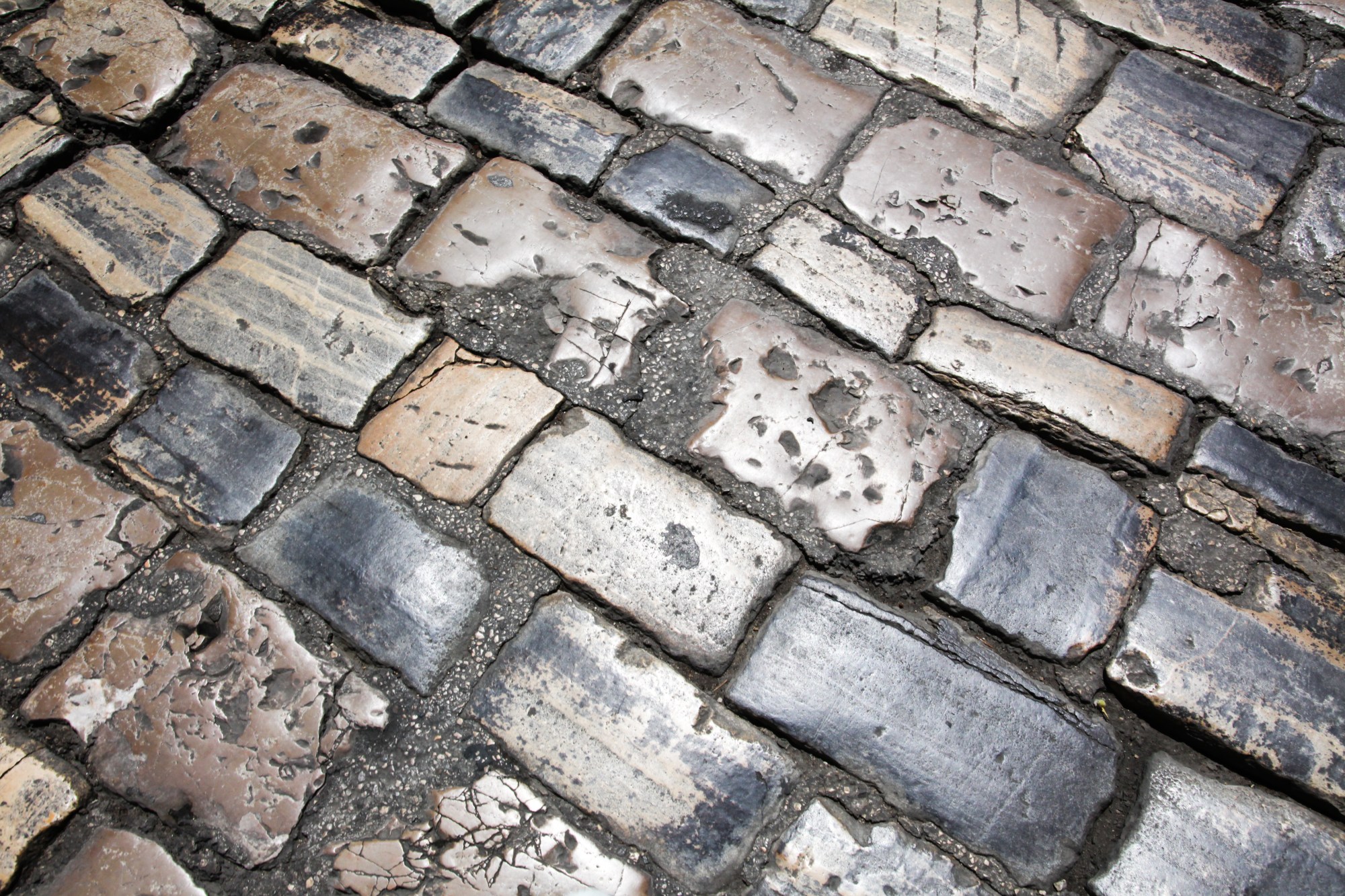
Cobblestones have a rich history dating back thousands of years and have been used extensively in street construction. Here’s a brief overview of their history and use:
- Ancient Origins: The use of cobblestones can be traced back to ancient civilizations such as Mesopotamia, where stone slabs were used to create paved roads as early as 4,000 BCE. The Romans also utilized cobblestones in their road-building efforts, with some of these ancient roads still visible today.
- Medieval Europe: Cobblestones became widespread in Europe during the Middle Ages. Small, naturally rounded stones, often obtained from riverbeds, were used to create roads. These stones were set in place by hand, packed tightly together, and sometimes bound with mortar or sand to create a solid surface.
- Expansion in the Renaissance: During the Renaissance, the use of cobblestones spread throughout Europe as trade and commerce flourished. Wealthier cities and towns often had streets paved with cobblestones, while smaller villages might have only partial cobblestone surfaces.
- Industrial Revolution: The Industrial Revolution brought significant advancements in road construction techniques. Machine-cut cobblestones replaced the hand-laid variety, resulting in more uniform and tightly fitted road surfaces. The increased availability of iron and steel for tools and equipment also contributed to more efficient road construction.
- 19th and 20th Centuries: Cobblestones remained a popular choice for road construction well into the 19th and 20th centuries. They were durable and capable of withstanding heavy traffic, making them ideal for urban streets. However, as cities modernized and transportation evolved, cobblestones gradually fell out of favor due to their uneven surface and discomfort for vehicles and pedestrians.
- Preservation and Revival: In recent decades, there has been a renewed interest in preserving and restoring cobblestone streets, particularly in historic districts. Many cities recognize the aesthetic value and historical significance of cobblestones, and efforts have been made to protect and maintain them. Some cities also incorporate cobblestones in new construction projects to evoke a sense of nostalgia and heritage.
Today, cobblestones are primarily used in specific areas, such as pedestrian zones, plazas, or historic districts, where their unique charm and historical value can be appreciated. They are less common on main thoroughfares and heavily trafficked roads due to concerns over noise, discomfort, and maintenance challenges.
 Meticulous Meanderings