
Oktoberfest, the world-famous beer festival held annually in Munich, Germany, has a history that dates back over 200 years. What began as a royal celebration has evolved into a global cultural phenomenon celebrating Bavarian traditions, food, music, and, of course, beer.
The Origins: A Royal Wedding (1810)
The First Oktoberfest: The festival originated on October 12, 1810, as a public celebration of the wedding between Crown Prince Ludwig (later King Ludwig I) and Princess Therese of Saxe-Hildburghausen.
Location: The festivities took place on the fields in front of Munich’s city gates, which were later named Theresienwiese (“Theresa’s Meadow”) in honor of the bride.
Horse Races: The main event of the first Oktoberfest was a grand horse race, organized to entertain the citizens of Munich.
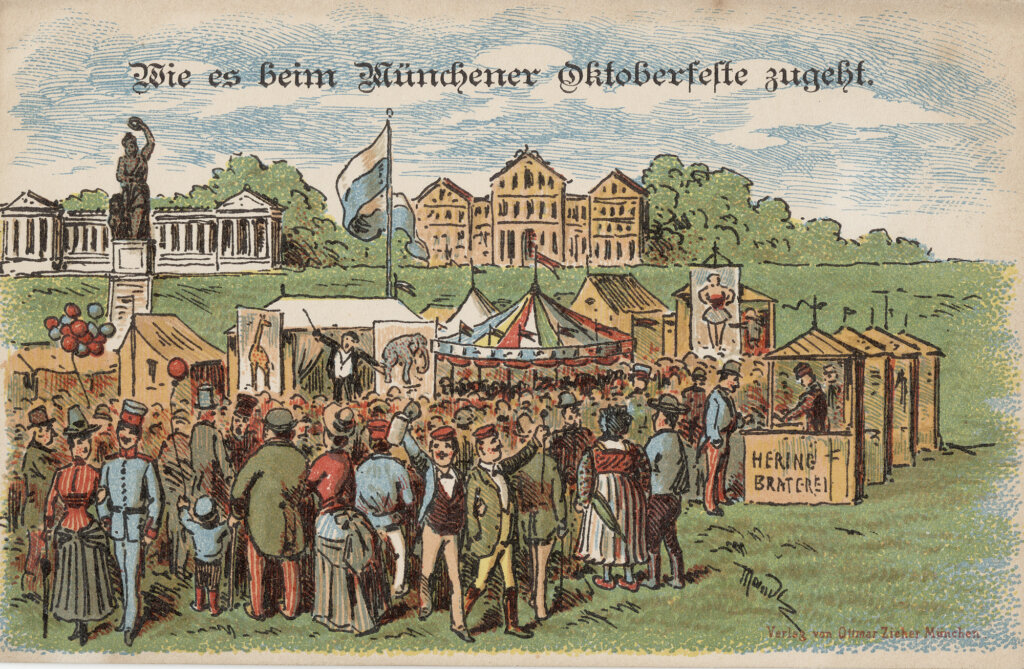
The Early Years: Growth and Tradition
Annual Event: The success of the first celebration led to its continuation as an annual event, with horse races becoming a central feature for the first few decades.
Agricultural Fair: In 1811, an agricultural show was introduced to promote Bavarian agriculture, a tradition that still takes place every four years during Oktoberfest.
The Addition of Beer and Carnival Attractions
By the mid-19th century, beer stands began appearing at the festival, gradually becoming more prominent.
Carnival Rides: In the late 1800s, attractions like carousels and swings were added, transforming Oktoberfest into a family-friendly festival.
In 1896, the first beer tents and halls replaced the smaller beer stands, providing space for thousands of festival-goers.

Modern Oktoberfest: 20th Century to Today
World Wars and Resumptions
Oktoberfest was canceled during the World Wars and experienced interruptions during times of political and economic turmoil, such as during hyperinflation in the 1920s.
When it resumed after World War II, the festival became increasingly international, attracting visitors from around the globe.
Shift to September
To take advantage of better weather, Oktoberfest gradually shifted its start date to mid-September. The festival typically runs for 16–18 days, ending on the first Sunday in October.
Beer and Tradition
Today, only breweries from Munich are allowed to serve beer at Oktoberfest, adhering to the Reinheitsgebot (German Beer Purity Law).
Traditional Bavarian music, folk costumes (lederhosen and dirndls), and hearty cuisine like pretzels, sausages, and roast chicken contribute to the festival’s authentic atmosphere.
.jpg)
Key Milestones
1810: The first Oktoberfest, celebrating a royal wedding.
1818: Introduction of amusement rides.
1896: Construction of large beer tents and halls.
1950: The first official O’zapft is! (the ceremonial tapping of the first beer keg by the Mayor of Munich), a tradition that continues today.
Oktoberfest has grown into the largest beer festival in the world, attracting over six million visitors annually. While it remains rooted in Bavarian culture, its global appeal has inspired similar festivals worldwide. Despite its evolution, Oktoberfest still honors its origins as a celebration of Bavarian tradition and community.
Oktoberfest is more than just a beer festival; it’s a celebration of history, culture, and Bavarian hospitality. Whether enjoying the lively beer tents, traditional music, or carnival attractions, visitors experience a festival that has preserved its roots while embracing its global significance.
 Meticulous Meanderings