
The history of the Moors is complex and spans several centuries, involving a diverse array of cultures and events. The term “Moors” refers to the Muslim inhabitants of the medieval Islamic territories in North Africa, Spain, and Portugal. The history of the Moors is intricately linked to the broader history of the Islamic world and the interactions between Muslims, Christians, and Jews during the Middle Ages.
The Moors originally emerged as Arab and Berber Muslim conquerors who swept across North Africa in the 7th and 8th centuries. Led by Arab generals such as Uqba ibn Nafi and Tariq ibn Ziyad, they established a series of Islamic caliphates and emirates, including the Umayyad Caliphate, the Abbasid Caliphate, and the Fatimid Caliphate. These territories encompassed modern-day Morocco, Algeria, Tunisia, and parts of Libya.

In the early 8th century, the Moors crossed the Strait of Gibraltar and initiated the Islamic conquest of the Iberian Peninsula, which was then under Visigothic rule. The Umayyad general Tariq ibn Ziyad played a significant role in this conquest, and the name “Gibraltar” is derived from the Arabic name “Jabal Tariq,” meaning “Mountain of Tariq.” The Moors quickly gained control over most of the peninsula, establishing the Umayyad Emirate of Cordoba in 756.
Under the Umayyad Caliphate of Cordoba, the Moors in Al-Andalus (the Arabic name for Muslim Spain) experienced a period of remarkable cultural, intellectual, and scientific advancement. The caliphate reached its zenith during the reign of Abd-ar-Rahman III (912-961), who declared himself the Caliph of Cordoba and established a prosperous and sophisticated state. Cordoba became a center of learning, attracting scholars from various disciplines, and boasted numerous libraries, mosques, and palaces.
However, the unity of Al-Andalus began to decline in the 11th century. Internal divisions and rivalries among the ruling Muslim factions allowed the Christian kingdoms in northern Spain to launch the “Reconquista,” a centuries-long campaign to retake the Iberian Peninsula from the Moors. The Reconquista gained momentum with the fall of the Caliphate of Cordoba in 1031, leading to the fragmentation of Al-Andalus into numerous smaller taifas (city-states).
The Moors faced increasing pressure from the Christian kingdoms, particularly the kingdoms of Castile, Aragon, and Portugal. The Reconquista reached a significant milestone in 1492 when the last Muslim stronghold, Granada, fell to the forces of Ferdinand II of Aragon and Isabella I of Castile. This marked the end of Muslim rule in Spain, and the Catholic Monarchs sought to establish a unified Christian kingdom through the Spanish Inquisition and the expulsion of non-Christians.
Although the Moors were expelled from Spain, their influence and legacy remained. The Islamic civilization of Al-Andalus left a profound impact on the arts, architecture, science, philosophy, and language in the region. Many of the architectural wonders of Andalusian cities, such as the Great Mosque of Cordoba and the Alhambra in Granada, are testaments to the architectural brilliance of the Moors.
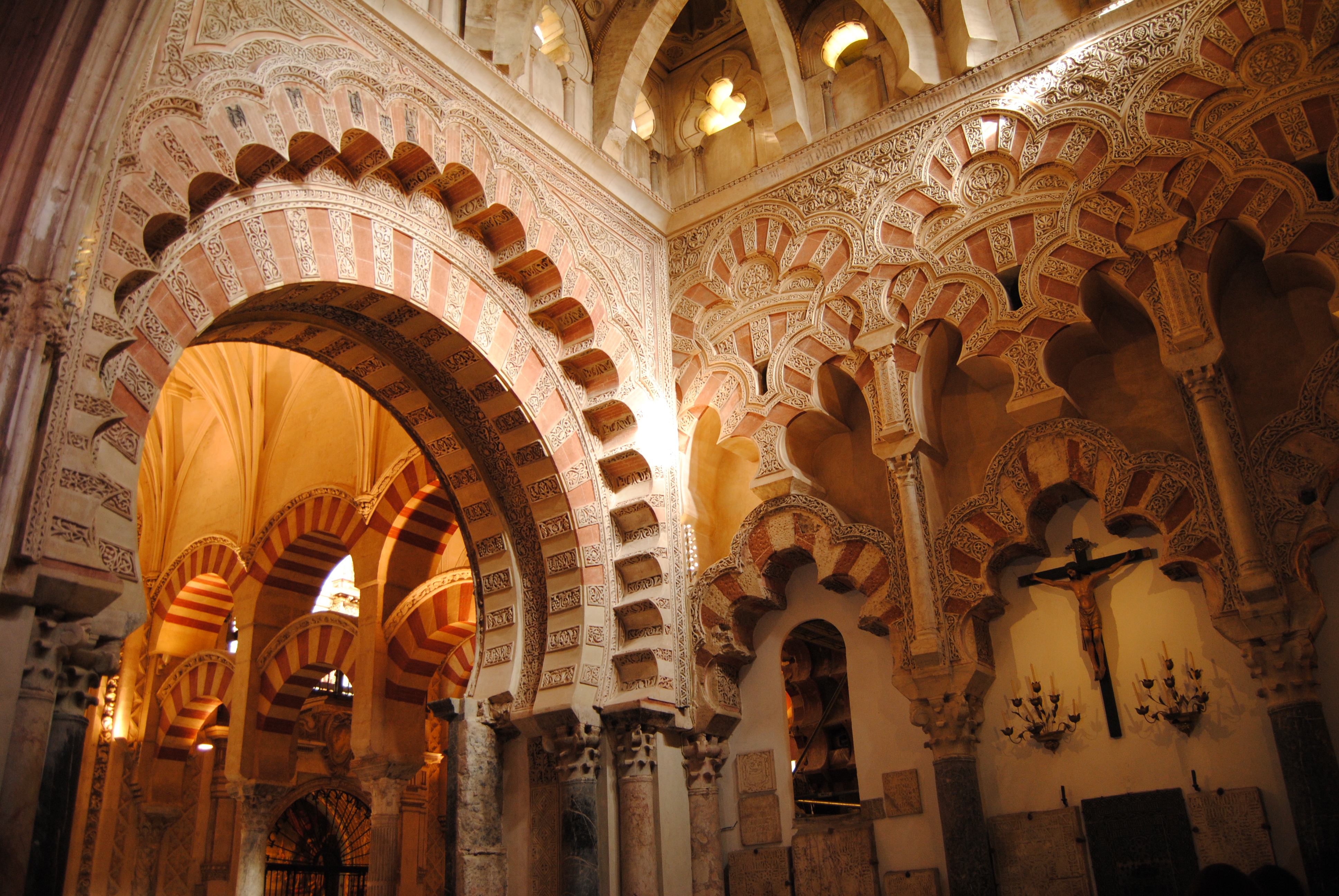
The history of the Moors encompasses their initial conquests in North Africa, their expansion into the Iberian Peninsula, the cultural and intellectual achievements of Al-Andalus, and the eventual decline and defeat at the hands of the Christian kingdoms during the Reconquista. Despite their expulsion, the Moors left an indelible mark on the history and culture of Spain and Portugal.
 Meticulous Meanderings
You must be logged in to post a comment.