Saints Peter and Paul Church, Krakรณw, Poland

Saints Peter and Paul Church

(AKA Koล›ciรณล‚ ล›w. Apostoล‚รณw Piotra i Pawล‚a) The Saints Peter and Paul Church is a magnificent and historically significant religious building located in the heart of Krakรณw, Poland. The Church of Saints Peter and Paul is one of the most important Baroque-style churches in Krakรณw. It was constructed between the late 16th and early 17th … Continue reading Saints Peter and Paul Church

Wrocล‚aw Old Town Hall Clock

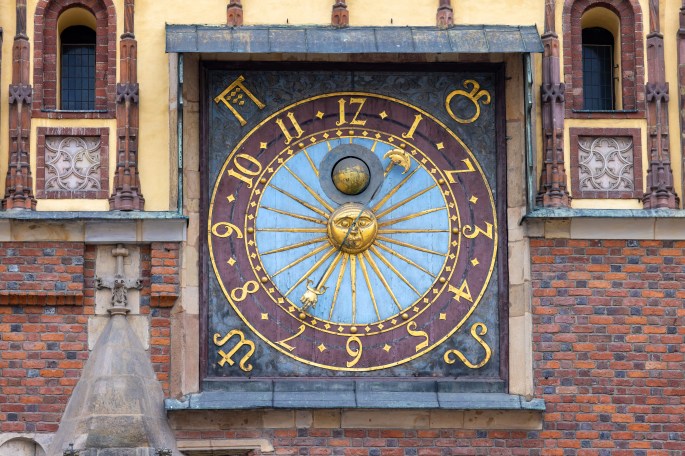
Old Town Hall (Wrocล‚aw)

(AKA Ratusz) The Old Town Hall in Wrocล‚aw, Poland, is a historic and architecturally significant building that holds a central place in the city's rich history. If you're thinking about visiting this remarkable structure, here's a brief overview of its history and architecture to help you appreciate its significance: History:The Old Town Hall has a … Continue reading Old Town Hall (Wrocล‚aw)

Church of Peace, Jawor, Poland

Church of Peace in Jawor

(AKA Koล›ciรณล‚ Pokoju w Jaworze) The Church of Peace in Jawor, Poland, is a remarkable historical and architectural gem that is worth exploring if you're considering a visit. History:The Church of Peace in Jawor is one of the most iconic symbols of the religious and cultural history of Silesia, a region in Central Europe that … Continue reading Church of Peace in Jawor

Kronentor, Dresden, Germany

Kronentor

The Kronentor was originally constructed as a part of the Dresden Castle, a magnificent palace complex that served as the royal residence of the Electors and Kings of Saxony. The castle, situated on the banks of the Elbe River, was built during various phases spanning several centuries, with the oldest parts dating back to the … Continue reading Kronentor

Frauenkirche

Frauenkirche

The Frauenkirche, located in Dresden, Germany, is a magnificent Baroque-style church with a rich history and a stunning architectural design that has captivated visitors for centuries. If you're considering visiting this iconic landmark, here's an overview of its history and architecture to enhance your understanding and appreciation. The Frauenkirche, which translates to "Church of Our … Continue reading Frauenkirche

Templo do Senhor Bom Jesus da Cruz, Barcelos

Templo do Senhor Bom Jesus da Cruz

The construction of Templo do Senhor Bom Jesus da Cruz began in the 18th century, with its foundation stone laid on September 14, 1704. The project was initiated by the local Brotherhood of Senhor Bom Jesus da Cruz, a religious association that wanted to build a sanctuary dedicated to the veneration of the Holy Cross. … Continue reading Templo do Senhor Bom Jesus da Cruz

Igreja Matriz, Barcelos

Igreja Matriz

The Igreja Matriz de Barcelos is an iconic religious building located in the charming town of Barcelos, Portugal. The church has a rich history dating back to the medieval period, making it a fascinating destination for history enthusiasts and those interested in architectural marvels. The exact founding date of the church is uncertain, but it … Continue reading Igreja Matriz

Catedral de Salamanca

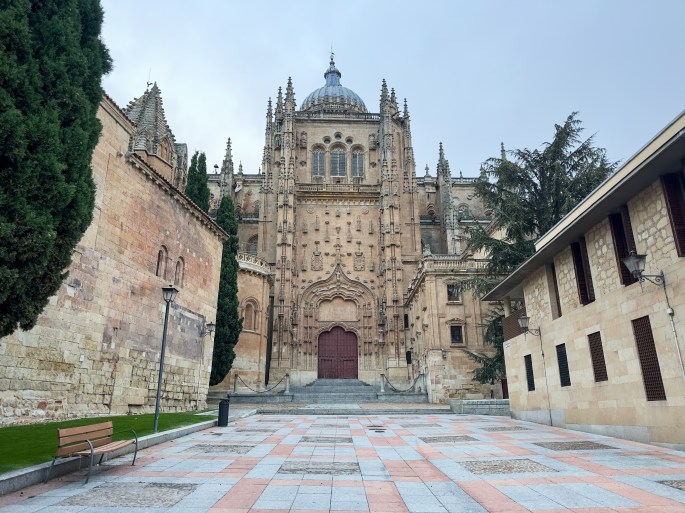
Catedral de Salamanca

The construction of the Salamanca Cathedral began in the 12th century, in 1102, during the Romanesque period. However, as was common with many cathedrals in Europe, it went through various expansions and modifications over the centuries, incorporating different architectural styles. As a result, the cathedral displays a beautiful blend of Romanesque, Gothic, Renaissance, and Baroque … Continue reading Catedral de Salamanca

La Clerecรญa, Salamanca

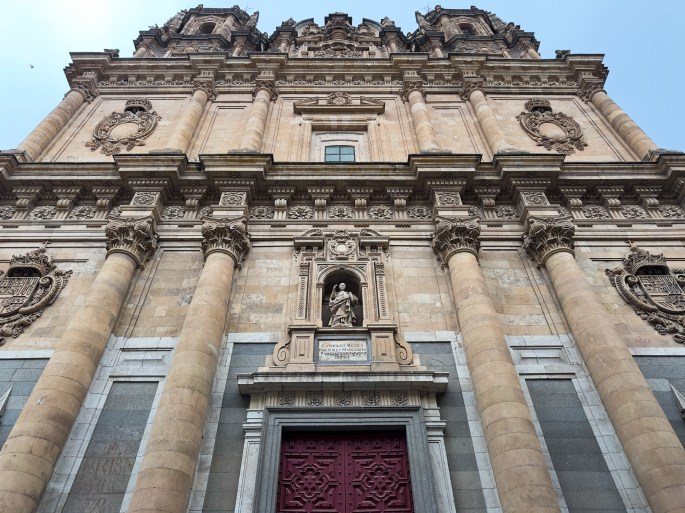
La Clerecรญa

La Clerecรญa was originally established in the late 16th century as a Jesuit college and seminary. Its construction began in 1617 and took several decades to complete. The college was founded to serve as a center for the education of future clergy and the religious elite, offering studies in theology, philosophy, and other academic disciplines. … Continue reading La Clerecรญa

Iglesia de la Purรญsima

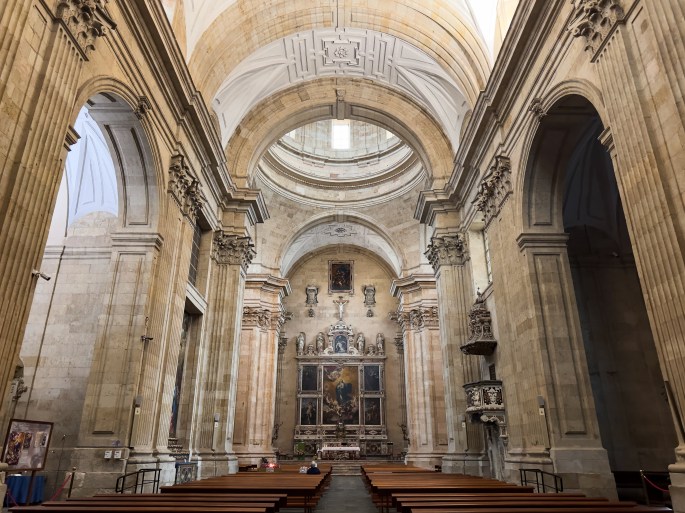
Iglesia de la Purรญsima

The Iglesia de la Purรญsima in Salamanca is a remarkable example of 17th-century Baroque architecture. Commissioned in 1636 by Manuel de Zรบรฑiga y Fonseca, Count of Monterrey, the church was intended as a family mausoleum and a convent for his daughter, Inรฉs Francisca de la Visitaciรณn. Situated opposite the Palacio de Monterrey, the church is … Continue reading Iglesia de la Purรญsima