Convento de las Dueรฑas, Salamanca

Convento de las Dueรฑas

The Convento de las Dueรฑas was founded in the 15th century, with construction starting in 1419 and continuing over the following decades. It was commissioned by the Catholic Monarchs, Queen Isabella I of Castile and King Ferdinand II of Aragon, as a place of worship and residence for nuns of the Order of Saint Clare … Continue reading Convento de las Dueรฑas

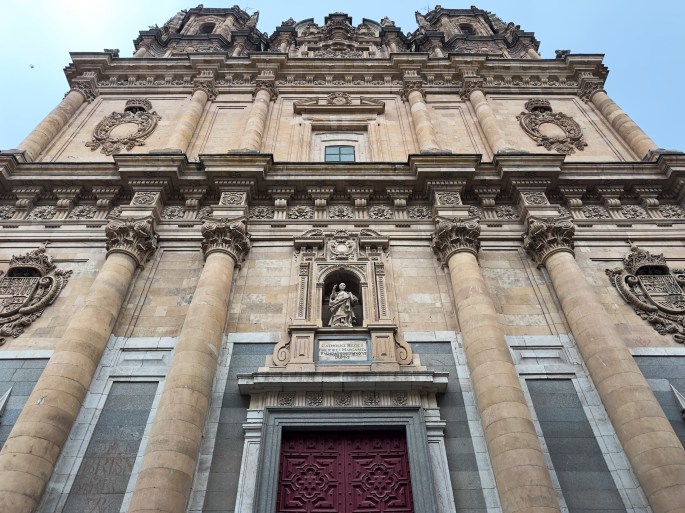
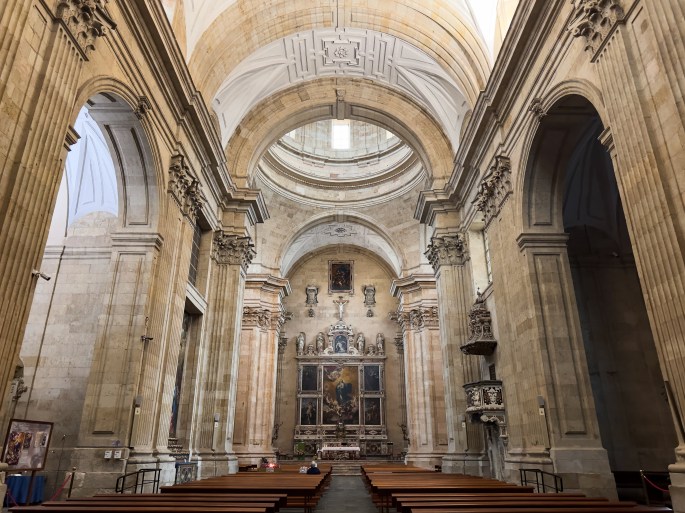
La Clerecรญa, Salamanca

La Clerecรญa

La Clerecรญa was originally established in the late 16th century as a Jesuit college and seminary. Its construction began in 1617 and took several decades to complete. The college was founded to serve as a center for the education of future clergy and the religious elite, offering studies in theology, philosophy, and other academic disciplines. … Continue reading La Clerecรญa

Iglesia de la Purรญsima

Iglesia de la Purรญsima

The Iglesia de la Purรญsima in Salamanca is a remarkable example of 17th-century Baroque architecture. Commissioned in 1636 by Manuel de Zรบรฑiga y Fonseca, Count of Monterrey, the church was intended as a family mausoleum and a convent for his daughter, Inรฉs Francisca de la Visitaciรณn. Situated opposite the Palacio de Monterrey, the church is … Continue reading Iglesia de la Purรญsima

Catedral de Leรณn

Catedral de Leรณn

Construction of the cathedral began in 1255 during the reign of King Alfonso X of Castile, on the site of an earlier Romanesque basilica. The construction continued for several centuries, with different architects and styles contributing to its design. The original plan aimed to create a grandiose and imposing place of worship that would be … Continue reading Catedral de Leรณn

Basรญlica de San Isidoro, Leรณn

Basรญlica de San Isidoro

The Basรญlica de San Isidoro, also known as the Basilica of San Isidoro, is a magnificent religious and historical site located in the charming city of Leรณn, Spain. It is one of the most important Romanesque buildings in the country and is a must-visit destination for anyone interested in art, architecture, and history. The history … Continue reading Basรญlica de San Isidoro

Iglesia de Santa Marรญa del Camino o del Mercado, Leรณn

Iglesia de Santa Marรญa del Camino o del Mercado

The Iglesia de Santa Marรญa del Camino, also known as Nuestra Seรฑora del Mercado, is a historic Romanesque church located in the heart of Leรณn, Spain. Dating back to the 12th century, this church holds significant historical and architectural value. Its dual names reflect its importance along the Camino de Santiago pilgrimage route ("del Camino") … Continue reading Iglesia de Santa Marรญa del Camino o del Mercado

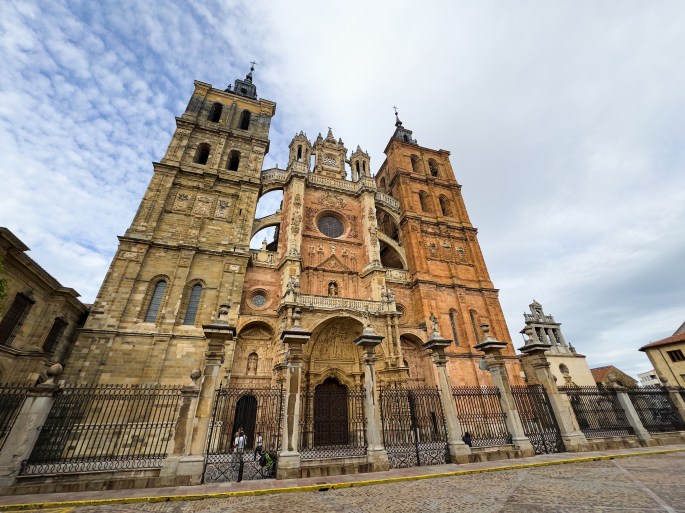
Cathedral of Santa Marรญa de Astorga

Cathedral of Santa Marรญa de Astorga

The Cathedral of Santa Marรญa de Astorga, located in the heart of Astorga, Spain, is a remarkable testament to the evolution of Spanish religious architecture. Its construction commenced in 1471 atop the site of a former Romanesque church, and the project spanned several centuries, culminating in the 18th century. This extended timeline resulted in a … Continue reading Cathedral of Santa Marรญa de Astorga

Lisbon Military Museum

Iglesia de San Andrรฉs

(AKA Church of Saint Andrew) The Iglesia de San Andrรฉs has a long and storied past that dates back to the 12th century. It was originally constructed in the Romanesque style during the 1100s, making it one of the oldest churches in รvila. The church has undergone several renovations and additions over the centuries, which … Continue reading Iglesia de San Andrรฉs

Lisbon Military Museum

Church and birthplace of Saint Teresa de Jesรบs

(AKA Convento de Santa Teresa, Monastery of the Incarnation) The Church and Convent of Saint Teresa of Jesus was established in the 16th century. It was founded by Saint Teresa of รvila herself, who was born Teresa de Cepeda y Ahumada in 1515. Teresa entered the Carmelite convent at a young age and later embarked … Continue reading Church and birthplace of Saint Teresa de Jesรบs

Lisbon Military Museum

Iglesia de San Pedro Apรณstol

(AKA Parish of St. Peter the Apostle) The Parish of St. Peter the Apostle has a rich history that dates back centuries. Its origins can be traced to the medieval period, with construction believed to have started in the 12th century. The church was built on the site of a former Romanesque temple, and over … Continue reading Iglesia de San Pedro Apรณstol