La Clerecía, Salamanca

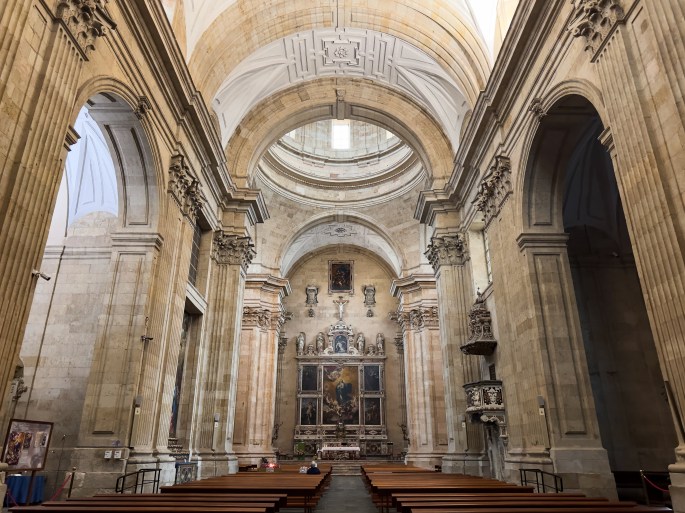
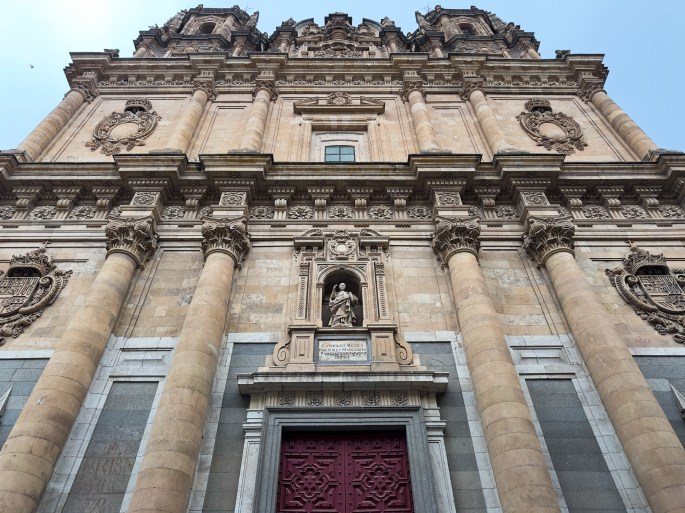
La Clerecía

La Clerecía was originally established in the late 16th century as a Jesuit college and seminary. Its construction began in 1617 and took several decades to complete. The college was founded to serve as a center for the education of future clergy and the religious elite, offering studies in theology, philosophy, and other academic disciplines. … Continue reading La Clerecía
Casa de las Conchas, Salamanca

Casa de las Conchas

The Casa de las Conchas was built in the late 15th to early 16th century, between 1493 and 1517, by Rodrigo Arias de Maldonado, a knight of the Order of Santiago and a professor at the University of Salamanca. The purpose behind its construction was to serve as a residence and a private library for … Continue reading Casa de las Conchas

Cueva de Salamanca

Cueva de Salamanca

The Cueva de Salamanca, also known as the Cave of Salamanca, is a fascinating historical site located in the charming city of Salamanca, Spain. This cave holds a unique blend of legends, dark magic, and secrets, making it an intriguing destination for those with an interest in history and folklore. The cave's history dates back … Continue reading Cueva de Salamanca

Puente Romano de Salamanca

Puente Romano de Salamanca

The Roman Bridge of Salamanca has an ancient origin, dating back to the 1st century AD during the Roman Empire's rule in the Iberian Peninsula. It was constructed to span the Tormes River, an essential waterway that played a significant role in the economic and strategic importance of the area. The bridge served as a … Continue reading Puente Romano de Salamanca

Museo da Salamanca

Museo da Salamanca

Located in the heart of Salamanca, a historic and beautiful city in western Spain, the Museo da Salamanca is housed in the Álvarez Albarca Palace, a 15th century medieval fort with tower and a beautiful courtyard. This architectural gem alone is worth a visit, as it provides a glimpse of the cultural significance and aesthetic … Continue reading Museo da Salamanca

Iglesia de la Purísima

Iglesia de la Purísima

The Iglesia de la Purísima in Salamanca is a remarkable example of 17th-century Baroque architecture. Commissioned in 1636 by Manuel de Zúñiga y Fonseca, Count of Monterrey, the church was intended as a family mausoleum and a convent for his daughter, Inés Francisca de la Visitación. Situated opposite the Palacio de Monterrey, the church is … Continue reading Iglesia de la Purísima

Plaza Mayor de Salamanca

Plaza Mayor de Salamanca

The Plaza Mayor de Salamanca is a magnificent square located in the heart of Salamanca, Spain. It is undoubtedly one of the most iconic and beautiful squares in the country, and it holds a rich historical and cultural significance. The square is surrounded by impressive Baroque-style buildings with ornate facades adorned with intricate details. The … Continue reading Plaza Mayor de Salamanca

Façade of the University of Salamanca

Salamanca Frog

The legend of the frog centers around the famous University of Salamanca, one of the oldest universities in Europe, founded in the 13th century. According to the myth, the university's main facade features a small, intricately carved frog hidden among the intricate stonework. This frog is known as "La Rana de la Universidad" or "The … Continue reading Salamanca Frog

San Vicente de Ávila

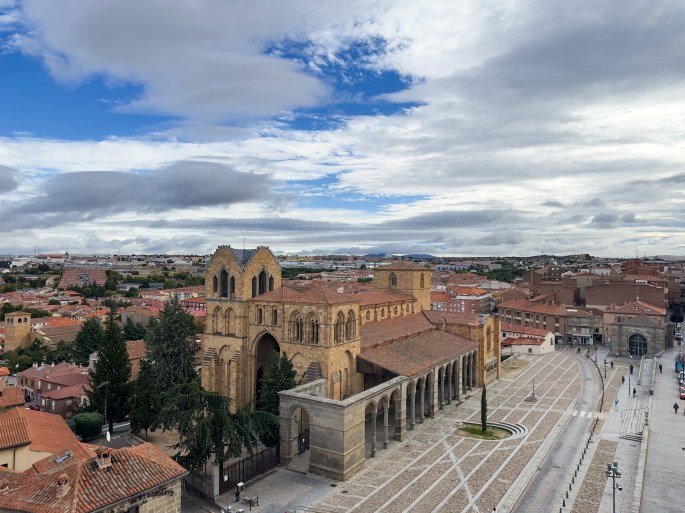
San Vicente de Ávila

The Basilica of San Vicente has a rich history that dates back to the 12th century. Its construction began in the Romanesque style, around 1130, during the reign of Alfonso VII of León and Castile. The basilica was built to house the relics of three Christian martyrs, Saint Vincent, Saint Sabina, and Saint Cristeta, who … Continue reading San Vicente de Ávila

Cathedral of Ávila

Cathedral of Ávila

The construction of the Cathedral of Ávila began in the 12th century, precisely in 1107, during the reign of King Alfonso VI of Castile and León. It was built on the site of a former Visigothic church, and its construction took place over several centuries, incorporating a mix of architectural styles due to its lengthy … Continue reading Cathedral of Ávila