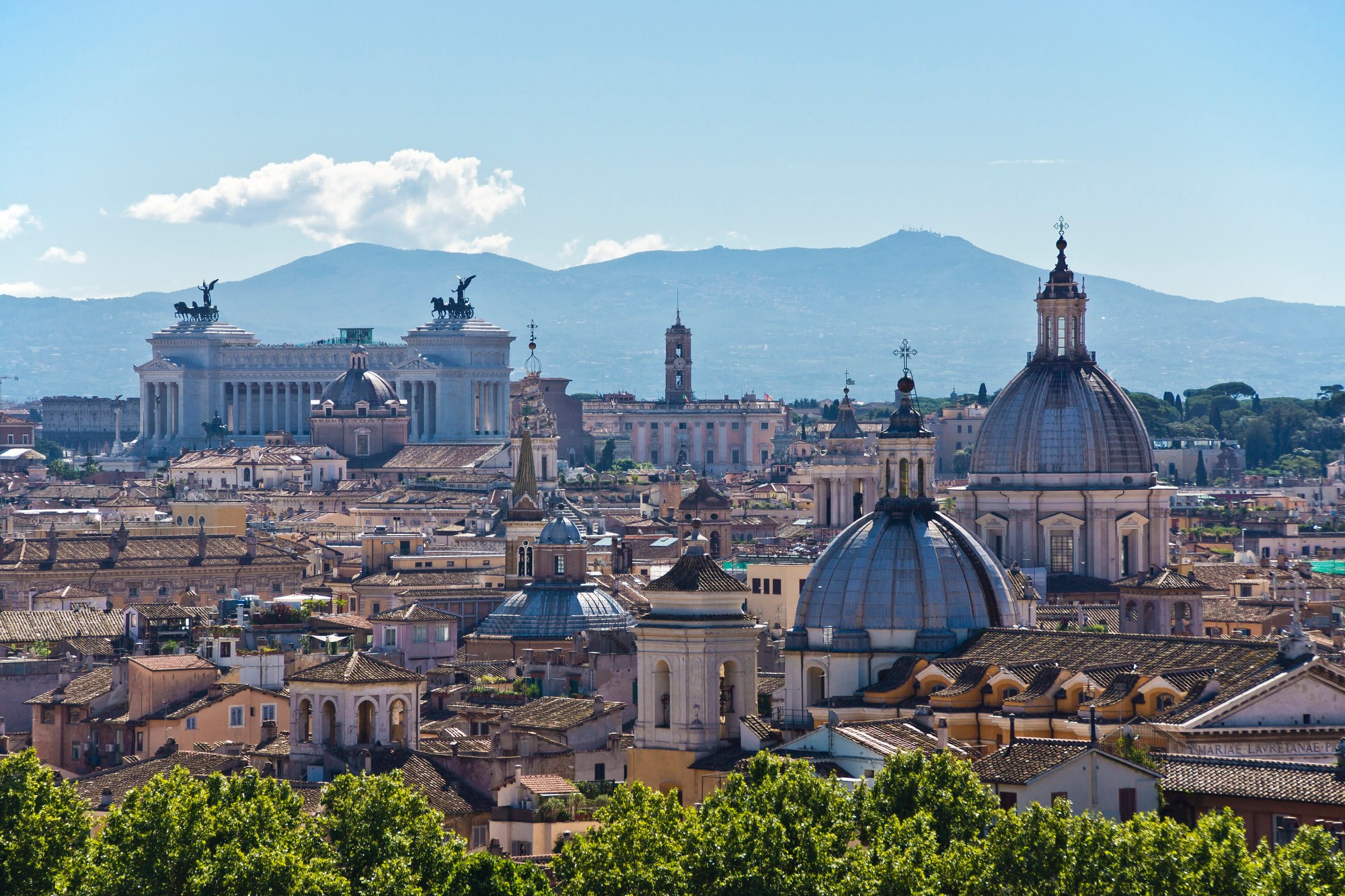
Rome’s churches are a living museum of Western art and devotion, and the city’s most famous sanctuaries are unmissable for first-time visitors. St. Peter’s Basilica dominates not just Vatican City but the whole imagination of Rome with its vast nave, Michelangelo’s dome, and Bernini’s baldachin; nearby the Vatican Museums and the Sistine Chapel complete the papal artistic circuit. Santa Maria Maggiore, San Giovanni in Laterano (the cathedral of the Bishop of Rome), and San Paolo fuori le Mura are the other major papal basilicas, each offering grand mosaics, monumental architecture, and deep historical layers tied to Rome’s Christian identity.
Beyond the papal giants, Rome’s central neighborhoods concentrate art-houses of devotion: Santa Maria del Popolo (with Caravaggio paintings in two Cerasi chapels), San Luigi dei Francesi (another Caravaggio trio), and Sant’Andrea della Valle (a high Baroque interior with a glorious dome) reward short detours from the main tourist routes. The Pantheon—now the Basilica of Santa Maria ad Martyres—is a singular ancient-to-Christian monument whose perfectly preserved classical form and luminous oculus make it one of the city’s most memorable sacred spaces. Many city palazzi and piazzas are framed by churches whose chapels preserve paintings, tombs, and frescoes by leading artists across centuries.
For quieter, more idiosyncratic experiences, explore lesser-known gems: San Clemente’s layered archaeology lets you descend from a 12th-century basilica into a 4th-century church and a Republican-era house below, offering a literal stratigraphy of Rome’s past. San Pietro in Vincoli houses Michelangelo’s mighty Moses and a surprisingly intimate medieval atmosphere, while Santa Prassede near Santa Maria Maggiore contains exquisite mosaic panels in a compact, luminous setting. Trastevere’s Santa Maria in Trastevere combines rustic charm with medieval mosaics, and small jewels like San Pietro in Montorio (with Bramante’s Tempietto in its cloister) blend architecture and green space away from the busiest routes.
If you’re curious about contemporary or less conventional sacred sites, Rome has modern churches and re-used religious spaces worth seeking out: the austere interiors of 20th-century parish churches in the suburbs, the actively restored minor basilicas hosting local cults and festivals, and chapels inside palaces that are often quietly open during visiting hours. Practical approach: mix the headline basilicas with a handful of these quieter stops to feel both the grandeur and the intimate, lived-in piety of the city—allow time to sit, listen to a service or organ practice, and notice details (caps on columns, donor tombs, hidden frescoes) that reward slow looking.
Visit Notes
I love a good church. I’m not religious at all and don’t really care necessarily about the religious aspect of the buildings. However, churches in a historical city like Rome are a fantastic place to see art and architectural styles spanning the centuries. Other than the Pantheon, they are all free to enter, so they also make an economical way to see the city. Most people don’t go into them, opting instead for the big-name attractions, giving you a quiet place to spend your time while everyone else grinds out their day in a sea of chaos and sweaty bodies.
I leave for my six week trip to Italy in a couple of months. When I started gathering all the sights I wanted to see during my two weeks in Rome, I quickly realized that there are a lot of churches… and I mean, A LOT. I read that there are around 1,000 churches. This caused me to bring up a map and do a search for ‘church’ in the historic center, and they really weren’t kidding about the 1,000 churches thing. I thought to myself, “Self, I’ll take a look through this list of churches and whittle them down to a manageable size. Surely, there can’t be that many churches I’d be interested in touring.” I was wrong. I’ve managed to pare down the list to about 82 churches, which is still a lot. I won’t get to them all and some of them will inevitably be closed when I walk by, but boy I’m going to give it the old college try.
Churches

Something went wrong. Please refresh the page and/or try again.
Rome
Rome is a city where every street feels like a short history lesson. Walk around and you’ll stumble on ruins, fountains, and churches all squeezed together — the Colosseum and Roman Forum sit near busy modern neighborhoods, while ancient columns pop up outside trendy cafés. It’s easy to soak up the past just by wandering:…
 Meticulous Meanderings