Hello, I’m Veronica
The sky is not completely dark at night. Were the sky absolutely dark, one would not be able to see the silhouette of an object against the sky.


-
Casa di Giulietta

The Casa di Giulietta in Verona is a 14th–15th century townhouse best known for its small courtyard with a balcony (added during a renovation in the early 20th century)—a busy spot where tourists flock to pose, leave love notes, and touch the bronze statue of Juliet for luck. Inside, period rooms and displays present the site’s later reinterpretation as a literary shrine rather than a strictly historic house tied to an actual medieval Juliet.
Beyond the balcony tableau, the site functions as a quirky cultural attraction: a museum of love memorabilia, reproductions, and interpretive panels about the Romeo and Juliet legend and its ties to Verona’s feuding Scaliger and Montecchi families. Crowds and the ritual of leaving messages give the courtyard a living, participatory quality, so visiting is as much about the shared tourist experience and the city’s embrace of the Shakespearean myth as it is about architectural history.
This is a sight that seems more of a tourist trap than a real, historical museum. However, if you have the time, why not stop into the courtyard and experience the energy and maybe leave a love note. The courtyard, with Juliet’s statue and balcony, is free to visit.
Photos


Other Sights
Verona
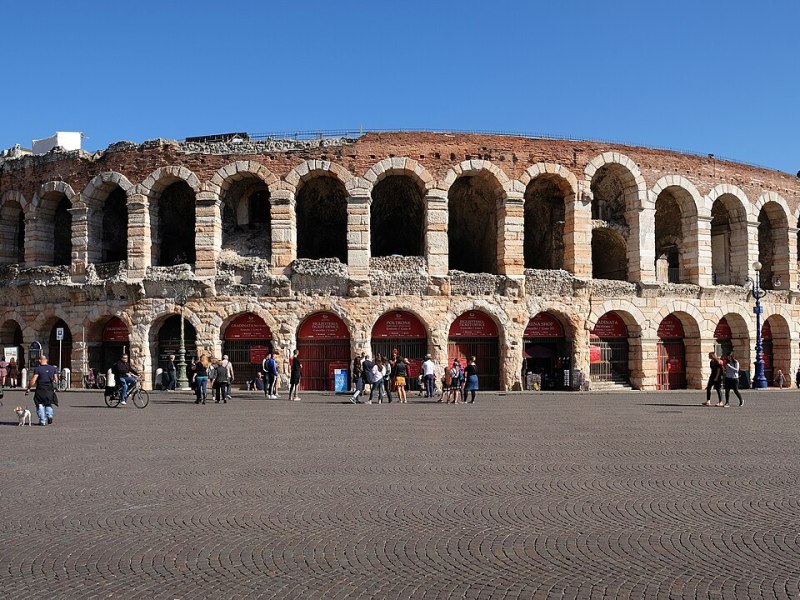
Verona feels like a storybook town where Roman stones and medieval towers sit comfortably beside lively cafés and modern boutiques. Start at the Arena, a remarkably well-preserved Roman amphitheater that still hosts operas and concerts in summer—there’s something magical about hearing music under the open sky with the old stone glowing at sunset. Wander out…
Thanks for visiting! I hope you have a great trip.
-
Museo Lapidario Maffeiano
The Museo Lapidario Maffeiano, founded in the 18th century by Count Girolamo Maffei and housed near Verona’s Piazza dei Signori, is one of Italy’s oldest lapidary museums and specializes in classical inscriptions and stone artifacts. Its rooms display an extensive collection of Roman and pre-Roman epigraphs, funerary monuments, sarcophagi, and sculptural fragments brought together from local excavations and private collections; the emphasis is on epigraphy, civic dedications, and the funerary practices of ancient Verona and the surrounding region.
Visitors move through sober, cabinet-like galleries where inscriptions are grouped thematically and often presented with scholarly notes, making the museum particularly valuable for students of classics and local history. The collection’s intimate scale and focused scope give a clear, material sense of Verona’s ancient civic identity—names, offices, and families carved in stone—while the historic setting and restrained display highlight the antiquities themselves rather than elaborate exhibition design.
Photos


Other Sights
Verona
Verona feels like a storybook town where Roman stones and medieval towers sit comfortably beside lively cafés and modern boutiques. Start at the Arena, a remarkably well-preserved Roman amphitheater that still hosts operas and concerts in summer—there’s something magical about hearing music under the open sky with the old stone glowing at sunset. Wander out…
Thanks for visiting! I hope you have a great trip.
-
Museo di Storia Naturale
The Museo di Storia Naturale di Verona, housed in the historic Palazzo Pompei, presents a broad natural-history collection that spans geology, paleontology, zoology and anthropology. Its cabinets display fossil specimens (including notable Pliocene and Pleistocene remains), minerals, mounted mammals and birds, and regional botany—arranged to trace the natural history of the Veneto and the wider Alpine–Adriatic area. The museum’s chronological and thematic layout makes it accessible to families and school groups while offering researchers valuable local reference material.
Key attractions include well-preserved fossil reconstructions, an extensive mineral collection, and dioramas that contextualize regional ecosystems; the museum also runs educational programs, temporary exhibitions, and public talks that connect scientific research with conservation themes. The combination of historic architecture, carefully curated displays, and outreach activities gives the Museo di Storia Naturale a dual role as both a repository of local natural heritage and an active center for public science engagement.
Photos


Verona
Verona feels like a storybook town where Roman stones and medieval towers sit comfortably beside lively cafés and modern boutiques. Start at the Arena, a remarkably well-preserved Roman amphitheater that still hosts operas and concerts in summer—there’s something magical about hearing music under the open sky with the old stone glowing at sunset. Wander out…
Thanks for visiting! I hope you have a great trip.
-
Museo Archeologico al Teatro Romano
The Museo Archeologico al Teatro Romano in Verona sits beside the ancient Roman theatre and occupies spaces that include a cloistered area and display rooms where finds from the theatre, nearby necropolises, and local Roman sites are shown. Its collection highlights sculptural fragments, architectural elements, funerary stelae, and everyday objects—pottery, coins, and tools—that illustrate Verona’s urban life in Roman times and the material culture connected to public entertainment and religious practices.
Exhibits are arranged to complement a visit to the ruins themselves: you can view pieces recovered during excavations of the theatre and nearby areas, then step outside to see the archaeological site that produced them. The museum’s modest but well-focused displays provide context for the Roman theatre complex and help visitors connect artifacts to the city’s ancient topography and social life.
Photos


Verona
Verona feels like a storybook town where Roman stones and medieval towers sit comfortably beside lively cafés and modern boutiques. Start at the Arena, a remarkably well-preserved Roman amphitheater that still hosts operas and concerts in summer—there’s something magical about hearing music under the open sky with the old stone glowing at sunset. Wander out…
Thanks for visiting! I hope you have a great trip.
-
Galleria d’Arte Moderna Achille Forti
Galleria d’Arte Moderna Achille Forti occupies the first floor of Verona’s historic Palazzo della Ragione and presents a coherent survey of Italian and Veronese art from the 19th century to the present. The collection—formed through donations and bequests including those of Achille Forti—numbers around 1,600–1,700 works and ranges from Romantic canvases and Divisionist pieces to early-20th-century realism, sculpture by Medardo Rosso, and a substantial contemporary wing with works by international artists; the gallery’s layout uses the palace’s Gothic rooms to create an intimate, chronological narrative.
Highlights include Francesco Hayez’s Meditation, Divisionist canvases by Angelo Morbelli and Baldassarre Longoni, works by Felice Casorati and other Veronese painters, plus rotating contemporary exhibitions and a distinctive display in the atmospheric Cappella dei Notai. The museum balances civic heritage with contemporary commissions, making it both a repository of local artistic identity and an active space for current art programming.
Photos


Verona
Verona feels like a storybook town where Roman stones and medieval towers sit comfortably beside lively cafés and modern boutiques. Start at the Arena, a remarkably well-preserved Roman amphitheater that still hosts operas and concerts in summer—there’s something magical about hearing music under the open sky with the old stone glowing at sunset. Wander out…
Thanks for visiting! I hope you have a great trip.


.jpg)
.jpg)


About Me
The sky is not completely dark at night. Were the sky absolutely dark, one would not be able to see the silhouette of an object against the sky.
Follow Me On
Subscribe To My Newsletter
Subscribe for new travel stories and exclusive content.


You must be logged in to post a comment.