Hello, I’m Veronica
The sky is not completely dark at night. Were the sky absolutely dark, one would not be able to see the silhouette of an object against the sky.


-
Basilica di Santa Maria Novella

The Basilica of Santa Maria Novella in Florence is a landmark Dominican church whose current Gothic structure dates mainly from the 13th–14th centuries. It features a striking marble façade completed in the 15th century by Leon Battista Alberti that harmonizes green and white Tuscan marble with classical proportions; inside, a spacious nave with pointed arches leads to chapels richly decorated with frescoes by major Renaissance and late-medieval artists such as Masaccio, Ghirlandaio, and Andrea di Bonaiuto. The church also houses important works including the crucifix by Brunelleschi, a famed Trinity by Masaccio that demonstrates early use of linear perspective, and an exquisite cloistered chapter house and refectory.
Beyond its art, Santa Maria Novella occupies a prominent civic and spiritual role in Florence, sitting near the main train station and serving as a key example of the city’s transition from medieval to Renaissance aesthetics. Architectural details—like the inlaid marble pavement, ornate chapels, and the church’s elegant proportions—exemplify the Florentine blend of austerity and humanist refinement; the site remains both a working church and a major destination for visitors interested in art history, theology, and Italian architecture.
Photos


Other Sights
Florence
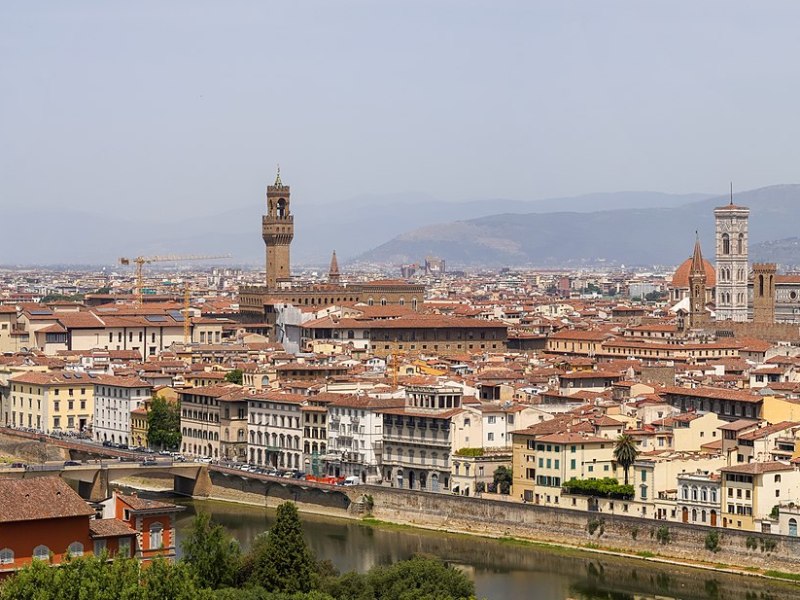
Florence, often regarded as the birthplace of the Renaissance, is a dazzling city that exudes art, culture, and history at every turn. Nestled in the picturesque Tuscany region, it captivates visitors with its stunning architecture, world-class museums, and vibrant streets filled with life. The historical center of Florence is a UNESCO World Heritage site, known…
Thanks for visiting! I hope you have a great trip.
-
Cappella Brancacci
The Cappella Brancacci, inside the Church of Santa Maria del Carmine in Florence’s Oltrarno, is celebrated for its early Renaissance fresco cycle by Masaccio and Masolino (with later additions by Filippino Lippi). Painted mainly in the 1420s, the frescoes—especially Masaccio’s scenes like the Tribute Money and the Expulsion of Adam and Eve—are landmark works for their pioneering use of linear perspective, strong chiaroscuro, and naturalistic human emotion, marking a decisive shift toward Renaissance painting.
Visiting rewards anyone interested in art history: the chapel is compact but visually powerful, so allow 30–45 minutes to take in the narrative panels and study Masaccio’s innovations up close. The site allows a maximum of 30 people to visit at a time with a maximum visit length of 30 minutes. It pays to book your timed ticket in advance from their website.
Photos


Other Sights
Florence
Florence, often regarded as the birthplace of the Renaissance, is a dazzling city that exudes art, culture, and history at every turn. Nestled in the picturesque Tuscany region, it captivates visitors with its stunning architecture, world-class museums, and vibrant streets filled with life. The historical center of Florence is a UNESCO World Heritage site, known…
Thanks for visiting! I hope you have a great trip.
-
Battistero di San Giovanni
The Battistero di San Giovanni (Florence Baptistery) is an octagonal, Romanesque landmark standing before the cathedral with origins in the early medieval period—its present form dates largely to the 11th–12th centuries. Clad in white and green marble like the Duomo, the exterior is notable for its geometric marble patterns and three richly decorated bronze door sets (the most famous being Ghiberti’s “Gates of Paradise” on the east), each a masterpiece of Renaissance relief sculpture.
Inside, the octagonal space centers on the baptismal font and a soaring mosaic-decorated dome whose 13th–14th-century scenes of Last Judgment and saints glow with gold tesserae; the interior also preserves sculptural fragments, sarcophagi, and medieval liturgical fittings.
Photos


Florence
Florence, often regarded as the birthplace of the Renaissance, is a dazzling city that exudes art, culture, and history at every turn. Nestled in the picturesque Tuscany region, it captivates visitors with its stunning architecture, world-class museums, and vibrant streets filled with life. The historical center of Florence is a UNESCO World Heritage site, known…
Thanks for visiting! I hope you have a great trip.
-
Chiesa di Santa Maria Maggiore
Santa Maria Maggiore is a historic parish church in Florence, with medieval origins that were reshaped by Renaissance and later restorations—its plain exterior gives way to an interior rich in layered history and devotional art. The nave and chapels contain works spanning several centuries, from fresco fragments and altarpieces to funerary monuments, reflecting the church’s long role in local religious life rather than a single grand artistic program.
Visitors will find a quieter, less crowded stop compared with the city’s major basilicas; allow 30–45 minutes to see the main chapels, notable paintings, and tombs, and check opening times since they can be limited. Modest dress is appropriate for this active parish.
Details
Vicolo di Santa Maria Maggiore, 1, 50123 Firenze FI, Italy
Photos


Florence
Florence, often regarded as the birthplace of the Renaissance, is a dazzling city that exudes art, culture, and history at every turn. Nestled in the picturesque Tuscany region, it captivates visitors with its stunning architecture, world-class museums, and vibrant streets filled with life. The historical center of Florence is a UNESCO World Heritage site, known…
Thanks for visiting! I hope you have a great trip.
-
Basilica di Santa Croce
The Basilica of Santa Croce is Florence’s principal Franciscan church, founded in the late 13th century, construction began in 1294 under Arnolfo di Cambio and continued through the 14th century, giving the building its expansive Gothic nave and chapels. Its striking white-and-green marble façade is a 19th-century neo-Gothic restoration that overlays the medieval structure.
Santa Croce is best known as the “Temple of the Italian Glories”: tombs and monuments commemorate luminaries such as Michelangelo (cenotaph), Galileo, Machiavelli, and Rossini, while the chapels contain major fresco cycles by Giotto and others, Renaissance altar pieces, and notable leather workshops and craft displays in the adjoining convent buildings. Allow 1–2 hours to see the main tombs, frescoes, and museum rooms; tickets often include access to cloisters and the leather school, and modest dress is requested inside the basilica.
Photos


Florence
Florence, often regarded as the birthplace of the Renaissance, is a dazzling city that exudes art, culture, and history at every turn. Nestled in the picturesque Tuscany region, it captivates visitors with its stunning architecture, world-class museums, and vibrant streets filled with life. The historical center of Florence is a UNESCO World Heritage site, known…
Thanks for visiting! I hope you have a great trip.




_-_2022-08-31_-_13.jpg)


.jpg)

,_nave.jpg)


About Me
The sky is not completely dark at night. Were the sky absolutely dark, one would not be able to see the silhouette of an object against the sky.
Follow Me On
Subscribe To My Newsletter
Subscribe for new travel stories and exclusive content.
 Meticulous Meanderings
You must be logged in to post a comment.