
Hello, I’m Veronica
The sky is not completely dark at night. Were the sky absolutely dark, one would not be able to see the silhouette of an object against the sky.


-
Puerta de Bisagra
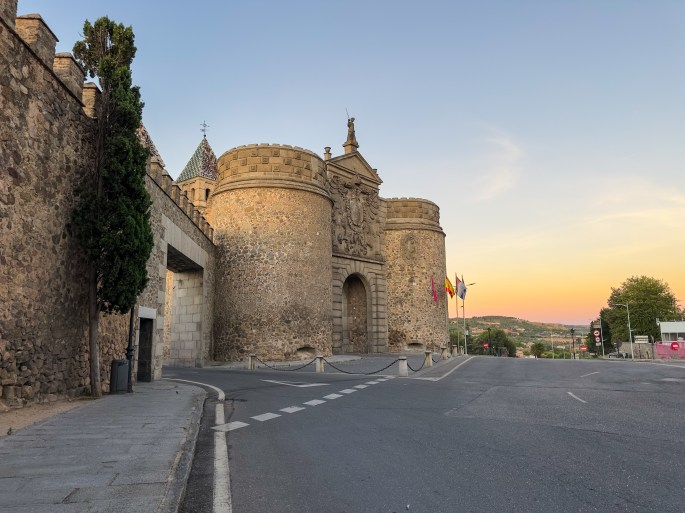
The history of the Puerta de Bisagra dates back to the medieval era when Toledo was a crucial city in the Iberian Peninsula. The gate was built during the 10th century by the Moors, who occupied the region at the time. It served as one of the main entrances to the fortified city and played a significant role in controlling access to Toledo.
However, after the Christian Reconquista of Toledo in 1085, the gate underwent major changes. In the 16th century, during the reign of Charles I of Spain and Holy Roman Emperor, a renovation project was undertaken to modernize and fortify the city’s defenses. The gate’s original structure was largely preserved, but new Renaissance-style elements were added, giving it a distinct and impressive appearance that still stands today.
The Puerta de Bisagra is a stunning example of military and Renaissance architecture. The gate is characterized by its two large towers flanking the central passage, which was a common feature of medieval city gates.
The outer facade of the gate showcases intricate decorative elements, reflecting the Mudejar architectural influence during the Moorish period. You’ll find beautiful geometric patterns, plasterwork, and inscriptions that add to its historic charm.
As you pass through the gate, you’ll notice the interior side, which exhibits more prominent Renaissance features, like classical pilasters and ornamental motifs that were added during the 16th-century renovations.
Today, the gate is an iconic symbol of Toledo’s rich history and is recognized as a National Monument in Spain. It stands as a testament to the city’s cultural and architectural heritage.
Details
C. Real del Arrabal, 26, 45003 Toledo, Spain
Photos


Other Sights
Thanks for visiting! I hope you have a great trip.
-
Iglesia de Santo Tomé
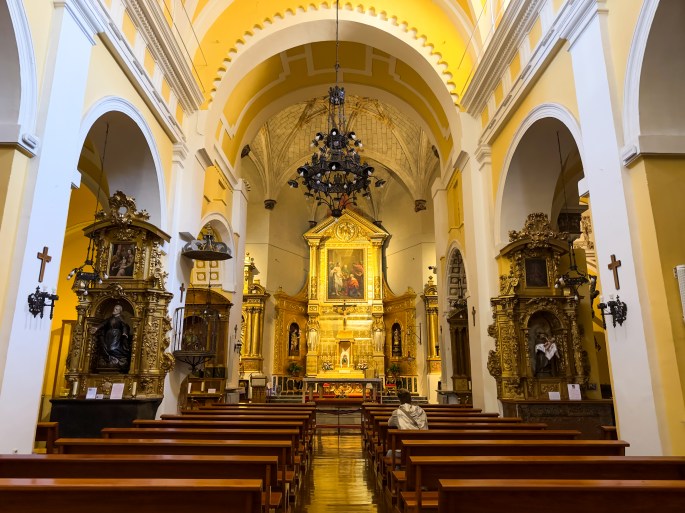
The Iglesia de Santo Tomé, or the Church of Santo Tomé, is a renowned religious and historical landmark located in the city of Toledo, Spain.
The origins of the Iglesia de Santo Tomé can be traced back to the 12th century when Toledo was under Islamic rule. At that time, the site was home to a mosque, and it was only after the Christian reconquest of Toledo in 1085 that the mosque was transformed into a church dedicated to Saint Thomas the Apostle.
However, the present-day church that stands today dates back to the 14th and 15th centuries. One of the most significant events in its history was the commissioning of a burial chapel by the powerful Catholic Monarchs, Queen Isabella I of Castile and King Ferdinand II of Aragon, in honor of their illustrious friend and advisor, Don Gonzalo Ruiz de Toledo.
The architectural style of the Iglesia de Santo Tomé is a beautiful blend of various influences, mainly Gothic and Mudejar. The church’s exterior might seem relatively modest compared to some grand cathedrals, but it holds numerous treasures within its walls.
One of the most captivating features of the church is its Mudejar tower, a remnant of the mosque that once stood on the site. The tower’s distinct brickwork showcases the Mudejar influence and provides a unique and picturesque aspect to the church’s silhouette.
The interior of Santo Tomé is equally impressive. It features a single nave with Gothic arches, adorned with beautiful religious artwork and statues that reflect the church’s rich history and spiritual significance. The main altarpiece, though not as elaborate as those found in larger cathedrals, is a fine example of Renaissance artistry.
The highlight of a visit to Iglesia de Santo Tomé is undoubtedly El Greco‘s masterpiece, “The Burial of the Count of Orgaz.” This awe-inspiring painting is located in the aforementioned burial chapel commissioned by the Catholic Monarchs. The artwork depicts a heavenly scene where the soul of Don Gonzalo Ruiz de Toledo is received by angels and saints after his death. El Greco’s unique style and use of color make this painting an exceptional representation of Spanish Renaissance art.
As you step into the Iglesia de Santo Tomé, you will be transported through centuries of history and art. It’s a place where the cultural heritage of Spain comes to life, and you’ll have the opportunity to witness one of El Greco’s most celebrated works up close. For any history enthusiast or art lover, this iconic church in the heart of Toledo is an absolute must-visit.

Admission is free with the
Photos


Other Sights
Thanks for visiting! I hope you have a great trip.
-
Iglesia de los Jesuitas (San Ildefonso)

The construction of the Iglesia de los Jesuitas began in the early 17th century, around 1629. It was commissioned by the Society of Jesus, a Catholic religious order founded by St. Ignatius of Loyola, to serve as their main church in Toledo. The Jesuits played a significant role in the religious and educational life of the city during that time.
However, the church’s history faced a significant setback during the suppression of the Jesuit order in 1767, when King Charles III of Spain ordered their expulsion from the country. As a result, the church was left abandoned for some time until it was repurposed for various uses.
In the 19th century, the building was restored and eventually returned to religious use. Over the years, it has undergone several renovations and additions, preserving its original beauty and historical significance.
The architecture of the Iglesia de los Jesuitas is a wonderful blend of different styles, showcasing the artistic and religious influences prevalent during its construction.
The church’s façade features elements of both Baroque and Neoclassical styles. It boasts an elegant and symmetrical design with towering bell towers on either side, giving it a grand and imposing appearance. The main entrance is adorned with intricate sculptures and reliefs, depicting religious scenes and symbols, which adds to its visual appeal.
Stepping inside, you’ll be struck by the church’s interior splendor. The nave follows a Latin cross plan, typical of many Catholic churches. The spacious and lofty interior is embellished with exquisite artwork and ornate altars.
One of the main highlights inside the church is the impressive main altar, which features intricate wood carvings and gold leaf decorations. This ornate altar is dedicated to San Ildefonso, the patron saint of Toledo.
Additionally, the church houses several chapels, each adorned with beautiful religious sculptures, paintings, and altarpieces, representing the religious fervor and artistic prowess of its time.
One of the most renowned artistic treasures found in the Iglesia de los Jesuitas is the work of the famous Spanish Baroque sculptor, Gregorio Fernández. His sculptures, including the image of the Virgin Mary, are celebrated for their emotive power and attention to detail.
Visiting this church will not only offer you a glimpse into the rich religious history of Toledo but also provide an opportunity to admire the artistic brilliance and architectural ingenuity of the past.
Admission is free with the
Photos


Thanks for visiting! I hope you have a great trip.
-
Mirador del Valle
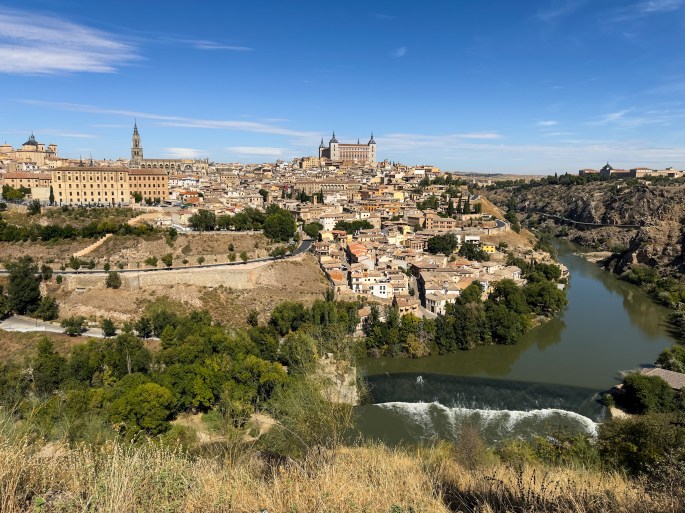
The Mirador del Valle in Toledo, Spain is a breathtaking viewpoint that offers an unparalleled panoramic view of one of Spain’s most picturesque and historic cities.
Standing atop a gentle hill on the southern edge of the city, the Mirador del Valle provides an unobstructed vantage point over the entire medieval city of Toledo, nestled amidst the dramatic backdrop of the Tagus River valley. The sight that unfolds before your eyes is simply awe-inspiring.
As you gaze outwards, you’ll see the majestic silhouette of Toledo’s historic landmarks that have stood the test of time. The iconic Alcázar of Toledo, an ancient fortress that now houses the Army Museum, stands tall amidst the city’s rooftops. To its left, the imposing Cathedral of Toledo, a masterpiece of Gothic architecture, reaches for the heavens with its grand spires. And just beyond, the Alcántara and San Martin bridges gracefully span the river, connecting the old town to the surrounding countryside.
The city’s unique blend of architectural styles becomes evident from this vantage point. You’ll notice a mix of Roman, Moorish, Gothic, Renaissance, and Baroque buildings, all nestled within the city’s walls. The whitewashed buildings contrast beautifully with the green landscapes, and the red-tiled roofs add a touch of warmth to the scene.
As the sun begins to set, the warm golden rays bathe the entire city in a magical glow, accentuating the ancient stone structures and creating a spectacle that words alone can’t do justice. The play of light and shadows transforms the scene into a living painting, making the Mirador del Valle a favorite spot for photographers and artists seeking to capture the essence of Toledo’s beauty.
Details
Ctra. Circunvalación, s/n, 45004 Toledo, Spain
Photos

Thanks for visiting! I hope you have a great trip.
-
Puerta del Sol

The Puerta del Sol has a history that dates back to the medieval period. It was originally built in the 14th century during the reign of King Peter I of Castile, also known as Peter the Cruel. The gate served as one of the main entrances to the fortified city of Toledo and played a crucial role in the city’s defense.
Throughout its existence, the Puerta del Sol has witnessed numerous historical events and has been an essential part of Toledo’s life. Over the centuries, the gate has undergone several renovations and restorations to maintain its structural integrity and preserve its historical significance.
The Puerta del Sol showcases a magnificent example of Gothic architecture, a style that was prominent during the medieval period in Spain. The gate’s design incorporates many classic elements of Gothic style, characterized by pointed arches, decorative tracery, and intricate stonework.
The gate is flanked by two impressive square towers with crenelated tops, which were used for defensive purposes and allowed guards to keep a watchful eye on approaching threats. The central archway, where the main entrance is located, is adorned with intricate carvings and sculptures, reflecting the fine craftsmanship of the era.
The façade of the Puerta del Sol is an exquisite display of intricate stonework that depicts various religious and heraldic symbols, adding to its historical and cultural significance. The attention to detail in its design makes it a truly remarkable piece of architecture.
Visiting the Puerta del Sol is like stepping back in time and experiencing the medieval charm of Toledo. The gate is conveniently located near the heart of the city, making it easily accessible to tourists.
Once you pass through the Puerta del Sol, you’ll find yourself in the narrow, winding streets of Toledo’s historic center, where you can explore the city’s ancient churches, museums, and other architectural wonders.
As you walk through the gate, take a moment to appreciate the remarkable craftsmanship and the stories the Puerta del Sol holds from its long history. It’s also an excellent spot for taking photos and capturing the essence of Toledo’s medieval past.
Details
Cjón. San José, 2, 45003 Toledo, Spain
Photos


Thanks for visiting! I hope you have a great trip.








About Me
The sky is not completely dark at night. Were the sky absolutely dark, one would not be able to see the silhouette of an object against the sky.
Follow Me On
Subscribe To My Newsletter
Subscribe for new travel stories and exclusive content.
 Meticulous Meanderings
You must be logged in to post a comment.