
Hello, I’m Veronica
The sky is not completely dark at night. Were the sky absolutely dark, one would not be able to see the silhouette of an object against the sky.


-
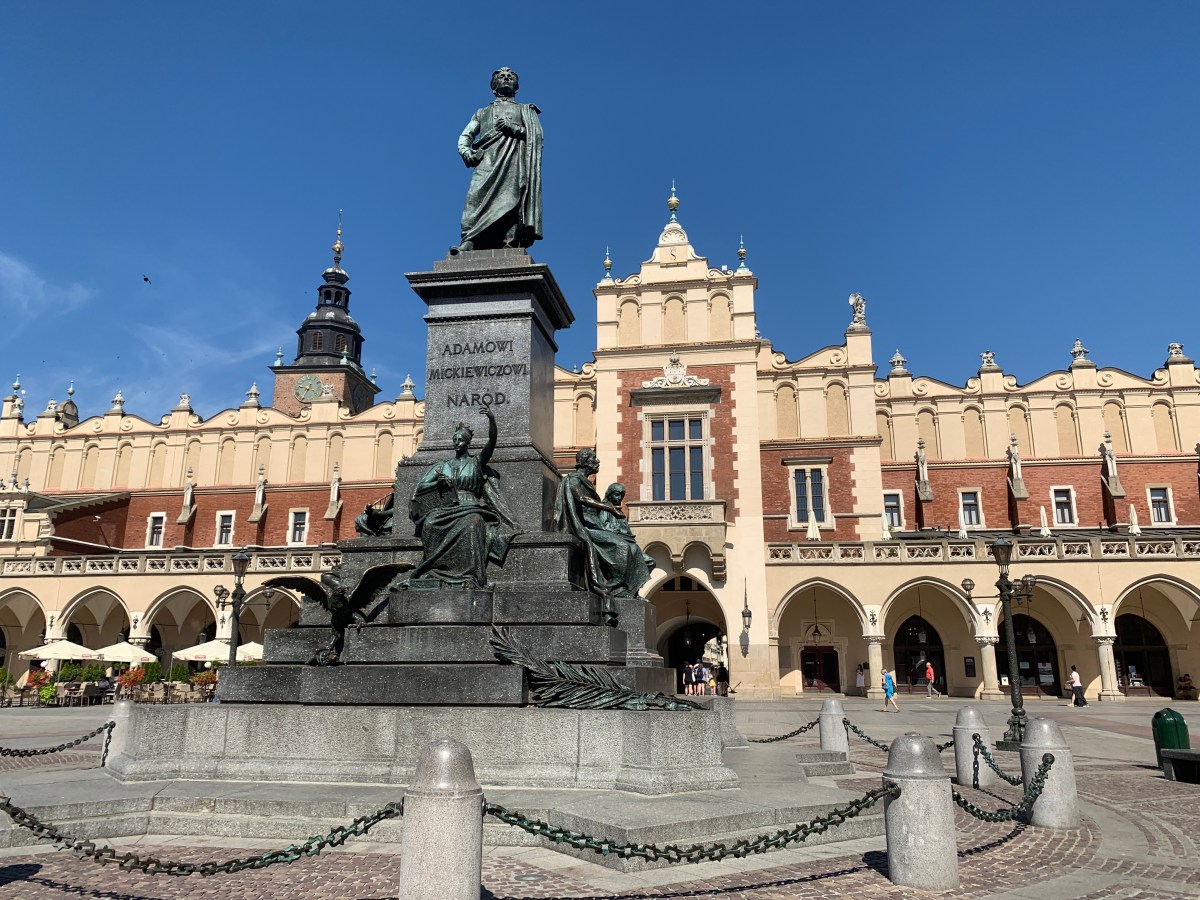
Adam Mickiewicz Monument
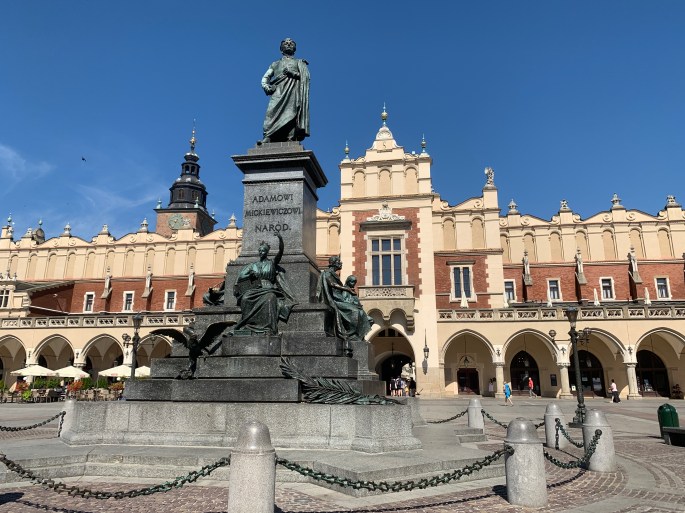
The Adam Mickiewicz Monument is situated in the heart of Kraków, in the historic Old Town, specifically on Rynek Główny (Main Square). This central location makes it easily accessible and a focal point of the city’s cultural and social life.
The monument itself is a striking and imposing piece of art. It consists of a bronze statue of Adam Mickiewicz, one of Poland’s most renowned Romantic poets and a national literary hero. Mickiewicz is depicted in a contemplative pose, sitting on a stone pedestal. He is often portrayed with a dramatic cloak flowing around him and a feathered quill in his hand, symbolizing his role as a poet.
Adam Mickiewicz (1798-1855) is considered one of the “Three Bards” of Polish literature and is celebrated for his patriotic and romantic poetry, which played a significant role in preserving and nurturing Polish national identity during a time of foreign occupation. The monument is a symbol of Poland’s enduring spirit and cultural heritage.
The monument itself was designed by the renowned Polish sculptor Antoni Wiwulski and completed in 1898, on the centenary of Mickiewicz’s birth. It’s an excellent example of 19th-century neoclassical sculpture and is surrounded by a beautifully designed semi-circular colonnade adorned with allegorical figures, representing the themes of Mickiewicz’s poetry, such as love, science, and art.
The area around the monument is not only a place of historical and artistic significance but also a vibrant cultural hub. Street performers, artists, and musicians often gather here, creating a lively atmosphere. It’s an excellent spot to relax, people-watch, and soak in the unique ambiance of Kraków.

The Tempest, Adam Mickiewicz
Visit Notes
Take a few minutes to appreciate the detail on this gorgeous monument. This is a great place to sit and enjoy the ice cream you’re probably holding.
Details
Photos


Other Sights
Kraków
Krakow, Poland is a city that seamlessly blends history, culture, and vibrant contemporary life, making it a fantastic destination for travelers. Krakow, often hailed as the “cultural capital” of Poland, is a city steeped in history and brimming with charm. Nestled in the southern part of the country, Krakow is a city that balances its…
Thanks for visiting! I hope you have a great trip.
-
Town Hall Tower

(AKA Wieża Ratuszowa)
The 75 meter Town Hall Tower has its roots in the 13th century when Kraków was granted city rights. The tower was initially constructed as a part of the medieval city hall complex.
In the 14th century, the tower underwent significant renovations, adopting the Gothic architectural style. It became a prominent symbol of Kraków’s prosperity and autonomy as a free city within the Kingdom of Poland.
The Town Hall Tower served as the focal point of Kraków’s bustling marketplace, known as the Main Square (Rynek Główny). It was not only a symbol of the city’s governance but also a practical structure for timekeeping, as it housed a clock and a bell.
Unfortunately, the original city hall building was demolished in the early 19th century, leaving only the tower standing as a testament to the city’s history. The Tower has since been meticulously preserved, and it stands as a testament to Kraków’s rich history and architectural heritage.
Visiting the Town Hall Tower in Kraków provides a unique opportunity to step back in time and explore the city’s medieval history. You’ll also have the chance to appreciate the city from a different perspective by taking in the breathtaking views from the tower’s observation deck. It’s a must-visit destination for history enthusiasts, architecture lovers, and anyone looking to immerse themselves in the charm of Kraków, Poland.
Visit Notes
You can climb the tower for views over the Rynek. To get to the top you’ll need to climb 110 steps. You’ll see exhibitions on the floors leading up to the tower. They limit how many people are admitted, so you should buy your tickets in advance from the website.
From the ground, the tower is a beautiful and imposing figure on the Rynek. Unfortunately, I didn’t get a chance to climb the tower on my last visit, but it’s on the list for next time!
Details
Rynek Główny 1, 30-001 Kraków, Poland
Monday
11:00 – 15:00
Tuesday to Sunday
10:00 – 18:00
Attraction opening days and times can change with no warning.
Always double-check information with the official website before making any plans
Photos


Other Sights
Kraków
Krakow, Poland is a city that seamlessly blends history, culture, and vibrant contemporary life, making it a fantastic destination for travelers. Krakow, often hailed as the “cultural capital” of Poland, is a city steeped in history and brimming with charm. Nestled in the southern part of the country, Krakow is a city that balances its…
Thanks for visiting! I hope you have a great trip.
-
Rynek Główny
(AKA Main Market Square)
The Rynek Główny is one of the most iconic and historic landmarks in Kraków, Poland. It’s a place rich in history, culture, and architectural beauty, making it a must-visit destination for anyone exploring this charming city.
History:
- Medieval Origins: The Rynek Główny dates back to the 13th century when it was established as the central market square of Kraków. It was laid out according to a strict grid plan, which was a common feature of medieval European towns.
- Marketplace: For centuries, the square served as the bustling heart of Kraków’s commercial and social life. It was a vibrant marketplace where merchants from all over Europe gathered to trade goods and produce. It also hosted various public events, including fairs, tournaments, and executions.
- Architectural Evolution: Over time, the architecture around the square evolved. You can witness a mix of architectural styles, including Gothic, Renaissance, Baroque, and Rococo, which reflect the changing tastes and influences of different periods in history.
- Landmarks: Several important landmarks surround the square, including St. Mary’s Basilica, the Cloth Hall (Sukiennice), and the Town Hall Tower. These buildings have played significant roles in the city’s history and continue to be major points of interest.
- Cultural Hub: The Rynek Główny also has a rich cultural heritage. It has been a gathering place for musicians, artists, and thinkers throughout the centuries, contributing to the city’s vibrant cultural scene.
Things to Do:
- St. Mary’s Basilica (Kościół Mariacki): This stunning Gothic church dominates the northern side of the square. Its two unequal towers are a recognizable symbol of Kraków. Inside, you can admire the magnificent altarpiece by Veit Stoss and enjoy the panoramic view from the taller tower.
- Cloth Hall (Sukiennice): Located in the center of the square, the Cloth Hall is a beautiful Renaissance-style building. It was historically used for trading textiles and goods. Today, it houses an array of souvenir shops, galleries, and the Sukiennice Museum, showcasing Poland’s art and history.
- Town Hall Tower: While the original town hall no longer exists, the tower remains as a reminder of Kraków’s medieval governance. You can climb the tower for panoramic views of the square and the city.
- Horse-drawn Carriages: You’ll often see colorful horse-drawn carriages waiting in the square, offering tourists a romantic and picturesque way to explore the city.
- Festivals and Events: The Rynek Główny is a hub of activity during various festivals and events, such as the Christmas Market and the annual Easter Market, where you can experience Polish traditions and taste local delicacies.
Visiting the Rynek Główny is like stepping back in time and immersing yourself in Kraków’s rich history and culture. Whether you’re interested in architecture, history, shopping, or simply savoring the atmosphere of this bustling square, it’s a must-visit destination for anyone exploring Kraków, Poland.
Visit Notes
I suppose it’s possible to visit Kraków and avoid the Rynek Główny, but why would you? Take some time to stroll around here and enjoy the beautiful architecture that surrounds you. You can take a carriage ride and enjoy a leisurely ride around the old town. You can even buy some pigeon food and let them land all over you. I honestly don’t know why you’d want to do that, but if that’s your thing go for it and enjoy!
Many of the top tourist sights are in the square, so it’s likely you will be here. Go slow and soak it in. Did I mention there are several places nearby to get ice cream? Or you could get yourself a Pączki (a Polish doughnut). There’s a place called Dobra Pączkarnia on Grodzka, just off the Rynek, where they have different flavors every day. Whatever your preferred way to ingest calories, grab one and wander the Rynek.
Details
Photos


Kraków
Krakow, Poland is a city that seamlessly blends history, culture, and vibrant contemporary life, making it a fantastic destination for travelers. Krakow, often hailed as the “cultural capital” of Poland, is a city steeped in history and brimming with charm. Nestled in the southern part of the country, Krakow is a city that balances its…
Thanks for visiting! I hope you have a great trip.
-
The Cloth Hall
(AKA Sukiennice)
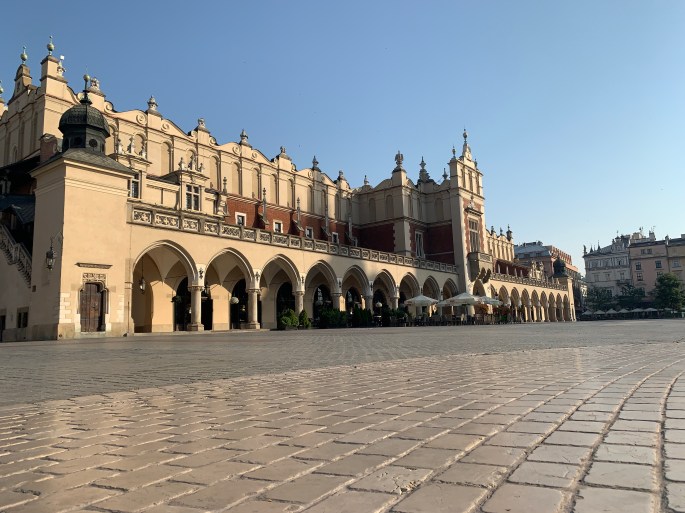
The Cloth Hall has a history dating back to the Renaissance period and is situated in the heart of Kraków’s historic Old Town, which is a UNESCO World Heritage Site. Its origins can be traced back to the 14th century when it was first constructed as a hub for international trade. During this time, Kraków was a flourishing trade center, and the Cloth Hall was at the center of it all.
Over the centuries, the building underwent several renovations and expansions to accommodate the growing trade activities. In the 19th century, it was thoroughly rebuilt in a neo-Gothic style under the supervision of renowned architect Tomasz Pryliński. This reconstruction aimed to restore the building to its former glory, and it became one of the most beautiful market halls in Europe.
Architecture:
The Cloth Hall is a stunning example of Polish Gothic and Renaissance architectural styles. Here are some key architectural features:- Exterior: The building’s façade is adorned with exquisite details, including numerous arches, decorative spires, and intricate sculptures. It has a symmetrical design with a central entrance and a series of pointed arches on the ground floor, which were once used as market stalls.
- Arcades: The ground floor of the Cloth Hall is an open arcade with rows of stone pillars, each supporting a beautifully crafted, decorative arch. These arches allowed merchants to display their goods while also providing shelter from the elements.
- Upper Floor: The upper floor is characterized by large, rectangular windows and a continuous balcony. This floor once housed the offices of the Kraków Academy, and today it hosts the Gallery of 19th-Century Polish Art.
- Roof: The roof of the Cloth Hall is a stunning feature. It is covered with intricately patterned terracotta tiles that add to the building’s overall charm.
- Interior: Inside the Cloth Hall, you’ll find a vibrant market with stalls selling a variety of traditional Polish products, including crafts, souvenirs, jewelry, and more. It’s a great place to shop for unique gifts and immerse yourself in the local culture.
Visiting the Cloth Hall offers a unique opportunity to step back in time and experience the historical and architectural heritage of Kraków. Whether you’re interested in shopping, history, or simply enjoying the beauty of the building, the Cloth Hall is a must-see destination when exploring this historic Polish city.
Visit Notes
I don’t see how you could come to Kraków and not take a walk through here. You may or may not find a treasure to take home with you, but it’s fun to look. I found an owl carved into amber and told myself I’d come back for it… then I couldn’t find it again. If you see something you like, be smart and remember the stall number.
Details
Rynek Główny 1/3, 31-042 Kraków, Poland
10:00 – 18:00
Closed Mondays
Attraction opening days and times can change with no warning.
Always double-check information with the official website before making any plans
Photos


Kraków
Krakow, Poland is a city that seamlessly blends history, culture, and vibrant contemporary life, making it a fantastic destination for travelers. Krakow, often hailed as the “cultural capital” of Poland, is a city steeped in history and brimming with charm. Nestled in the southern part of the country, Krakow is a city that balances its…
Thanks for visiting! I hope you have a great trip.
-
Rynek Underground Museum
(AKA Rynek Podziemny)
The Rynek Underground Museum in Kraków, Poland is a captivating and innovative museum that offers visitors a unique journey through time and history.
The Rynek Underground Museum is situated beneath Kraków’s famous Main Market Square (Rynek Główny), which is the heart of the city and one of Europe’s largest medieval town squares. This prime location makes it easily accessible for tourists exploring the historic center of Kraków.
The museum’s concept is to provide an immersive experience that takes you back in time to the medieval history of Kraków. It showcases the city’s development over the centuries, with a focus on the Main Market Square itself.
Upon entering, you descend into the depths of the square, where you’ll find a meticulously recreated medieval marketplace. The underground space includes a labyrinth of passageways, chambers, and exhibition halls.
The museum employs state-of-the-art multimedia and interactive technology to bring history to life. You’ll encounter life-sized figures, detailed dioramas, and historical artifacts that provide insights into the daily life of Kraków’s past residents.
The museum covers various historical eras, from the city’s founding through the Middle Ages and up to the Renaissance period. It highlights the architectural and social changes that took place over the centuries.
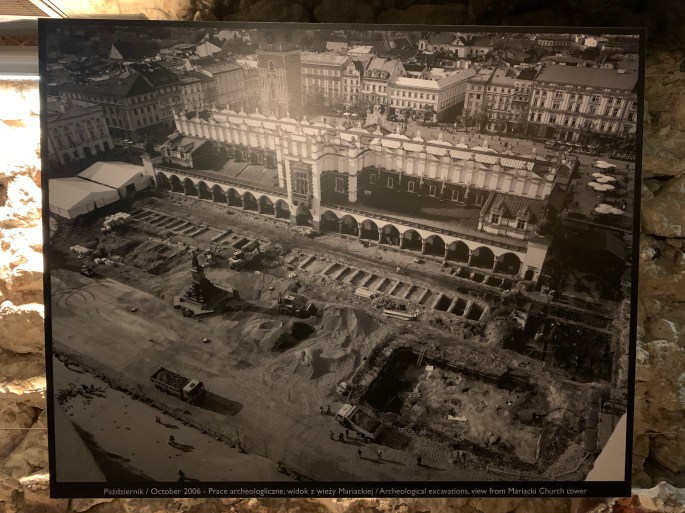
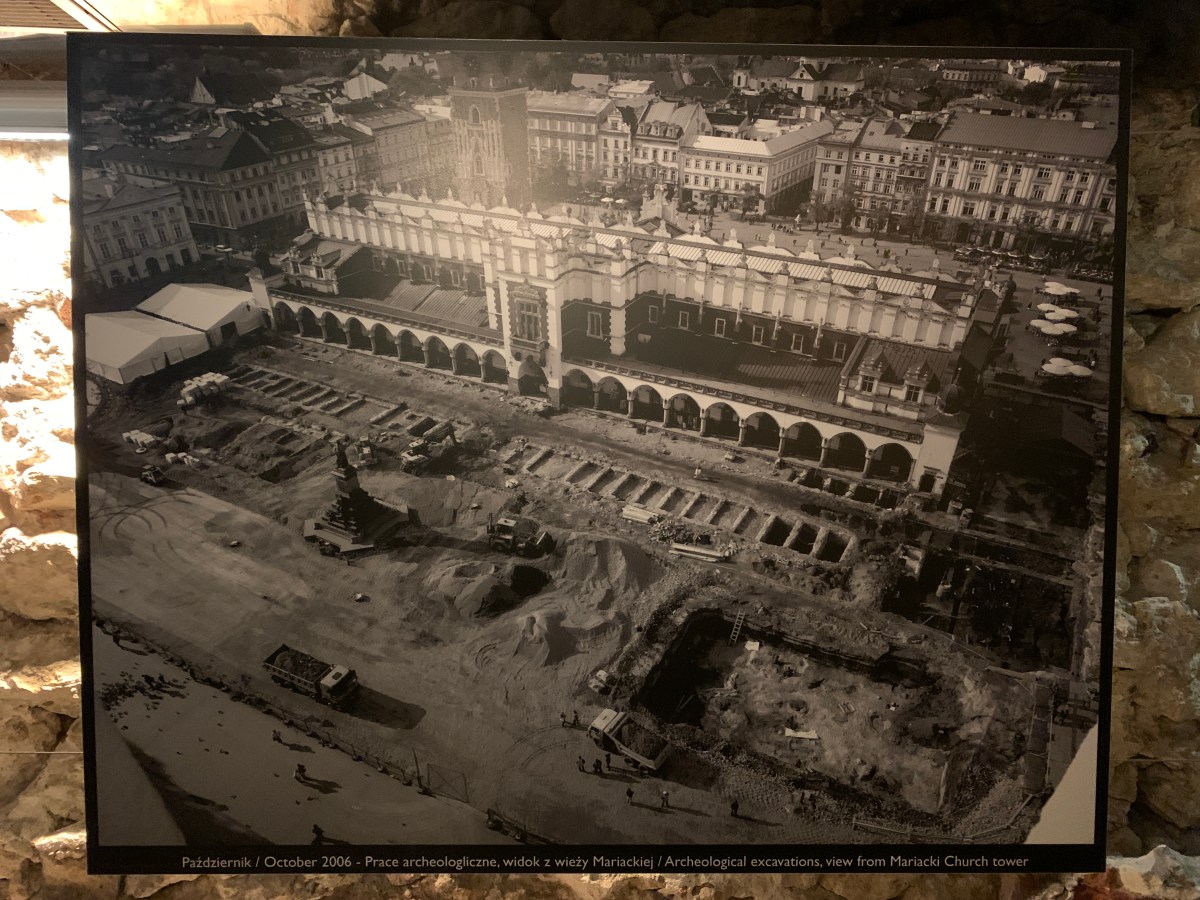
One of the most fascinating aspects of the Rynek Underground Museum is that it was built on the site of ongoing archaeological excavations. Visitors can see the actual remains of medieval buildings, streets, and artifacts that have been uncovered beneath the square.
Throughout your visit, you’ll encounter multimedia presentations, including videos and interactive exhibits, which provide context and further information about the history and development of Kraków.
The museum offers audio guides and information in multiple languages, making it accessible to international visitors.
After your underground exploration, you can visit the museum’s gift shop to purchase souvenirs related to Kraków’s history. There’s also a café where you can relax and reflect on your visit.
Visiting the Rynek Underground Museum in Kraków is a truly unique experience that allows you to step back in time and gain a deeper appreciation for the city’s rich history. It’s a must-see attraction for history enthusiasts, families, and anyone interested in exploring the hidden treasures beneath one of Europe’s most iconic squares.
Visit Notes
This is a pretty cool museum to visit, especially if you don’t get that excited about traditional museums where you have to read a lot of information placards. I’m not saying there aren’t any here, but most of the information is delivered in multimedia presentations. You’ll find both recreations of medieval scenes and actual artifacts found during excavations of the Rynek.
The second half of the museum is comprised of the actual remains of buildings found beneath the Rynek. I found this area to be the most interesting. If you have kids with you, they’ll definitely prefer the first half.
We bought our tickets online in advance and they let us in right on time. It took us about an hour to get through the exhibits. Overall, a good visit that I would recommend for anyone wanting to learn more about Kraków history.
Details
Rynek Główny 1, 31-042 Kraków, Poland
Monday, Wednesday, Thursday
10:00 – 19:00
Tuesday
10:00 – 14:00
Friday to Sunday
10:00 – 20:00
Closed the second Monday of each month
Attraction opening days and times can change with no warning.
Always double-check information with the official website before making any plans
Photos


Kraków
Krakow, Poland is a city that seamlessly blends history, culture, and vibrant contemporary life, making it a fantastic destination for travelers. Krakow, often hailed as the “cultural capital” of Poland, is a city steeped in history and brimming with charm. Nestled in the southern part of the country, Krakow is a city that balances its…
Thanks for visiting! I hope you have a great trip.










About Me
The sky is not completely dark at night. Were the sky absolutely dark, one would not be able to see the silhouette of an object against the sky.
Follow Me On
Subscribe To My Newsletter
Subscribe for new travel stories and exclusive content.
 Meticulous Meanderings
You must be logged in to post a comment.