
Hello, I’m Veronica
The sky is not completely dark at night. Were the sky absolutely dark, one would not be able to see the silhouette of an object against the sky.


-
Frauenkirche

The Frauenkirche, located in Dresden, Germany, is a magnificent Baroque-style church with a rich history and a stunning architectural design that has captivated visitors for centuries. If you’re considering visiting this iconic landmark, here’s an overview of its history and architecture to enhance your understanding and appreciation.
The Frauenkirche, which translates to “Church of Our Lady,” has a history dating back to the 18th century. It was originally built between 1726 and 1743 under the guidance of architect George Bähr. The church was constructed to serve as a symbol of Dresden’s strong Protestant faith and as a monument to the city’s resilience in the face of religious turmoil.
Tragedy struck during the bombing raids on Dresden in World War II, specifically during the infamous bombing in February 1945. The church’s dome and much of its structure collapsed due to the intense heat generated by the firebombing. For many years, the ruins of the Frauenkirche stood as a somber reminder of the destruction caused by the war.
However, in a remarkable feat of engineering and dedication, efforts to rebuild the Frauenkirche began in the 1990s, after the reunification of Germany. Using both traditional techniques and modern technology, the reconstruction project aimed to restore the church to its former glory. The project was completed in 2005, and the restored Frauenkirche was consecrated in a moving ceremony that symbolized the city’s rebirth and reconciliation.
The architectural style of the Frauenkirche is Baroque, which was popular during the time of its original construction. The church’s design reflects the aesthetic principles of this period, characterized by grandeur, ornate details, and a focus on creating a sense of awe.
One of the most striking features of the Frauenkirche is its massive dome, which stands as a dominant element in Dresden’s skyline. The dome is constructed using a unique technique known as “stone ribbing.” This method involves interlocking stones in a way that provides both structural stability and intricate design patterns. The dome’s exterior is adorned with statues and decorative elements, while the interior is equally impressive with its spaciousness and intricate ornamentation.
Inside the church, visitors will find a circular layout with a central altar area surrounded by galleries and seating. The interior is adorned with lavish decorations, including intricate woodwork, paintings, and sculptures that showcase the artistic prowess of the Baroque era.
When you visit the Frauenkirche, take the time to admire the breathtaking views of Dresden from its dome, accessible by climbing a spiral staircase. The panoramic vista is well worth the effort and offers a unique perspective on the city’s architecture and surrounding landscapes.
Visit Notes
It is free to visit the Frauenkirche, so be sure to stop in. It does cost extra if you want to climb to the tower. Inside, the church is light and bright with a remarkable attention to detail in the reconstruction. It’s really quite lovely. While we were there some sort of event (not mass) was going on, so we weren’t able to walk around freely, but I still managed to get a few photos.
Details
Neumarkt, 01067 Dresden, Germany
Monday to Friday
10:00 – 11:30 and 13:00 – 17:30
Saturday and Sunday
Alternating times
Attraction opening days and times can change with no warning.
Always double-check information with the official website before making any plans
Photos


Dresden
Dresden, located in eastern Germany, is a city that seamlessly blends history, culture, and natural beauty. Known as the “Florence on the Elbe,” Dresden has a rich and complex history that is reflected in its stunning architecture, vibrant arts scene, and picturesque landscapes. Architectural Marvels: One of the city’s most iconic landmarks is the Dresden…
Thanks for visiting! I hope you have a great trip.
-
Dresden Cathedral
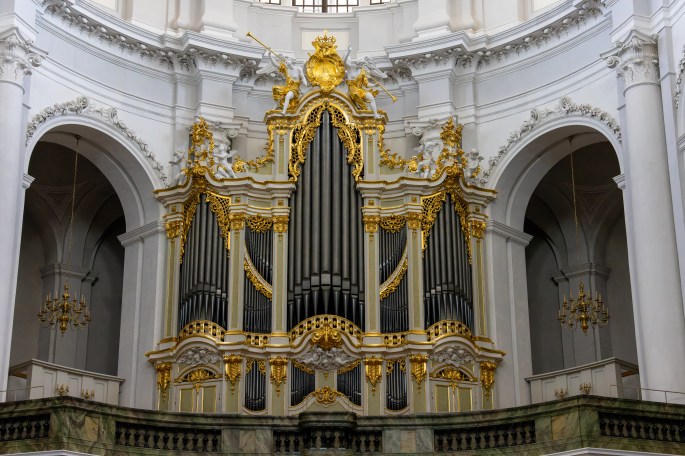
(AKA Katholische Hofkirche, Kathedrale Sanctissimae Trinitatis)
The Dresden Cathedral is a Baroque-style cathedral that dates back to the 18th century. Its construction began in 1739 and was completed in 1751 under the reign of Augustus III of Poland, who was also the Elector of Saxony. The cathedral was commissioned as a Roman Catholic Church and was intended to be the church of the Saxon court. It played a significant role in asserting the Catholic faith within the predominantly Protestant region of Saxony.
During the bombing raids of February 1945 the city suffered extensive damage, and the Dresden Cathedral was not spared. The church suffered significant destruction from the firebombing, which resulted in the collapse of parts of the roof and the destruction of some interior elements. The grand organ and many valuable artworks were also lost in the fires. The church was restored in the 1980’s by the East German government, with further restoration occurring in the early 21st century.
The architecture of the Dresden Cathedral is a blend of Baroque and Rococo styles, characterized by its grandeur, elaborate decorations, and harmonious proportions.
When visiting the Dresden Cathedral, take your time to explore both the exterior and interior. Admire the intricate details on the facade, enjoy the awe-inspiring dome paintings, and immerse yourself in the rich history of the church. The cathedral is free and open to visitors.
Visit Notes
This cathedral is perfectly nice, however, due to the bombing and the reconstruction it is lacking many of the intricate details you would see in other grand European cathedrals. I don’t want to hate on this cathedral because, you know, it’s been through a lot, but it was not my favorite stop in Dresden.
On one hand, the interior is quite plain. But on the other hand, it’s fee to visit and it won’t take you long to walk through. I would say it’s worth a quick stop if you’re nearby.
Details
Schloßstraße 24, 01067 Dresden, Germany
Monday to Thursday
10:00 – 17:00
Friday
13:00 – 17:00
Saturday
10:00 – 17:00
Sunday
12:00 – 16:00
Attraction opening days and times can change with no warning.
Always double-check information with the official website before making any plans
Photos


Other Sights
Dresden
Dresden, located in eastern Germany, is a city that seamlessly blends history, culture, and natural beauty. Known as the “Florence on the Elbe,” Dresden has a rich and complex history that is reflected in its stunning architecture, vibrant arts scene, and picturesque landscapes. Architectural Marvels: One of the city’s most iconic landmarks is the Dresden…
Thanks for visiting! I hope you have a great trip.
-
Semperoper

(AKA Sächsische Staatsoper Dresden)
The Semperoper, officially known as the Sächsische Staatsoper Dresden (Saxon State Opera Dresden), is one of Germany’s most famous and historically significant opera houses. The history of the Semperoper dates back to the 19th century. It was designed by the renowned architect Gottfried Semper and first opened its doors in 1841. Unfortunately, the original building was destroyed by a devastating fire in 1869.
However, it was promptly rebuilt under the guidance of Gottfried Semper himself, and the second version of the opera house was inaugurated in 1878. The Semperoper played a vital role in the cultural and artistic life of Dresden and became a symbol of the city’s rich history and artistic heritage.
The Semperoper is a prime example of neo-Renaissance architecture. Designed by Gottfried Semper, the building boasts a stunning façade adorned with intricate sculptures, reliefs, and decorative elements that reflect the artistic spirit of the 19th century. The exterior is characterized by its grandeur, with a monumental staircase leading to the entrance and a prominent central dome that crowns the building.
Inside, the opera house is equally impressive. The auditorium is a masterpiece of design, featuring lavish decorations, ornate gilding, and a magnificent ceiling adorned with frescoes. The horseshoe-shaped seating arrangement offers excellent acoustics, ensuring an immersive experience for opera and concert attendees.
Visit Notes
We only visited the outside of the Semperoper as it is located adjacent to the Zwinger. While we waited for the Zwinger to open, we wandered around the outside, enjoying the details on the building and the statue of King Johann in the square out front. The exterior is definitely worth taking a look at, particularly if you’re already nearby.
Photos


Dresden
Dresden, located in eastern Germany, is a city that seamlessly blends history, culture, and natural beauty. Known as the “Florence on the Elbe,” Dresden has a rich and complex history that is reflected in its stunning architecture, vibrant arts scene, and picturesque landscapes. Architectural Marvels: One of the city’s most iconic landmarks is the Dresden…
Thanks for visiting! I hope you have a great trip.
-
Brühl’s Terrace

(AKA Brühlsche Terrasse)
Brühl’s Terrace, often referred to as “The Balcony of Europe,” is a splendid architectural and historical landmark located in the heart of Dresden, Germany.
Panoramic Views: One of the best aspects of Brühl’s Terrace is its breathtaking panoramic views of the Elbe River and the cityscape of Dresden. Standing on the terrace, you’ll be treated to an uninterrupted vista that stretches over the meandering river, the iconic Augustus Bridge, and the enchanting skyline of Dresden’s historic and modern architecture.
Historical Significance: Brühl’s Terrace holds a special place in history. It was originally built during the 18th century as part of the city’s fortifications, serving both practical and aesthetic purposes. Later, it became a favorite haunt of the European aristocracy, who would stroll along the terrace, enjoying the scenic beauty and the social ambiance. The terrace witnessed the rise and fall of empires, making it a silent witness to centuries of European history.
Architectural Marvels: The terrace itself is adorned with a series of beautifully crafted sculptures, ornate balustrades, and decorative elements that reflect the artistic style of the time. The ensemble of architectural details creates an ambiance that transports you to an era of opulence and refined taste.
Cultural Events: Throughout the year, Brühl’s Terrace hosts a variety of cultural events, concerts, and festivals. From music performances to open-air exhibitions, these events infuse the area with a vibrant atmosphere, making your visit even more enriching.
Location: Brühl’s Terrace is conveniently situated in the heart of Dresden’s historic center, making it easily accessible for both locals and tourists. Its central location also means that you can seamlessly explore other nearby attractions, such as the Frauenkirche, Dresden Castle, and the Zwinger Palace.
Relaxation and Reflection: Whether you’re looking for a tranquil spot to enjoy a leisurely stroll, capture stunning photographs, or simply take a moment to absorb the beauty around you, Brühl’s Terrace offers an ideal setting for relaxation and reflection. The combination of fresh air, scenic beauty, and a touch of history creates an environment conducive to peaceful contemplation.
Visit Notes
This is a fantastic place for a stroll, especially if you’re also eating an ice cream. There are so many things to see, from gorgeous buildings to provocative art, not to mention the view of the river. There are some shady places to sit, which came in handy during our very hot visit. I was so excited by all the statues and art that I completely forget to take pictures of the terrace itself. In my defense, it was hot and we’d already walked thirteen miles so I was tired.
Details
Photos


Dresden
Dresden, located in eastern Germany, is a city that seamlessly blends history, culture, and natural beauty. Known as the “Florence on the Elbe,” Dresden has a rich and complex history that is reflected in its stunning architecture, vibrant arts scene, and picturesque landscapes. Architectural Marvels: One of the city’s most iconic landmarks is the Dresden…
Thanks for visiting! I hope you have a great trip.
-
Zwinger
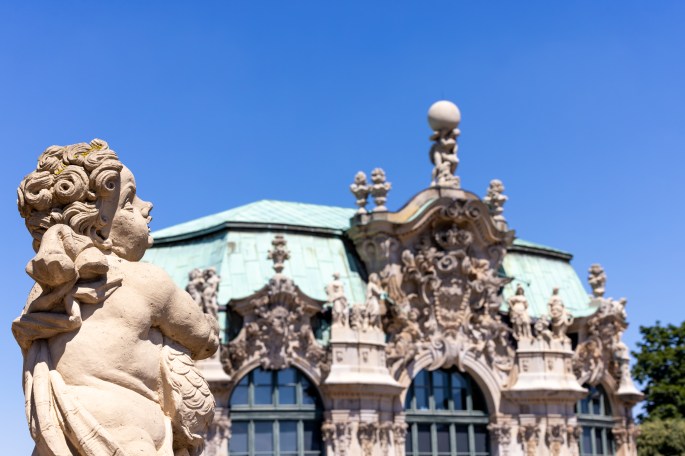
The Zwinger is an exquisite and renowned architectural ensemble located in the heart of Dresden. It’s a palace complex that seamlessly combines stunning Baroque architecture with beautiful gardens, and it’s one of the most famous landmarks in the city. The Zwinger was originally constructed in the early 18th century as an orangery, exhibition gallery, and festival arena for the royal court of Augustus the Strong, Elector of Saxony and King of Poland.
However, during World War II, Dresden experienced intense bombing raids that severely damaged the city, including the Zwinger. The devastating Allied bombings in February 1945 left much of Dresden, including the Zwinger, in ruins. The grandeur of the palace was reduced to rubble. Thankfully, its collection of art had been previously evactuated. The destruction of the Zwinger was a tragic loss for both Dresden and the world’s cultural heritage.
After the war, the reconstruction of Dresden and the Zwinger became a symbol of resilience and restoration. The painstaking efforts to rebuild the city and its historical landmarks, including the Zwinger, were a testament to the determination of the people to restore their cultural legacy. The reconstruction process aimed not only to rebuild the physical structures but also to recapture the spirit and aesthetics of the original architecture and artworks. Reconstruction began in 1945, and by 1963 the Zwinger had been largely restored.
Architecture:
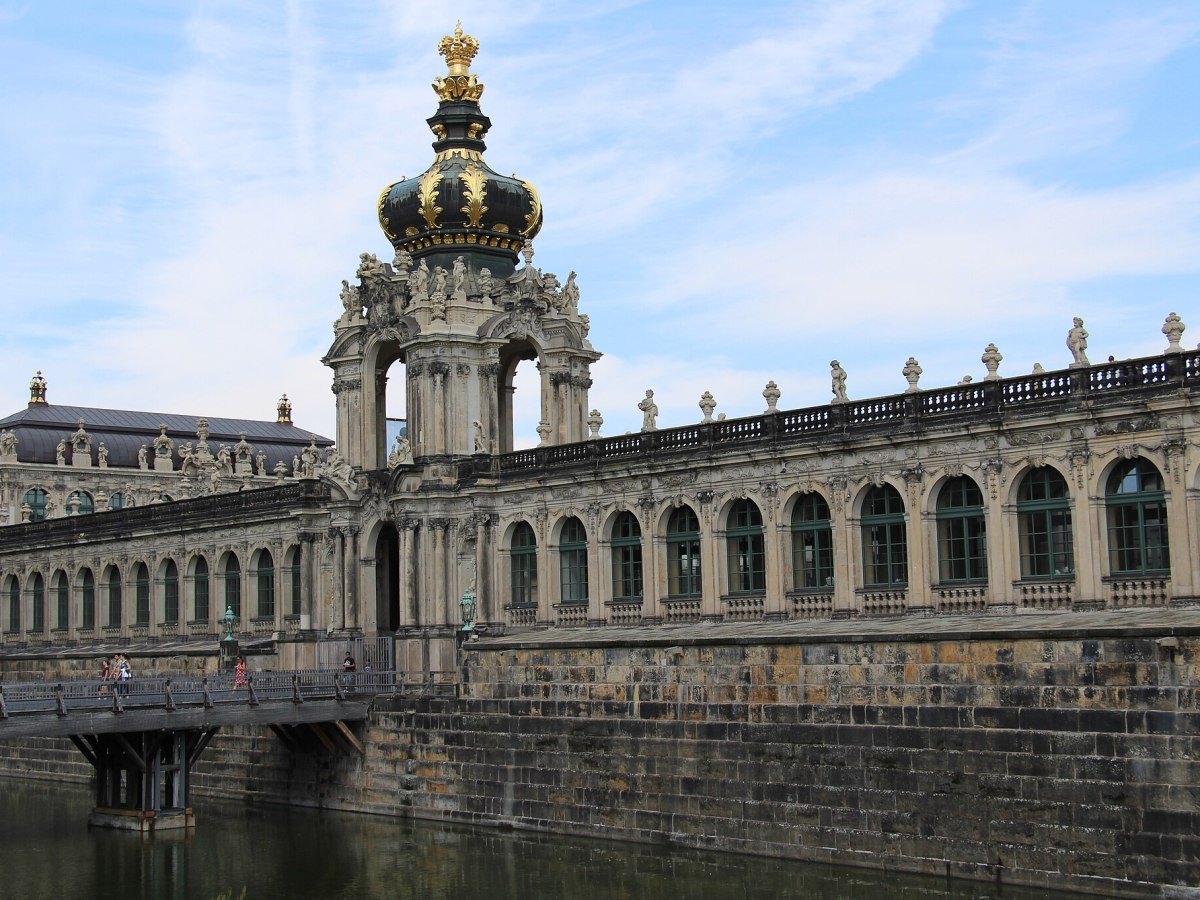
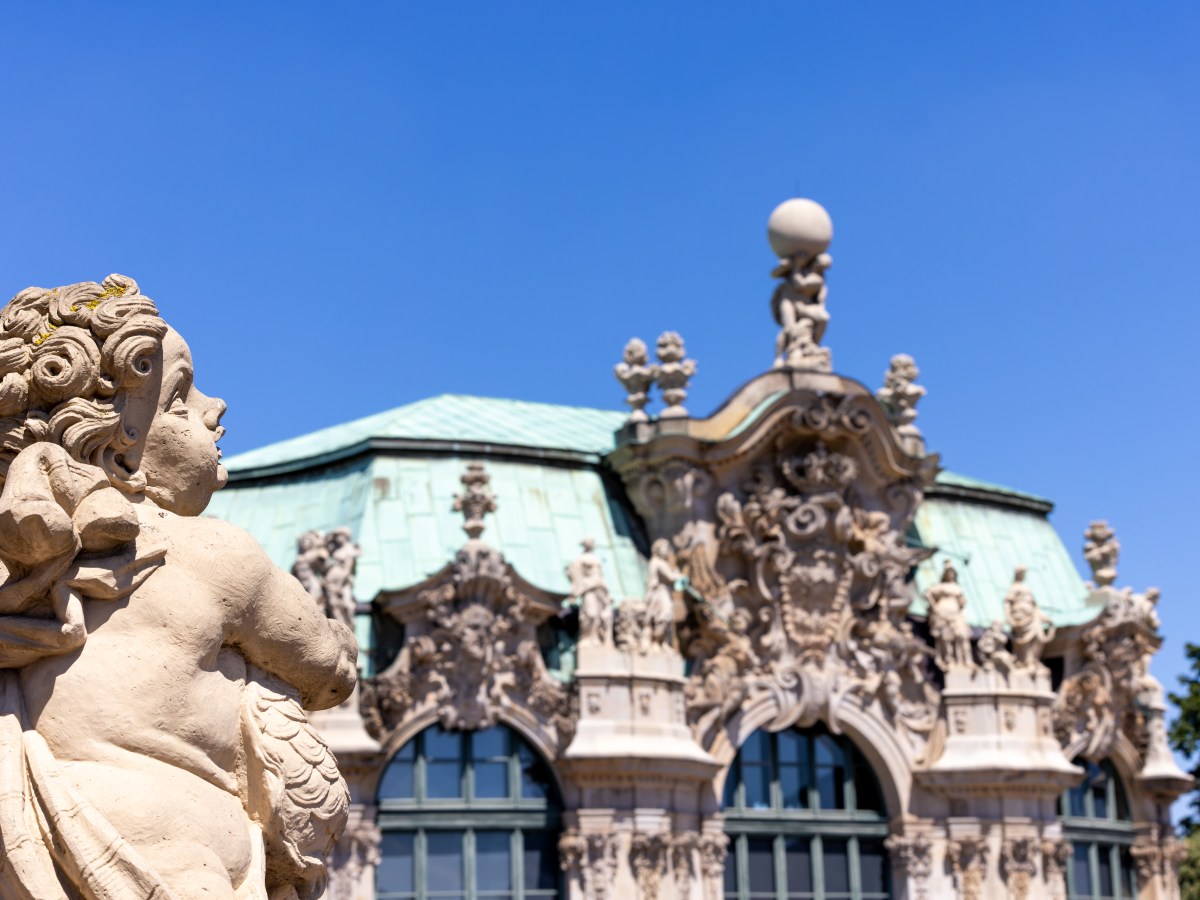
The Zwinger’s architecture is a prime example of Baroque grandeur and elegance. The complex consists of various pavilions, galleries, and courtyards, all interconnected by ornate gates, arcades, and walkways. The outer walls are adorned with intricate sculptures, reliefs, and decorative elements. One of the most iconic features is the Crown Gate (Kronentor), which serves as the main entrance and features a majestic crown at its top.Museums:
Within the Zwinger complex, there are several museums that house a remarkable collection of art, historical artifacts, and scientific instruments:- Old Masters Picture Gallery (Gemäldegalerie Alte Meister): This museum hosts an outstanding collection of European paintings from the Renaissance to the Romantic era. You’ll find masterpieces by artists like Raphael, Rembrandt, Vermeer, and Titian. One of the most famous works is Raphael’s “Sistine Madonna,” featuring the cherubic angels that have become iconic.
- Porcelain Collection (Porzellansammlung): The Zwinger is also home to a remarkable collection of porcelain, particularly Meissen porcelain, which is renowned for its quality and craftsmanship. The museum showcases delicate and intricate porcelain items ranging from tableware to figurines.
- Mathematics and Physics Salon (Mathematisch-Physikalischer Salon): This museum is a treasure trove of scientific instruments, clocks, and precision tools. It provides insights into the history of scientific exploration and technological advancement.
- Sculpture Museum (Skulpturensammlung): The museum’s collection comprises sculptures from antiquity to the 18th century, showcasing a diverse array of styles, materials, and artistic expressions. Marvel at exquisite sculptures from ancient Greece and Rome. Explore sculptures from the Renaissance period, capturing the revival of classical forms and a renewed focus on human anatomy and emotion. Works from renowned artists like Giambologna and Bernini showcase the skill and innovation of this era.
Gardens:
In addition to the architectural marvels and museums, the Zwinger normally boasts beautifully landscaped gardens and fountains. The gardens are laid out in a formal Baroque style, featuring fountains, flower beds, and meticulously designed pathways. The gardens provide a serene atmosphere for visitors to stroll, relax, and appreciate the beauty of the surroundings.
Visit Notes
The first thing to note is that the interior courtyard and gardens are currently undergoing renovations. When we visited they were doing what looked like an archaeological dig in the courtyard with little trowels and brushes. It was actually pretty interesting.
If you want to visit all of the collections at the Zwinger, you’ll need to allocate quite a lot of time. We spent a full morning and half the afternoon wandering through all the exhibits. There is a cafe in the southwest corner (upstairs) with snacks to keep you fueled. I had a chocolate “shake”, which was more like ice cold chocolate milk (not at all thick), but boy was it delicious and refreshing. We also picked up a brownie and a cookie.
Each museum has its own entrance, so you will need to have your ticket handy for each. At the Mathematics and Physics Salon, I had to put my backpack in a locker for a Euro. I didn’t have a Euro handy so they gave me some plastic coin that looked like a Euro and that worked.
You should also note that this is a historic building with no air conditioning. The only place it was noticeable to us was in the Porcelain museum. They had brought in portable air conditioning units, but that only helped if you were directly in front of them. Perhaps not coincidentally, that’s where the museum employees would sit.
I enjoyed all of the museums here, but my favorite was the Mathematics and Physics Salon. I love mechanical things and globes, so it was very much like someone had created this place just for me.
You can also walk up some stairs and stroll along the top of the building. From here you have a close-up view of all the Baroque details and statues. On the north side of the complex there are some fountains and shady areas to relax.
Lastly, even though it was summer and the courtyard was full of people, we hardly saw anyone inside the museums themselves. The building is so large, you have plenty of room to get away from others.
Details
Sophienstraße, 01067 Dresden, Germany
Tuesday to Sunday
10:00 – 18:00
Attraction opening days and times can change with no warning.
Always double-check information with the official website before making any plans
Photos


Dresden
Dresden, located in eastern Germany, is a city that seamlessly blends history, culture, and natural beauty. Known as the “Florence on the Elbe,” Dresden has a rich and complex history that is reflected in its stunning architecture, vibrant arts scene, and picturesque landscapes. Architectural Marvels: One of the city’s most iconic landmarks is the Dresden…
Thanks for visiting! I hope you have a great trip.




About Me
The sky is not completely dark at night. Were the sky absolutely dark, one would not be able to see the silhouette of an object against the sky.
Follow Me On
Subscribe To My Newsletter
Subscribe for new travel stories and exclusive content.
 Meticulous Meanderings
You must be logged in to post a comment.